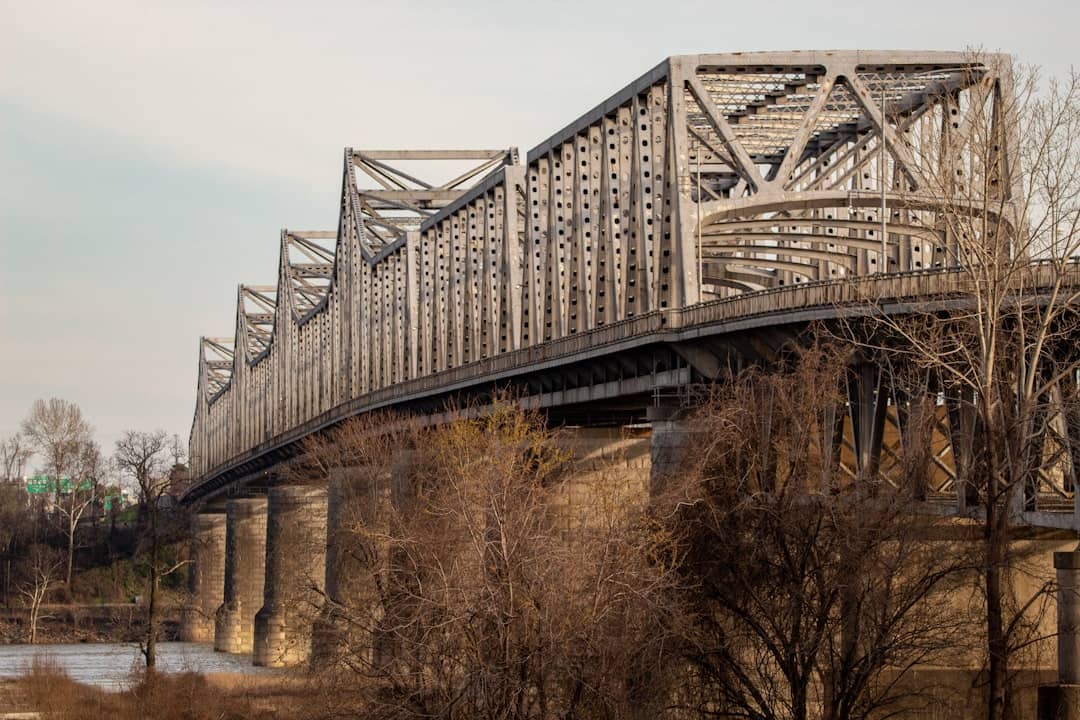
Maine covered bridges and historic crossings include wooden spans and the Bailey Island cribstone bridge, with different settings and access at each.
There are nine covered bridges in Maine. A small number, and a fragile one, since the state had well over a hundred before fire, flood and the automobile worked through them. They are scattered from Fryeburg to Aroostook County, and no single day of driving reaches them all. This guide covers where each one stands, which you can still drive through, and the other historic crossings that reward a detour more than some of the covered ones do.
Compiled from published reviews, official sites and our own research; assessed remotely without firsthand experience.
The nine covered bridges
Two things to know before you plan around them. First, they are short stops. Five or ten minutes each, with no facilities, and several sit at the end of unpaved roads. Second, they are spread across four corners of a large state. The four in the western mountains cluster well enough for a day trip. The rest are one-offs you fold into a drive you were already making.
| Bridge | Where | Rating | Traffic? |
|---|
| Sunday River (Artist's) Bridge | Newry | 4.7 (328) | Foot only |
| Babb's Bridge | Gorham / Windham line | 4.7 (274) | Cars |
| Low's Bridge | Guilford / Sangerville | 4.7 (176) | Cars |
| Hemlock Bridge | Fryeburg | 4.7 (170) | Cars |
| Lovejoy Bridge | Andover | 4.7 (156) | Cars |
| Porter–Parsonsfield Bridge | Porter / Parsonsfield | 4.2 (96) | Foot only |
| Robyville Bridge | Corinth | 4.7 (87) | Cars |
| Bennett–Bean Bridge | Wilsons Mills | 4.6 (26) | Foot only |
| Watson Settlement Bridge | Littleton | n/a | Foot only |
The Sunday River Bridge in Newry is the one everyone photographs, which is how it earned its other name, the Artist's Bridge. It has been painted and shot more than any other covered bridge in the state. It was bypassed long ago, so the road stops at it and you walk. Park, cross, look at it from the gravel bar downstream, and go. It is a fifteen-minute stop from the ski slopes above Bethel.
Lovejoy Bridge in Andover is the shortest covered bridge in Maine at roughly seventy feet, and it still carries cars over the Ellis River. Robyville Bridge in Corinth is the only one in the state shingled all over (roof and sides both) which gives it a squat, barn-like look completely unlike the clapboard others. Hemlock Bridge outside Fryeburg spans an old oxbow channel of the Saco and is reached down a couple of miles of dirt; it is the prettiest setting of the nine and the one most likely to have nobody else at it.
Two carry an asterisk. Babb's Bridge, over the Presumpscot on the Gorham–Windham line, is the oldest covered bridge in Maine on paper, and the structure you drive through is a 1976 reconstruction, because the original burned in a 1973 arson. Low's Bridge, over the Piscataquis, was swept off its abutments by a flood in 1987 and rebuilt to the original plans. Both are honest replicas rather than survivors, and nobody at either site pretends otherwise.
Why they were covered in the first place
The roof is not decoration and it was never about keeping snow off the deck, in practice towns had to shovel snow onto covered bridge decks so sleighs could get across. The roof exists to protect the timber truss underneath.
An uncovered wooden bridge in the Maine climate rots at the joints within ten or fifteen years, because water sits in every mortise and end grain soaks it up. Roof and siding keep the structural timbers dry, and a dry truss lasts generations. That is the whole idea: the bridge is a barn built around a piece of engineering, and the cladding is the raincoat.
Most Maine examples use a Paddleford truss, a New England design worked out by Peter Paddleford of Littleton, New Hampshire, in the 1840s. It is a Long truss with the diagonals reconfigured so they interlock, and it spread through northern New England because local carpenters could build it without a patent fight. Several Maine bridges add an arch on top of the truss for extra span. Look up as you walk through. The timberwork is the point, not the postcard exterior.
Maine once had somewhere north of a hundred and twenty covered bridges. Fire took a share, floods took more, and from the 1920s on the state simply replaced them with steel and concrete that could carry a loaded truck. The nine that remain survived mostly by being on roads too minor to be worth upgrading.
The other historic crossings, several of which are better
Say this plainly: if you drive four hours for a covered bridge you may come away underwhelmed. Some of Maine's uncovered historic bridges are more interesting objects.
- Bailey Island Bridge, Harpswell (4.9, 187 reviews): the highest-rated bridge in the corpus, and deservedly. Built in 1928 of granite blocks stacked in an open lattice, unmortared, so the tide runs straight through the gaps instead of tearing at it. It is the only cribstone bridge of its kind anywhere. See our Bailey Island guide for what is at the far end.
- Wire Bridge, New Portland (4.8, 424 reviews). A wire suspension bridge from the 1860s with shingled wooden towers, still open to one car at a time. The last of its type left in Maine and the reason people detour off Route 27.
- Androscoggin Swinging Bridge, Topsham (4.7, 892 reviews). An 1892 pedestrian suspension bridge built so mill workers on the Topsham side could get to the Cabot Mill in Brunswick. It moves under you, which is the entire experience.
- Two Cent Bridge, Winslow–Waterville (4.6, 394 reviews): a footbridge over the Kennebec named for the toll it once charged mill hands, and often described as the last surviving pedestrian toll bridge in the country.
- Deer Isle Suspension Bridge (4.8, 56 reviews), a 1939 span by David B. Steinman that became a case study in wind-induced oscillation and needed stiffening after it started moving in gales. Approaching it from the mainland side is one of the better reveals on the coast.
- Wiggly Bridge, York (4.7, 250 reviews): claimed as the smallest suspension bridge in the world, about the length of a bus, leading into the Steedman Woods trails. It genuinely wiggles.
- Perkins Cove Drawbridge, Ogunquit (4.7, 180 reviews): a hand-cranked pedestrian drawbridge that still gets raised for masted boats, at the far end of the Marginal Way.
- Boothbay Harbor Footbridge (4.8, 50 reviews), a 1901 wooden crossing of the inner harbor with a small house sitting partway along it.
Acadia's seventeen stone bridges
The densest collection of interesting bridges in Maine is not on any road. Between 1917 and 1933, John D. Rockefeller Jr. funded a carriage road network through what is now Acadia National Park, and had seventeen stone bridges built along it: each one different, each faced in local granite, none of them repeating a design.
Duck Brook Bridge (4.8, 127 reviews) is the showpiece: three arches, cut stone parapets, and stairs down to the brook. Cobblestone Bridge near Jordan Pond was the first built and is the only one faced in rounded cobbles rather than cut block. Amphitheatre Bridge is the longest. All of them are reached on foot, by bike or by horse: no cars on the carriage roads, ever, which is precisely why they are in the condition they are in.
The Penobscot Narrows, old and new
At Prospect two bridges tell one story. The Waldo–Hancock Bridge (4.8, 33 reviews) opened in 1931, another Steinman suspension design and the first permanent crossing of the lower Penobscot. Corrosion in its main cables outran the repairs, and it was replaced and taken down. Its successor, the Penobscot Narrows Bridge (4.8, 404 reviews), carries an observatory 420 feet up its western tower: the tallest public bridge observatory in the world, with an elevator and a glassed-in room looking down the river. It shares a parking lot with a granite fort. Our Fort Knox and Penobscot Narrows guide covers the pair.
A one-day covered bridge loop
Base yourself in Bethel. Sunday River Bridge in Newry is fifteen minutes north. Lovejoy Bridge in Andover is another thirty, on a road that follows the Ellis River. From there it is a long but scenic run south through Rumford and Fryeburg to Hemlock Bridge, and back up Route 302. That is three of the nine in a full day with mountain driving in between, and it is the only cluster in Maine that works as a route rather than a series of errands.
FAQ
How many covered bridges are left in Maine?
Nine. Sunday River in Newry, Babb's on the Gorham–Windham line, Low's near Guilford, Hemlock in Fryeburg, Lovejoy in Andover, Porter–Parsonsfield, Robyville in Corinth, Bennett–Bean at Wilsons Mills, and Watson Settlement in Littleton. Maine had more than a hundred and twenty in the nineteenth century.
Which covered bridges in Maine can you still drive through?
Babb's, Low's, Hemlock, Lovejoy and Robyville carry vehicles. Sunday River, Porter–Parsonsfield, Bennett–Bean and Watson Settlement have been bypassed and are open to foot traffic only. On the drivable ones the clearance and weight limits are posted at the portal, and they are low. Do not take an RV through without reading the sign.
What is the oldest covered bridge in Maine?
Babb's Bridge dates to 1864 by original construction, but the bridge standing there today was rebuilt in 1976 after arson destroyed the original in 1973. If you want an unbroken original, Porter–Parsonsfield and Hemlock are the strongest claims among the survivors.
Are Maine's covered bridges worth a special trip?
Honestly, not on their own. Each is a ten-minute stop with no visitor center, no parking to speak of, and often a dirt road in. They work beautifully as punctuation on a drive through western Maine in foliage season, and poorly as a destination. The Bailey Island cribstone bridge and Acadia's carriage road bridges are the two that justify going out of your way.