The short answer
Almost every Maine lighthouse is view-only. The doors are locked, the buildings are somebody's house or office, and what you get is the walk, the rocks and the photograph. Worth doing, but it is not a tour.
If going inside is the point, there are three ways to do it:
- Drive to a light whose tower opens in season. Pemaquid Point is the dependable one. Owls Head, Rockland Breakwater and Spring Point Ledge also open, on schedules set by the nonprofits that own them.
- Take a boat to an island station. Seguin, Burnt Island, Goat Island, Burnt Coat Harbor and Little River all welcome visitors, and all require a crossing.
- Go on Maine Open Lighthouse Day. Held annually in September, coordinated by the Coast Guard and the state, it is the single day when the largest number of towers unlock at once, including several that are shut the rest of the year.
Towers you can climb without a boat
Pemaquid Point Lighthouse, Bristol. Rated 4.8 from 3,243 reviews, and the one to build a day around. The stair is a tight spiral and volunteers meter people up in twos and threes, so expect a short queue. The keeper's house next door is the Fishermen's Museum, and the granite below the light (sheets of tilted, striped bedrock running straight into the sea) is the reason half of Maine's postcards look the way they do. It is the light on the Maine state quarter. Full detail is in our Pemaquid Point guide.
Owls Head Lighthouse, Owls Head, 4.8 from 1,726 reviews. A short wooden staircase from the parking area brings you to a stubby white tower on a headland with one of the better views on Penobscot Bay. The American Lighthouse Foundation handles tower openings; check lighthousefoundation.org before driving out, because the schedule is narrower than the grounds' hours.
Rockland Breakwater Lighthouse, Rockland, 4.8 from 1,318 reviews. Getting there is the attraction. The breakwater is close to a mile of stacked granite blocks laid out into Rockland Harbor, and you walk the whole thing to reach the light at the end. The blocks are uneven, gapped in places and slick when spray comes over. A poor choice in flip-flops or with a stroller. Friends of Rockland Harbor Lights open the building on a seasonal weekend schedule. Budget an hour round trip on the stones alone; our Rockland lighthouse guide covers how it pairs with the rest of the harbor.
Spring Point Ledge Lighthouse, South Portland, 4.8 from 747 reviews. A cast-iron sparkplug light at the end of a much shorter granite breakwater beside Southern Maine Community College. Same principle as Rockland, a fifth of the distance. The Spring Point Ledge Light Trust opens it on selected days in the warm months.
The keeper's-house museums
At a second group of lights the tower stays shut but the keeper's dwelling is open. These are often the more interesting visits. The dwelling is where the human story is.
| Light | Town | What is open |
|---|
| Portland Head Light | Cape Elizabeth | Museum in the keeper's quarters; tower closed |
| Marshall Point Lighthouse & Museum | Port Clyde | Museum and the walkway; tower closed |
| West Quoddy Head Lighthouse | Lubec | Visitor center and exhibits in the keeper's house |
| Grindle Point | Islesboro | Sailors' Memorial Museum, at the ferry landing |
| Maine Lighthouse Museum | Rockland | Not a lighthouse, the lenses and hardware from many |
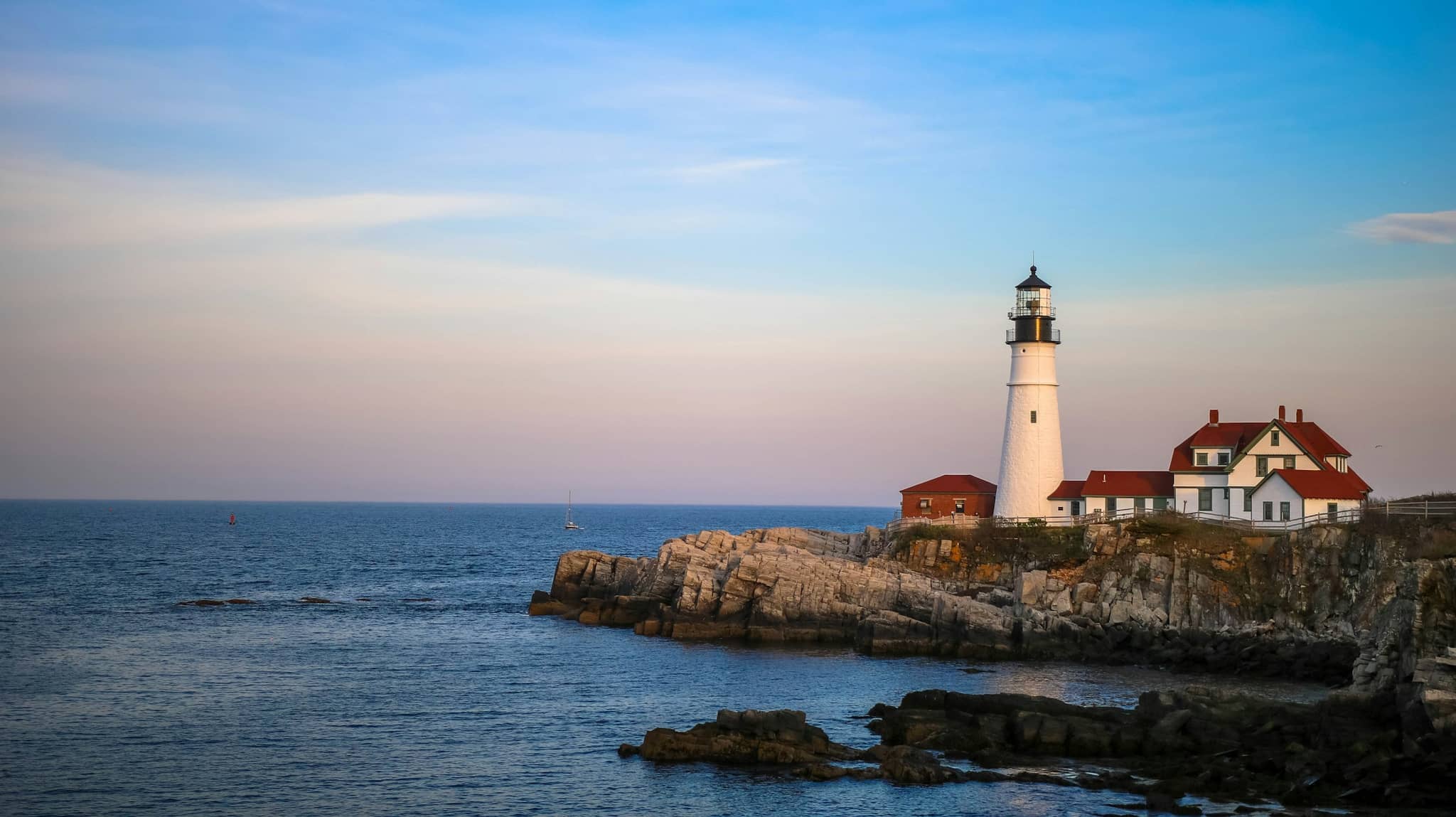
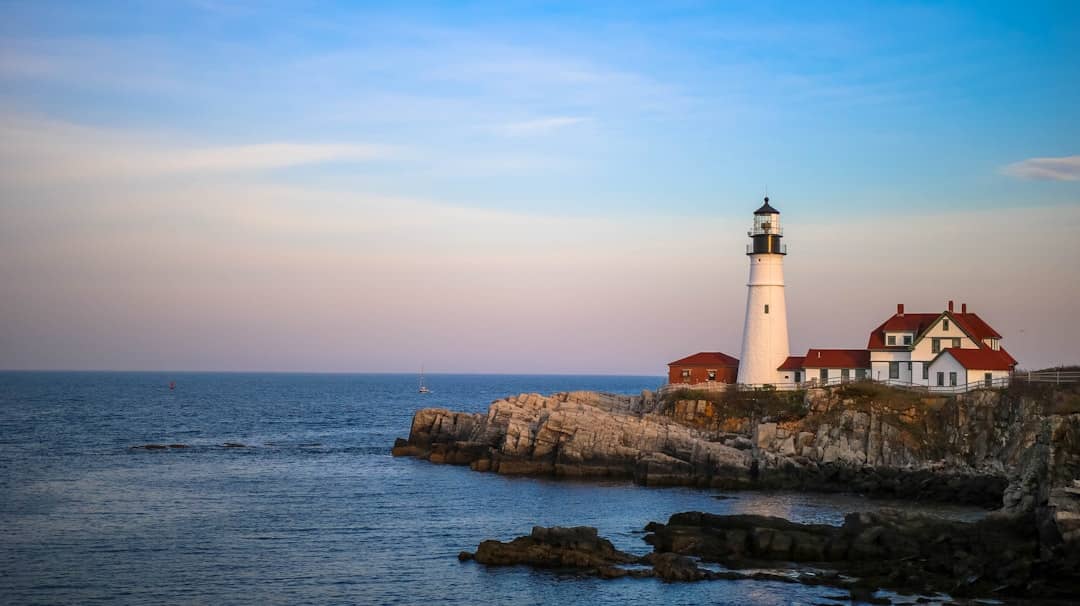
Portland Head Light deserves a warning, because it is what most people mean when they search for a lighthouse tour in Maine. It is superb, 4.8 from 16,744 reviews, the most-reviewed lighthouse in the state by an order of magnitude, on a headland in Fort Williams Park with a ruined stone tower and an old fort battery on the same lawn. The tower itself has never been open to visitors. Go anyway; just do not go expecting stairs.
Marshall Point, at 4.8 from 1,458 reviews, is the one with the low white walkway running out to the tower on skinny wooden legs. The walkway Forrest Gump turns around on. The museum is in the keeper's house and staffed by volunteers. West Quoddy Head in Lubec, 4.9 from 1,488 reviews, is the red-and-white striped tower at the easternmost point of the United States, with a visitor center in the dwelling and a coastal trail running off along cliffs behind it.
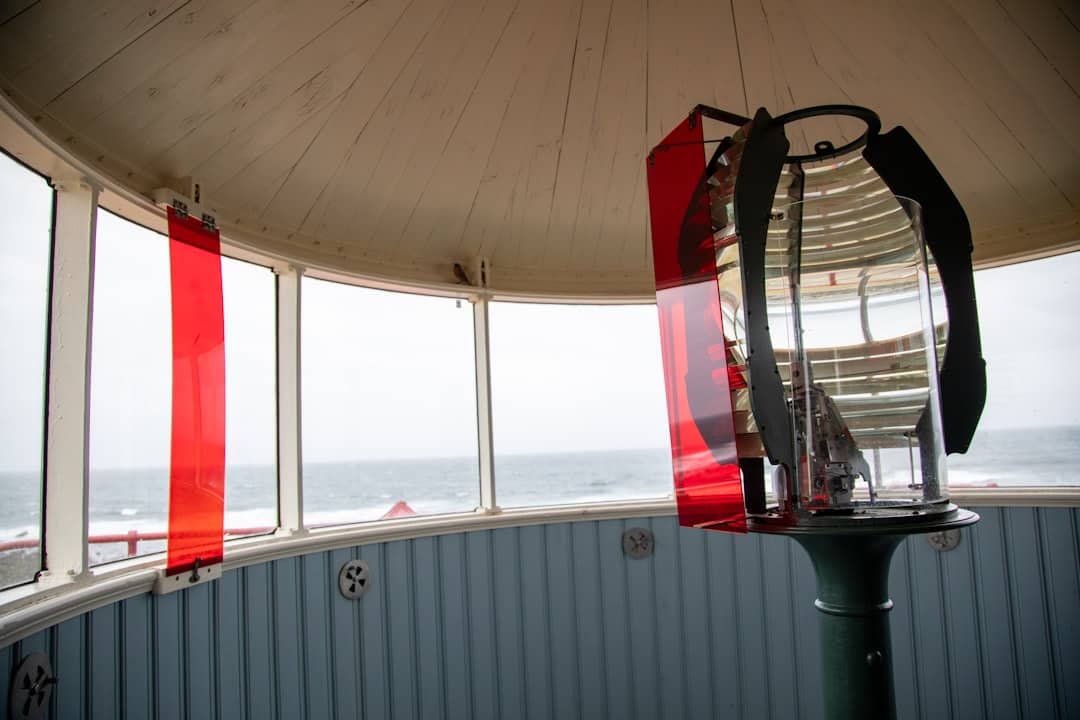
The Maine Lighthouse Museum in Rockland (4.5, 325 reviews) is the best rainy-day answer on this list. It holds the largest collection of Fresnel lenses in the country (the tiered glass beehives that made lighthouses work) plus lifesaving gear, fog signals and Coast Guard material. Standing beside a first-order lens at eye level explains more in five minutes than a dozen exterior photographs.
The island lights, and how you reach them
The most complete lighthouse experiences in Maine are on islands, which is exactly why so few people have them.
- Seguin Island Light Station, off Phippsburg: a first-order Fresnel lens still in its lantern room, the only one of that size left operating in Maine, with volunteer caretakers living on the island through the season. A launch runs from the mouth of the Kennebec; details at seguinisland.org. The walk up from the boathouse is steep.
- Burnt Island Light, off Southport. The Maine Department of Marine Resources runs living-history tours here, with costumed interpreters playing the 1950s keeper's family. Boats leave from Boothbay Harbor. It is the most kid-oriented lighthouse visit in the state.
- Goat Island Lighthouse, off Cape Porpoise: owned by the Kennebunkport Conservation Trust, which runs boat trips out and opens the tower. See the Goat Island guide for the crossing.
- Burnt Coat Harbor Lighthouse, Swans Island (4.8, 84 reviews). Reachable by state ferry from Bass Harbor, restored by the town, tower open in season. A full day out, and a quiet one.
- Little River Lighthouse, Cutler, the American Lighthouse Foundation restored the keeper's house and rents rooms in it overnight, about as close as a civilian gets to keeping a light.
Why so few of them open: a short history
The locked doors are not indifference. They are the residue of two decisions made in Washington.
The first was automation. Through the twentieth century the Coast Guard replaced keepers with timers, photocells and remote monitoring, one station at a time. Goat Island off Cape Porpoise was the last in Maine to lose its resident keeper, automated in 1990. An automated light needs no dwelling, no boathouse, no barn, and buildings nobody lives in rot fast in salt air.
The second decision fixed it. In 1996 Congress authorized the Maine Lights Program, which moved 28 light stations out of federal ownership and into the hands of towns, land trusts, historical societies and nonprofits. The Island Institute in Rockland administered the handover, matching each station to a group willing to take on its roof. The model worked well enough that Congress extended it nationally with the National Historic Lighthouse Preservation Act of 2000, which is how most American lighthouses have changed hands since.
That history is why access is so uneven. There is no central lighthouse authority and no statewide ticket. Each tower belongs to a different owner with a different budget and roster of volunteers, and the opening hours reflect whoever showed up. The Coast Guard, meanwhile, still services the light itself at most active stations, so you can stand in a museum a historical society owns, looking up at an optic the federal government maintains.
The ones you will only ever see from a distance
Say this plainly, because it saves wasted driving. Nubble Light in York sits on its own rock across a channel; you view it from Sohier Park (4.8, 1,321 reviews) and never set foot on the island. Bass Harbor Head Light (4.4, 4,616 reviews) transferred to Acadia National Park in 2020, but tower and dwelling remain closed, the lot is small, and the classic angle means climbing down a rock scramble. See the Bass Harbor guide. Two Lights State Park in Cape Elizabeth is named for two towers that are not in the park; both are private and neither is visible from the picnic ground. Boon Island, the tallest tower in New England at 133 feet, stands six miles off York with no public access at all.
Building an actual itinerary
Do not try to string the coast together. Maine folds into peninsulas, and the drive from the tip of one to the tip of the next can be an hour for four miles of water. Pick a region:
- South Coast day: Nubble from Sohier Park, then Bug Light and Spring Point Ledge in South Portland, then Portland Head Light in Fort Williams. Four lights, short hops, one of them with stairs.
- Midcoast day: Rockland Breakwater in the morning, Maine Lighthouse Museum when your legs give out, Owls Head after lunch, Marshall Point down the St. George peninsula if you have the appetite for the detour.
- Boothbay day: Burnt Island tour by boat in the morning, Pemaquid Point in the afternoon. A genuine climb and a genuine tour in one day, which is rare.
For the full inventory, see our complete Maine lighthouses guide.
FAQ
Can you go inside Portland Head Light?
No. The tower has never been open to the public. The museum in the adjoining keeper's quarters is open on a seasonal schedule, and the grounds of Fort Williams Park are open year-round and free to walk. If climbing a tower is the goal, Pemaquid Point is a 90-minute drive up the coast and delivers it.
How many Maine lighthouses can you actually climb?
Fewer than a dozen in a normal week, most of those seasonally. Pemaquid Point, Owls Head, Rockland Breakwater and Spring Point Ledge are the drive-up options; Seguin, Burnt Island, Goat Island and Burnt Coat Harbor require a boat. On Maine Open Lighthouse Day in September the number roughly doubles for one day, which is why the popular towers develop lines that morning.
What is the best lighthouse tour in Maine for a first visit?
Pemaquid Point, on the merits. You climb the tower, the museum is next door, and the rock formations below it are the best of any mainland station. If you are based near Portland and cannot spare the drive, pair Spring Point Ledge with Portland Head Light for a climb and a museum in one afternoon.
Do you need a boat to see Maine's best lighthouses?
Not for the famous ones. Portland Head, Pemaquid Point, West Quoddy Head, Marshall Point, Owls Head and Nubble are all reachable by car and cover most of what people picture. A boat buys you the island stations (Seguin's first-order lens, Burnt Island's living-history tour) plus offshore lights like Egg Rock and Ram Island Ledge that cannot be seen properly any other way.