1
Damariscotta
See main listingOyster country of the Pemaquid peninsula - Edgecomb Potters, Main Street mica, and some of the best raw bars in the state.
Details

Guide
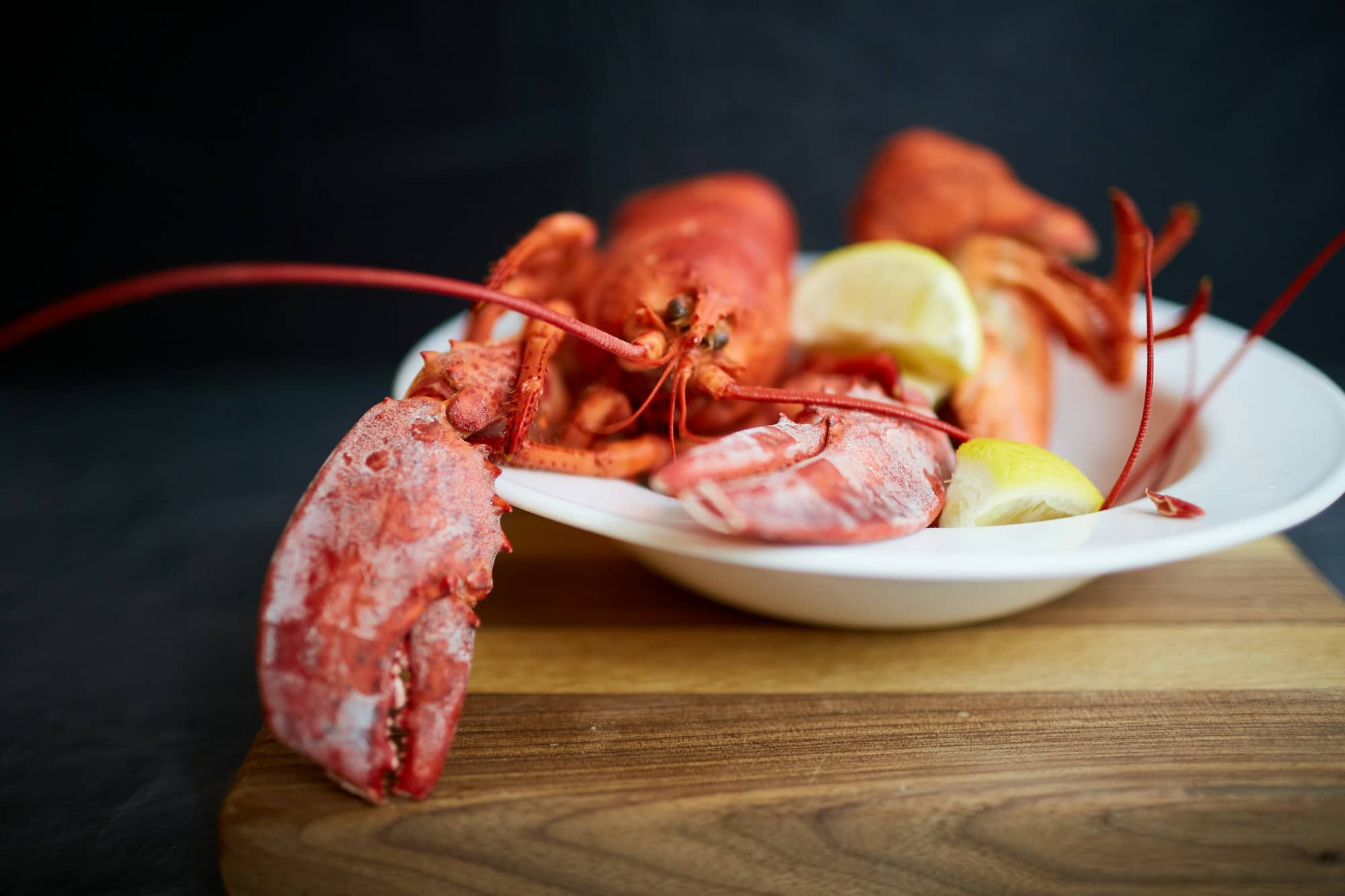
Maine oysters went from a local curiosity to a national product in about fifteen years, and the center of that is a short, salty tidal river between Damariscotta and Newcastle. Cold water grows them slowly, which makes them firm and clean-tasting, and slow growth is the whole argument. Here is where they come from, where to eat them, and why the shell heap on the riverbank matters.
Compiled from published reviews, official sites and our own research; assessed remotely without firsthand experience.
Every oyster grown in Maine is the eastern oyster, Crassostrea virginica: the same species farmed from the Gulf of Mexico to the Canadian Maritimes. What differs is the water, and in Maine the water does two things.
First, it is cold, so the animals grow slowly. An oyster that takes a year or so to reach market size in warmer water takes two to three years here. That extra time builds denser, firmer meat with a deeper cup, which is why a Maine oyster holds together on the shell instead of sliding off it.
Second, salinity and food supply vary sharply between rivers, and even along a single one. Oysters filter their environment continuously, so where a farm sits determines how salty, how sweet and how mineral the finished oyster tastes. Growers call this merroir, borrowing from wine, and while the term gets overused the underlying effect is real: two oysters from bays twenty miles apart taste measurably different side by side.
The Damariscotta is the most productive oyster water in the state, and it is not an accident. It is a shallow, narrow tidal river with strong flushing, high salinity well upstream, and enough phytoplankton to feed a lot of animals. Farms line both banks between the twin villages of Damariscotta and Newcastle and run several miles down toward the sea.
People have known this for a very long time. On the eastern bank sits the Whaleback Shell Midden, a mound of discarded oyster shells built up over thousands of years by the region's Indigenous people, in places many feet deep, and made of shells noticeably larger than anything harvested today. It is a state historic site with a short trail, and it reframes the whole modern industry: the farms on this river are the latest chapter of an oyster fishery that is millennia old, not a new invention.
The practical consequence for a visitor is that Damariscotta is a very small town with a very large reputation. Parking on Main Street is tight in summer, the restaurants are few and fill early, and most of the farms are working operations reached by boat rather than roadside stands. Plan the visit; do not drift into it.
Ranked from our dataset by rating against review volume, these are the places that put Maine oysters in front of you:
| Place | Town | Rating | Reviews | What it is |
|---|---|---|---|---|
| Glidden Point Oyster Farms | Edgecomb | 4.9 | 310 | A working farm on the Damariscotta with a shop and tastings, the closest thing to eating at the source |
| Eventide Oyster Co. | Portland | 4.5 | 5,227 | The restaurant that made Maine oysters a national story; also the brown-butter lobster roll |
| 18 Central Oyster Bar & Grill | Rockport | 4.6 | 289 | Small midcoast room, strong raw bar, less pressure than Portland |
| North Beacon Oyster | Rockland | 4.6 | 264 | Main Street oyster bar in a town that has quietly become a food destination |
| J's Oyster | Portland | 4.4 | 3,126 | An unreconstructed pier bar that was shucking long before it was fashionable |
| Freeport Oyster Bar | Freeport | 4.4 | 191 | The one good reason to eat in Freeport rather than shop in it |
| Boone's Fish House & Oyster Room | Portland | 4.3 | 2,061 | Wharf-side, larger, easier to get into on a weekend |
| Mine Oyster | Boothbay Harbor | 4.2 | 668 | Harbor-front deck; convenient if you are already on the peninsula |
The most useful thing in that table is that the highest-rated entry is a farm, not a restaurant. Glidden Point at 4.9 from 310 reviews out-rates every oyster bar in the state, and the reason is obvious once you have done it: oysters eaten within sight of the water they came out of that morning are a different product from oysters that have spent two days in transit. If you are near Boothbay or Wiscasset, the detour is short. Our Wiscasset guide covers the rest of that stretch.
Oysters travel well if kept cold and cup-down, which makes a fish market a better move than a restaurant if you have a cooler and a shucking knife. Strong options in our data:
Ask when they came in. A market that cannot tell you the harvest date is not the market you want.
The state's aquaculture association runs the Maine Oyster Trail, a passport-style program that maps farms, farm tours, oyster bars and markets across the coast and gives you something to collect as you go. It is the simplest way to turn scattered curiosity into an actual route, and it covers growing areas well beyond the Damariscotta. Casco Bay, the New Meadows, the Bagaduce, the Sheepscot. Farm tours are seasonal and weather-dependent, and the small operations book out; reserve rather than turning up.
The old rule about only eating oysters in months containing an R is a genuine piece of history that no longer applies. It had two origins: no refrigeration in summer, and wild oysters spawning in warm water, which leaves them soft, thin and milky. Modern farmed oysters are refrigerated from the moment they leave the water, and many Maine growers raise triploid stock that does not put its energy into spawning, so it stays firm through August.
That said, the rule points at something true. Oysters really are at their best in cold water. From late September through the winter, Maine oysters are firmer, saltier and cleaner-tasting than the same oysters in July, and prices are gentler because demand has dropped off with the tourists. October is the sweet spot. See our October guide for what else is good then.
Order them by name rather than by the dozen, and if the menu lists four farms, get one of each and compare. Skip the cocktail sauce; a squeeze of lemon or a spoonful of mignonette is plenty, and plenty of people take them naked. Drink the liquor in the shell, that is the water the animal lived in and half the flavor. And chew. Swallowing an oyster whole is a way of not tasting it.
Shucking at home is a skill you get in about a dozen attempts. Use a proper oyster knife, never a kitchen knife; hold the shell in a folded towel; work the tip into the hinge at the narrow end and twist rather than lever; run the blade along the top shell to cut the adductor muscle, then under the meat to free it. Keep the cup level so you do not lose the liquor.
They are not cheap. A dozen at a Portland oyster bar in season costs what a full meal costs in most of the state. Buying at a market or a farm shop typically cuts the per-oyster cost by more than half, and shucking your own is the difference between a treat and a habit.
The farms are not visitor attractions. Most are working leases reached by boat, with no public access. The handful that run shops and tours are the exception, and they are seasonal. Do not drive to Damariscotta expecting a row of oyster stands on the waterfront.
Summer is the worst time to try them. The oysters are at their softest, the raw bars are at their busiest, and prices are at their highest. If oysters are the reason for the trip, come in the fall.
For the wider seafood picture (lobster pounds, fried clams and the fish markets worth a detour) see our seafood restaurant guide, and Portland for the city that most of the raw bars are in.
Cold, slow growth. Maine's water is cold enough that an oyster takes two to three years to reach market size, which produces firmer meat, a deeper cup and a cleaner, brinier finish than faster-grown oysters from warmer waters. The Damariscotta River is the best-known growing area, though Casco Bay, the Sheepscot and the Bagaduce all produce distinctive oysters.
The nearest thing to eating at the source is Glidden Point Oyster Farms in Edgecomb, a working farm with a shop and tastings that rates 4.9 from 310 reviews: the highest-rated oyster business in our Maine dataset. In Damariscotta village itself, Simmons Seafood Market (4.8 from 41) sells them by the bag, and the town's restaurants carry local oysters through the season.
Farmed Maine oysters are available all year. Quality peaks in cold water, so roughly late September through spring is when they are firmest and most flavorful, and prices are lower outside the summer rush. The old rule about avoiding months without an R came from a time before refrigeration and applies mainly to wild, spawning oysters rather than farmed stock.
A passport-style program run by the state's aquaculture association that maps oyster farms, farm tours, raw bars and markets along the coast, so you can build a route rather than guessing. Farm tours are seasonal, weather-dependent and often small, so book ahead rather than arriving unannounced.
Oyster country of the Pemaquid peninsula - Edgecomb Potters, Main Street mica, and some of the best raw bars in the state.
Guides
Destinations
Downeast & Acadia
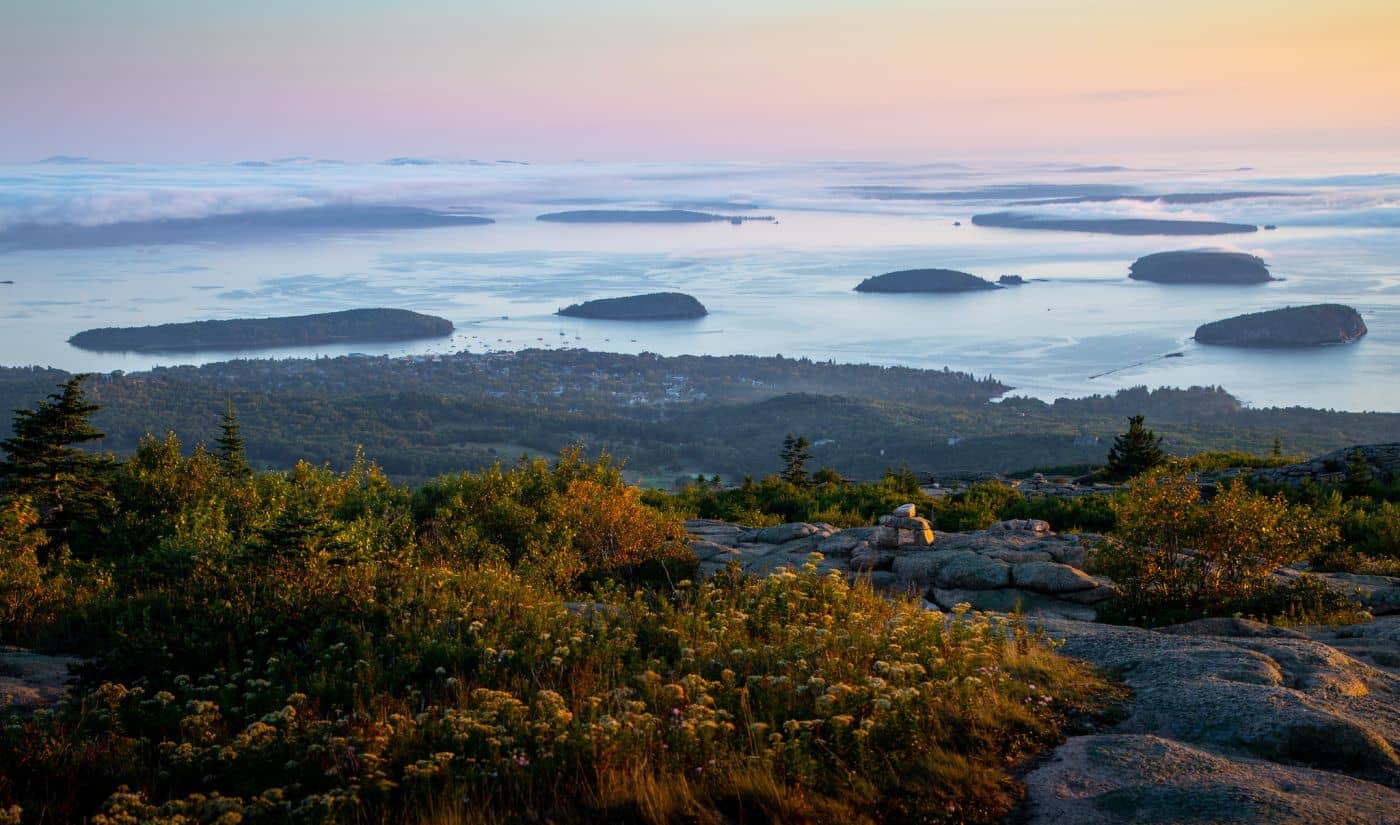
Gateway to Acadia National Park - Cadillac Mountain, puffin cruises, and a harbor town that fills with cruise ships from May to October.
Southern Maine Coast
Dock Square boutiques, Goose Rocks Beach, and the Bush family's Walker's Point - the quintessential coastal Maine summer town.
Greater Portland
Maine's largest city - a working waterfront, Old Port cobblestones, and a food scene that punches well above its weight.
Midcoast Islands
Shipbuilding heart of Maine since 1743 - Bath Iron Works still launches destroyers past the Maine Maritime Museum on the Kennebec.
Midcoast Islands
A Midcoast harbor town built around boat trips, with the Coastal Maine Botanical Gardens just up the road.
Midcoast Islands
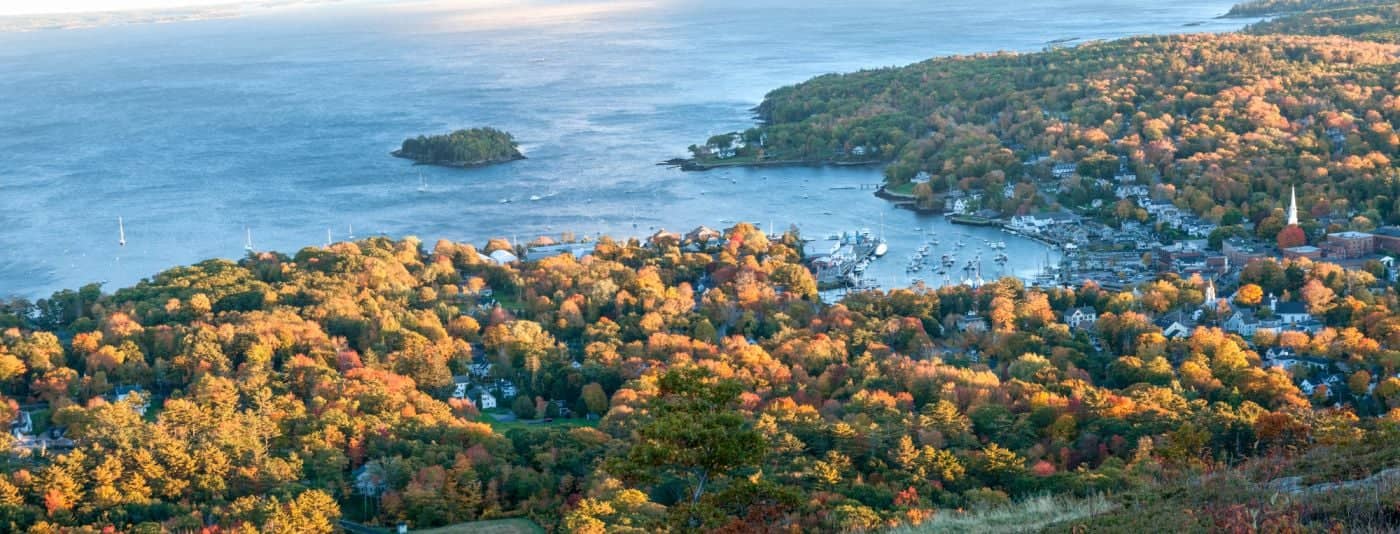
Where the mountains meet the sea - windjammer harbor, Mount Battie summit views, and an independent village with real soul.
Greater Portland
Flagship home of L.L. Bean, open 24/7 - outlets, a tidal river, and surprisingly good eating between the shopping.
Southern Maine Coast
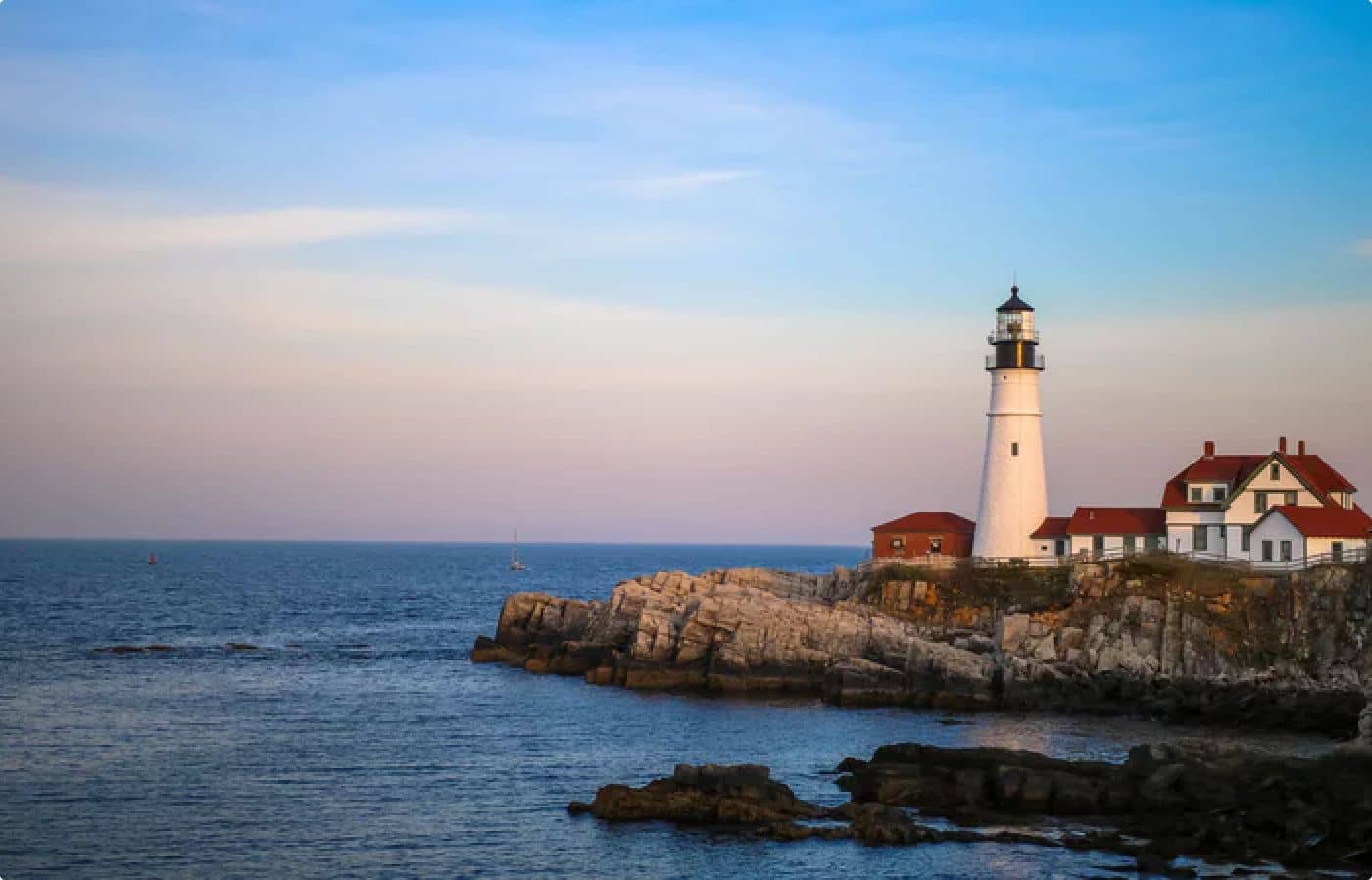
Postcard-perfect village of sea captains' mansions, Lower Village shops, and easy walks to Mother's Beach and Gooch's Beach.