1
Rockland
See main listingWyeth country - the Farnsworth Art Museum, a working lobster fleet, and August's legendary Maine Lobster Festival on the harbor.
Details

Guide
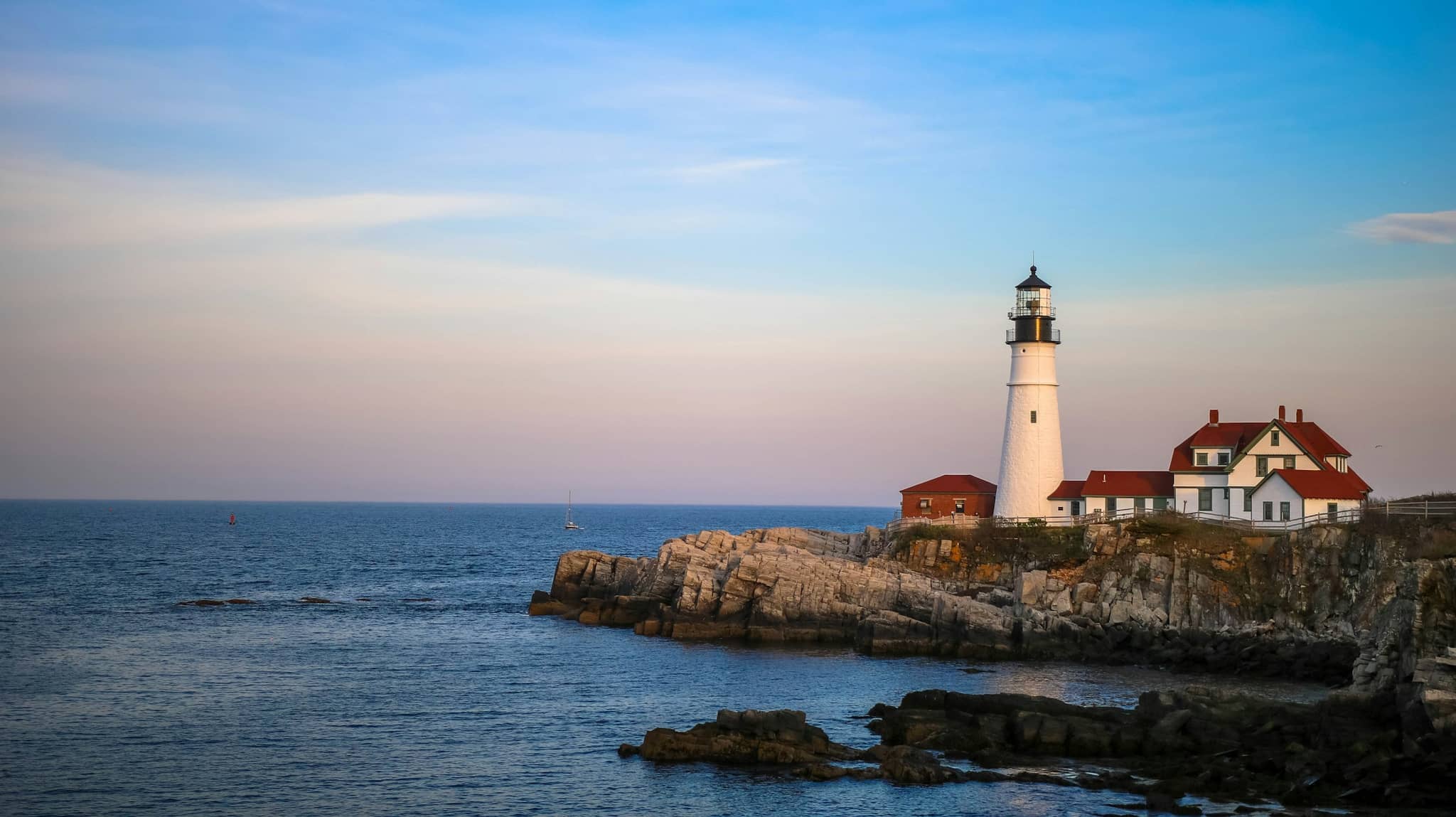
Owls Head State Park is thirteen acres of headland at the mouth of Rockland Harbor, wrapped around one of the most photographed lighthouses in Maine. It is free, it is open all year, and the walk from the parking lot to the light takes about five minutes. It holds a 4.8 rating from 1,516 Google reviews, and the lighthouse itself carries 4.8 from 1,726: numbers that survive very heavy traffic, which is the interesting part.
The park sits at 186 Lighthouse Road in Owls Head, roughly four miles off Route 73 and about four miles south of downtown Rockland. From the lot, one gravel path climbs to the lighthouse and a second drops to a small rocky beach. Both are about a fifth of a mile. Neither is hard.
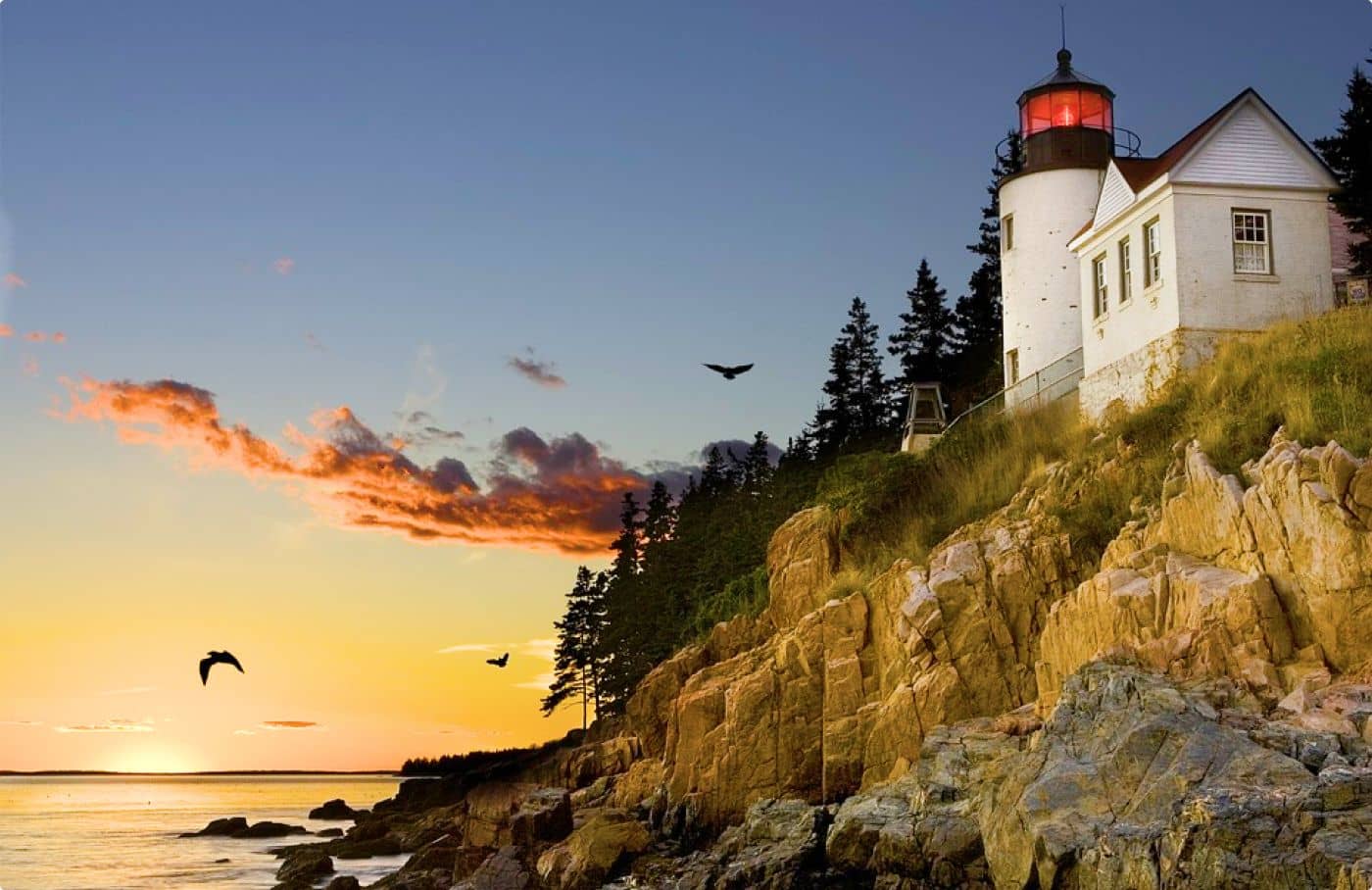
What makes the site is the geometry. The tower is only about 30 feet tall, but it stands on a granite promontory 100 feet above Penobscot Bay, so the light throws from a height most Maine lighthouses need a much bigger tower to reach. You are looking across the western entrance to the bay, with Rockland's harbor and its breakwater to the north and the open bay east.
The Bureau of Parks and Lands, the division of Maine's Department of Agriculture, Conservation and Forestry that runs the state parks, manages this one jointly with the U.S. Coast Guard, and it is administered out of Camden Hills State Park up the road. That arrangement produces two facts worth knowing before you drive out.
First: there is no day-use fee here. Most Maine state parks collect one at a gate, with a lower rate for residents. Owls Head does not. The park is open year-round, daylight hours, and there is no booth and no season to work around. It is one of the few places in the system where you can simply show up in February.
Second: the tower, the keeper's house and the ground immediately around them are Coast Guard property, not park. The keeper's house serves as the headquarters of the American Lighthouse Foundation. It is an office, not a museum. Tower climbs happen occasionally under ALF, on limited dates, and they are the exception rather than the rule. Plan on viewing from outside and you will not be disappointed.
Facilities are minimal: a parking area, picnic tables in a grove, toilets in season, and shore access. No store, no visitor center, no food.
The honest drawbacks. The lot is small (genuinely small) and Owls Head is on every midcoast itinerary and every cruise-ship excursion out of Rockland. From late morning to late afternoon in July and August, expect to circle, wait, or park along a narrow road and walk. Go at opening or go in the last hour of light. Second, the beach is cobble and rockweed, not sand; it is a place to sit and watch lobster boats, not swim. If you want sand, Birch Point is fifteen minutes south.
The compensation for the crowds is real: this is one of the best fog-and-storm-watching spots on the midcoast, and it is at its best in weather that keeps other people in the car.
Owls Head guards the western entrance to Penobscot Bay and the approach to Rockland Harbor, and the reason that mattered so much is a business almost nobody remembers: lime.
Rockland sat on limestone. Through the 19th century the town quarried it, burned it in kilns along the waterfront, and shipped the result out as quicklime, the essential ingredient of the plaster and mortar that built American cities. Rockland was known as the Lime City, and the trade produced its own fleet of small wooden schooners, the lime coasters, running south to Boston and New York in numbers that are hard to picture now.
Quicklime is a dangerous cargo. Get seawater into a hold full of it and the lime slakes, generating enough heat to set the ship on fire from the inside. A fire you cannot fight with water, because water is what caused it. The standard response was to seal the hatches and smother it, and vessels sometimes burned for days. That is the traffic Owls Head was lit for: heavily loaded, thin-margined, flammable schooners threading a rock-lined entrance in fog.
A light went up on the headland in 1825, a rubblestone tower. The structure standing today dates from an 1852 rebuild. A squat cylindrical brick tower on granite, short because the hill does the work. A fourth-order Fresnel lens was installed in 1856 and is still in the tower: one of only about six Fresnel lenses left in service anywhere in Maine, and the reason lighthouse people treat this station as more than a photograph. The light was automated in 1989, and the station went on the National Register of Historic Places in 1978.
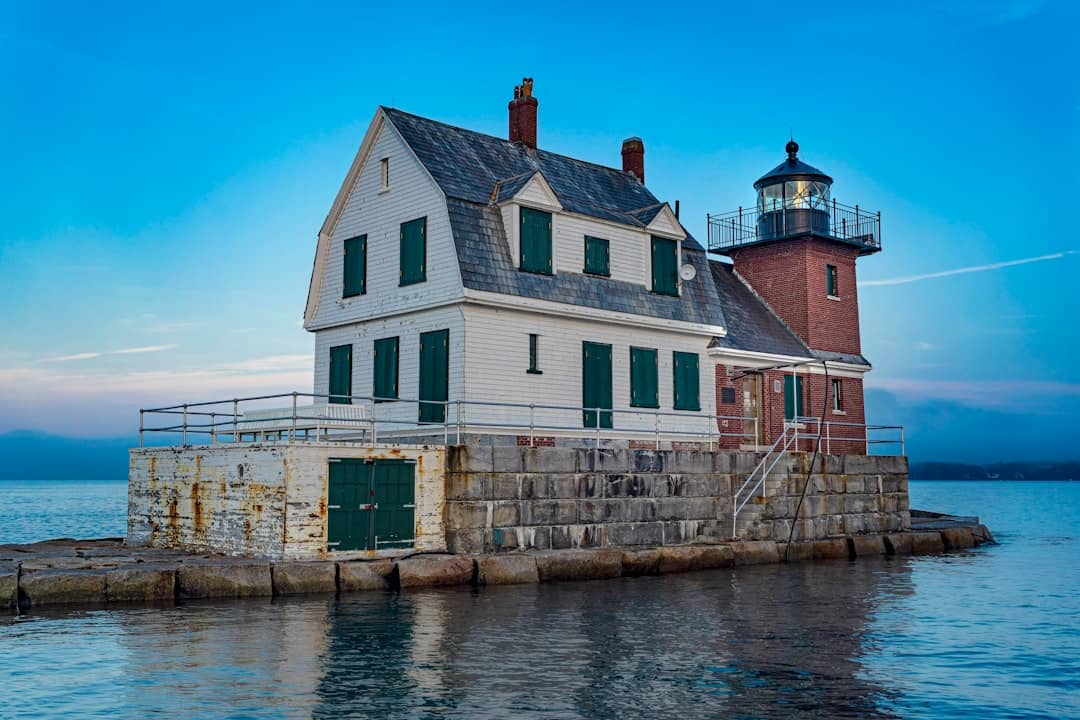
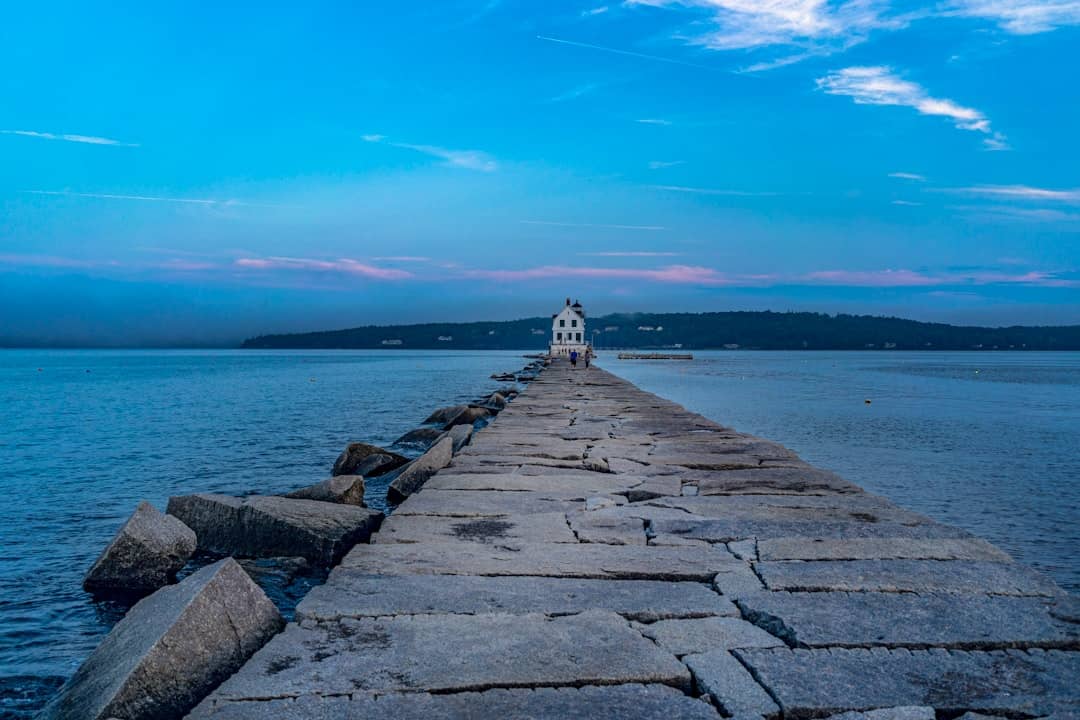
The harbor got a second layer of protection late in the century. Rockland's granite breakwater, nearly a mile of stacked block reaching out from Jameson Point, was built between the 1880s and the turn of the century to shelter the anchorage, with its own lighthouse added at the seaward end in 1902. Stand at Owls Head and you can see the whole system at once. Outer light, breakwater, inner harbor. It was designed as one thing.
For more on the cluster, see our guide to lighthouses around Rockland and the statewide Maine lighthouses roundup.
No. Unlike most parks in the Maine system, Owls Head charges no day-use fee and has no gate, which is a consequence of its joint management with the Coast Guard. Fee schedules for the parks that do charge are published on maine.gov and are worth checking there rather than trusting a number printed elsewhere.
Usually not. The tower and keeper's house are Coast Guard property, and the house is the working headquarters of the American Lighthouse Foundation rather than a museum. ALF opens the tower for climbs on a limited basis. Assume you are viewing from the outside and treat any opportunity to go up as a bonus.
About a fifth of a mile from the parking lot, five minutes on a gravel road, ending at a stairway up to the tower platform. A second path of similar length drops to a rocky beach below the headland. Neither route is difficult, though the stairs are steep enough to matter for some visitors.
Yes. The park is open all year, daylight hours, with no seasonal closure. One of the few Maine state parks you can visit in January without walking in from a locked gate. Facilities are limited off season and the road and lot may not be cleared immediately after a storm, but the light and the headland are there.
Wyeth country - the Farnsworth Art Museum, a working lobster fleet, and August's legendary Maine Lobster Festival on the harbor.
Tools
Guides

Destinations
Downeast & Acadia
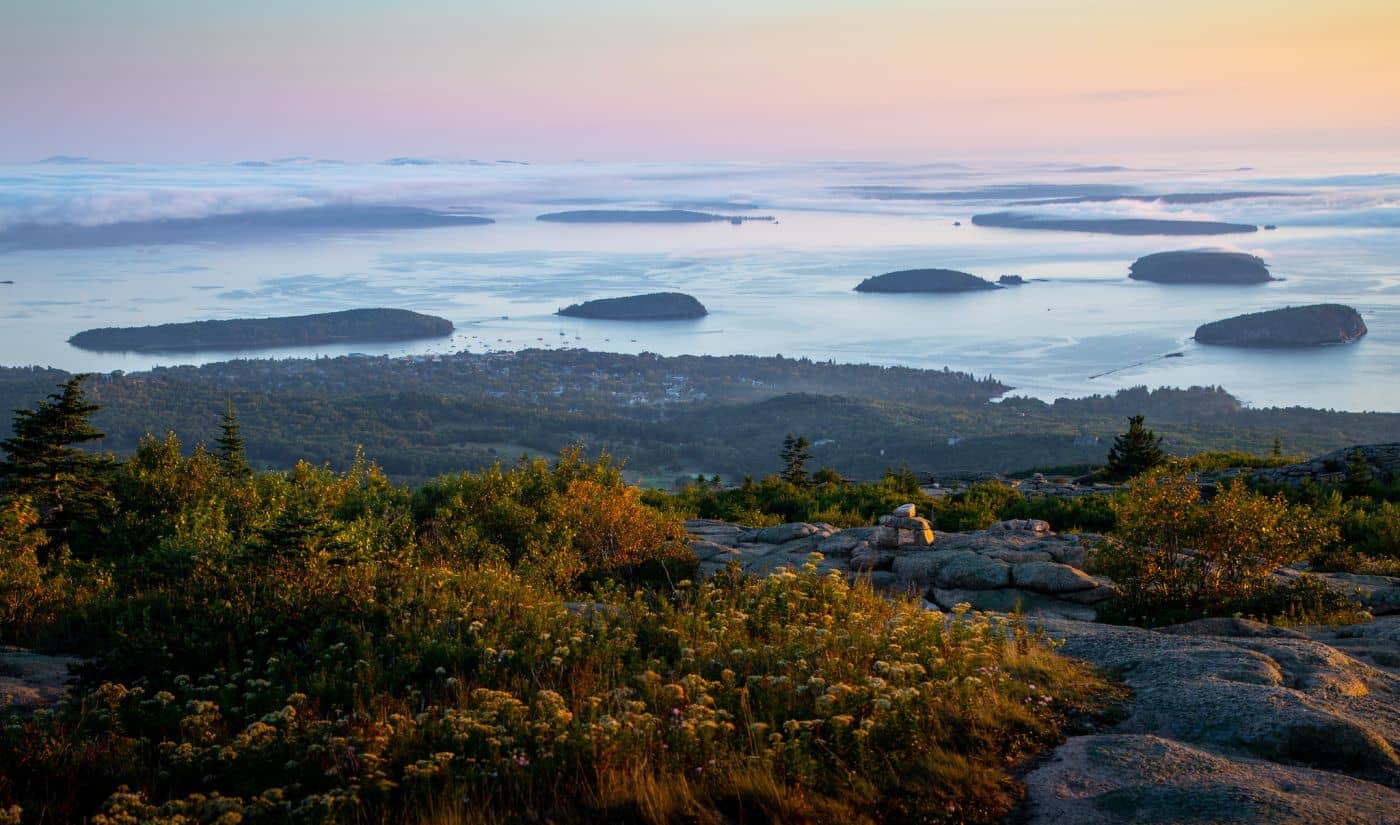
Gateway to Acadia National Park - Cadillac Mountain, puffin cruises, and a harbor town that fills with cruise ships from May to October.
Southern Maine Coast
Dock Square boutiques, Goose Rocks Beach, and the Bush family's Walker's Point - the quintessential coastal Maine summer town.
Greater Portland
Maine's largest city - a working waterfront, Old Port cobblestones, and a food scene that punches well above its weight.
Midcoast Islands
Shipbuilding heart of Maine since 1743 - Bath Iron Works still launches destroyers past the Maine Maritime Museum on the Kennebec.
Midcoast Islands
A Midcoast harbor town built around boat trips, with the Coastal Maine Botanical Gardens just up the road.
Midcoast Islands
Where the mountains meet the sea - windjammer harbor, Mount Battie summit views, and an independent village with real soul.
Greater Portland
Flagship home of L.L. Bean, open 24/7 - outlets, a tidal river, and surprisingly good eating between the shopping.
Southern Maine Coast
Postcard-perfect village of sea captains' mansions, Lower Village shops, and easy walks to Mother's Beach and Gooch's Beach.