Guide
Maine Stargazing: Choose a Dark-Sky Base

Choose Acadia for a stargazing evening within a coastal trip, Katahdin Woods and Waters for a visit centered on a protected dark sky, or an AMC lodge for an overnight woods experience. Choose a viewpoint with permitted nighttime access, a clear return route and a forecast suited to the sky you want to see.
Where should you base a Maine stargazing trip?
The best base is the one that lets you spend time looking up without making the journey home the hardest part of the evening. Maine offers different versions of that night: ocean beside you in Acadia, a remote monument in the Katahdin region, or a lodge where the bed is part of the same outing. Choose between those trips before buying equipment or planning a long drive around a photograph.
Our Maine national-parks guide helps distinguish Acadia from Katahdin Woods and Waters and from Baxter State Park. They have different purposes and access arrangements. Choose a viewing area with permitted nighttime access.
| Base | Reason to choose it | Main planning question |
|---|---|---|
| Acadia and Mount Desert Island | A coastal night within an existing island stay | Which viewing location and return route are accessible? |
| Katahdin Woods and Waters | An International Dark Sky Sanctuary | How will you reach and leave your chosen location after dark? |
| AMC Gorman Chairback | A lodge stay with the night sky as part of the evening | Can your group manage the season's lodge access? |
What makes Katahdin Woods and Waters different?
Katahdin Woods and Waters became an International Dark Sky Sanctuary in 2020. The National Park Service describes measured darkness as a defining resource of the monument, alongside its efforts to protect that night environment. Make the sky the purpose of this visit: choose the viewing location, overnight base and access together, with the rest of the day built around them.
NPS recommends checking clouds, moonrise and moonset, and using a new-moon period for darker skies. It also notes that the Milky Way is especially suited to summer viewing, while stargazing itself is possible throughout the year. Match the object you want to see to the conditions in the night's forecast.
Make the road and overnight plan in daylight. A remote monument calls for a deliberate route, a known place to stop and a return you have already considered. The Millinocket town guide provides context for a Katahdin-region base. Our Baxter guide covers the separate park and its own access arrangements.
Where can you watch the stars in Acadia?
Seawall is the west-side choice: NPS describes open views over the Atlantic and toward Somes Sound, convenient to a Southwest Harbor or Bass Harbor stay. Its paved areas and rocky shore have different accessibility. There is no after-dark public transportation to the site, so decide how the group will return before choosing it.
At Jordan Pond, NPS directs visitors from the North Lot toward the boat launch. It distinguishes the accessible launch and Jordan Pond House area from the uneven pond path. Choose a viewing position that suits the group rather than turning a short evening outside into a full circuit of the pond.
Ocean Path offers eastward views along the shore. NPS describes a mostly accessible stretch from the upper Sand Beach lot to Thunder Hole, followed by rougher ground and stairs toward Otter Point. Sand Beach itself has a large staircase; its nighttime visiting permission does not include camping or overnight parking. Pick the shore experience and access your group actually wants.
At the shore, choose where you will sit while there is enough light to see the surface and the route back. NPS cautions against entering the water at night and notes that rocky terrain becomes more difficult after dark. The attraction is the sky above the coast; getting closer to the water is not necessary to enjoy it.
The family Acadia guide is useful for shaping the daytime portion of a visit before a shorter evening outside. For an overnight under canvas, consult Acadia camping separately. A campground booking, a legal place to park and a good viewing position are three distinct pieces of the plan.
Should you drive up Cadillac Mountain at night?
Plan a shore-level viewing alternative to Cadillac. In guidance captured October 10, 2026, NPS lists a 9 p.m. nightly closure for Cadillac Summit Road, vehicle reservations from May to October and no overnight parking. The dedicated Cadillac page also directs visitors to current conditions because nighttime vehicle access is restricted.
Hiking and cycling have separate access arrangements from driving. Its guidance calls for lights and substantial preparation for mountain weather. If your group came for an easy look at the stars, choose a suitable shore-level option instead of turning a missed vehicle window into an unplanned summit hike.
Winter further changes the island road network. NPS guidance captured October 10, 2026 lists December 1 through April 14 as the winter vehicle-closure window for most of Park Loop Road. Use our Maine winter guide to build a winter trip around its actual character, rather than copying a summer driving loop and shifting the sunset time.
What does a lodge-based night offer?
Gorman Chairback, AMC's lodge beside Long Pond in the 100-Mile Wilderness, gives stargazing a different place in the trip: it becomes something to do around an overnight stay. AMC's lodge-to-lodge materials describe its conservation lands as an International Dark Sky Park. This is a separate designation and location from the Katahdin Woods and Waters sanctuary.
The lodge itself supplies the practical context. Meals are included in its nightly rate, cabins differ in bathroom arrangements and winter arrival is by ski, snowshoe or dogsled. A winter evening there is part of a backcountry lodge journey, not an impromptu stop after dinner in town. Choose the lodge for an overnight backcountry trip that includes its seasonal approach.
Use Greenville and the Moosehead Lake guide to understand the broader region. For the daytime outdoor portion, compare the Maine hiking options.
When are the conditions worth an evening outside?
Start with cloud cover, then moonlight, then the time darkness arrives. Acadia's guidance recommends waiting an hour or two after sunset for residual light to fade. A bright moon is worth watching in its own right, but it changes a night intended for faint stars. Plan the viewing window around moonrise and moonset as well as phase.
Give your eyes time. NPS says adjustment to darkness takes about 20–30 minutes and recommends a light with a red setting. That changes how you plan a short stop: arriving, looking briefly and immediately driving away does not give the evening much chance. Put away the bright screen once you have used the map, and keep any necessary light directed toward your own task.
Clouds can make the right location the wrong choice that night. Choose a base you also want in daylight, so the trip still has a purpose if the sky closes in. Our season-by-season planning guide helps with that wider decision. It is more useful to have a good coastal or woods holiday with a possible clear evening than a rigid itinerary dependent on one photograph.
How is stargazing different from watching the northern lights?
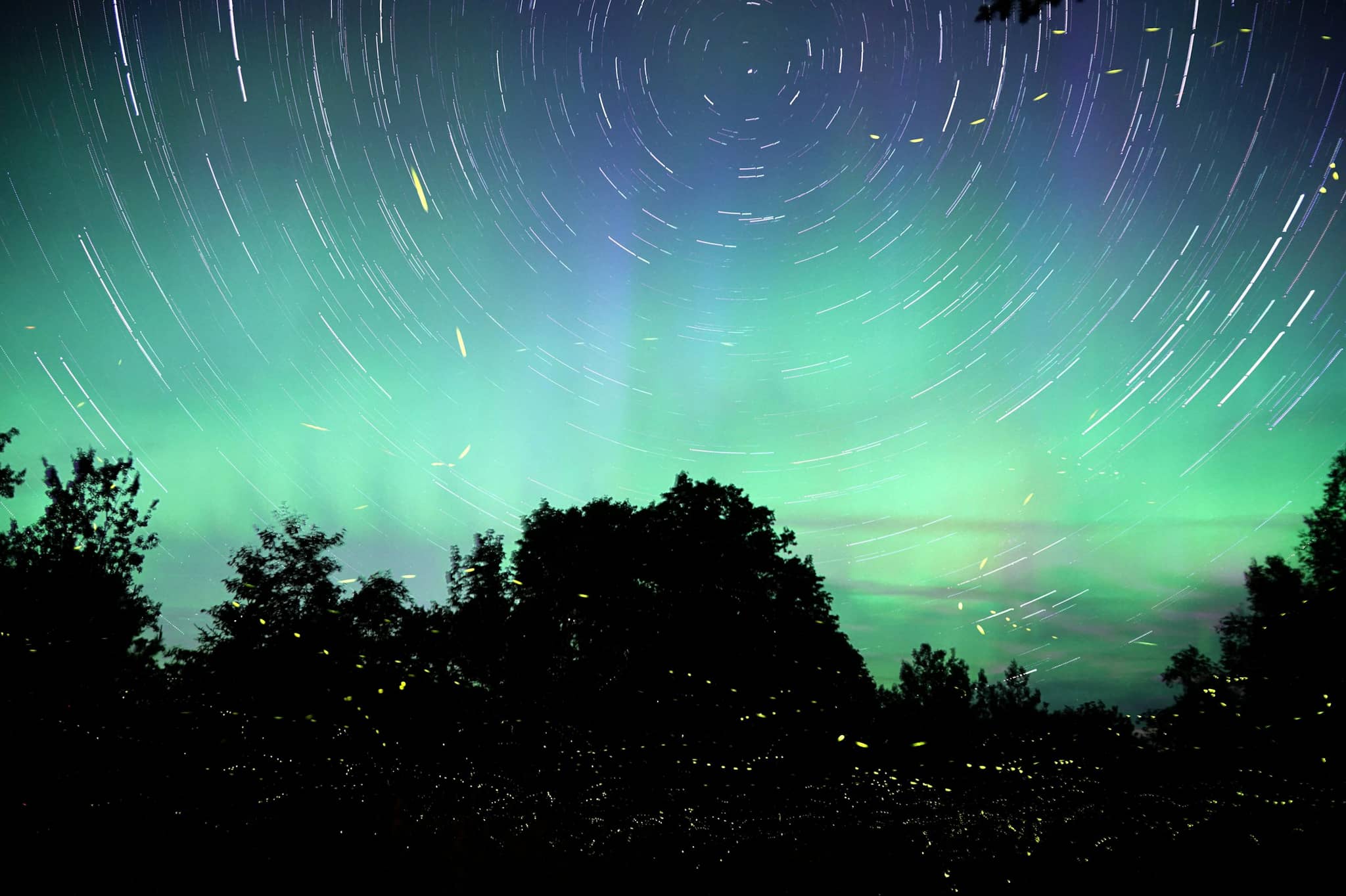
A dark, clear location supports ordinary stargazing without an aurora forecast. Northern lights require a different set of conditions, and Maine.com's northern-lights tool addresses that separate question. Use it to plan around aurora activity when northern lights are the goal.
The same distinction applies to photography. NPS explains that long exposures record a night sky differently from human vision. Enjoy the view you actually have rather than measuring it against a processed image. On a first outing, a warm seat, useful light and a familiar return are more valuable than a complicated camera setup you are learning in darkness.
What should you bring, and what should you skip?
NPS recommends layers, a comfortable place to sit, a red-capable light and a star map or identification app. In Acadia's warmer months, it also flags mosquitoes near water. Bring what makes it possible to remain still and comfortable, along with what you need to navigate the route back. Decide who has the map before leaving the car.
Skip an ambitious tour of several dark-sky locations in one night. Every move restarts the logistics and interrupts the quiet that made the outing appealing. Choose one legal, suitable location, allow time and leave it as you found it. Choose a familiar, accessible viewing area for the group’s first night out.
Frequently asked questions
Where is Maine's Dark Sky Sanctuary?
Katahdin Woods and Waters National Monument holds that designation, awarded in 2020. AMC's Maine Woods uses a different designation, International Dark Sky Park.
Is a new moon necessary?
No, but NPS recommends darker moon conditions for seeing more stars. A bright-moon visit offers a different kind of sky.
Can I park overnight on Cadillac?
No. NPS prohibits overnight parking there and restricts nighttime road access.
Do I need a telescope?
You can begin with your eyes and a star map. The planning priorities are clear skies, darkness, appropriate access and time for your eyes to adjust.
Will a dark-sky designation guarantee northern lights?
No. Darkness and aurora activity are separate conditions. Use the northern-lights forecast for the latter question.
Can I use a daytime hiking plan after dark?
Reassess it. NPS warns that uneven ground is harder to navigate at night, and vehicle access can change after daytime visiting hours.