Guide
National Parks in Maine: Acadia and Other NPS Places

There is exactly one national park in Maine, Acadia, and that single sentence answers most of what people are looking for. But the National Park Service runs five separate units in the state, only one of which carries the "National Park" title, and the mountain most people picture when they think of wild Maine is not in any of them. Here is what is federal, what is state, and which is actually worth your driving time.
The short answer
Maine has one national park and four other National Park Service units:
- Acadia National Park: the only unit with National Park status
- Katahdin Woods and Waters National Monument: designated far more recently, and almost empty by comparison
- Saint Croix Island International Historic Site: a small commemorative site on the Canadian border
- Appalachian National Scenic Trail: roughly 280 miles of it cross Maine and it ends here
- Maine Acadian Culture: an affiliated area in the St. John Valley, which is a designation rather than a place with a gate
The big one you might expect and will not find on that list is Baxter State Park, which holds Katahdin, Maine's highest mountain. It is a state park, not a national one, and it is run on very different terms. More on that below, because it trips up a lot of trip planning.
Acadia National Park
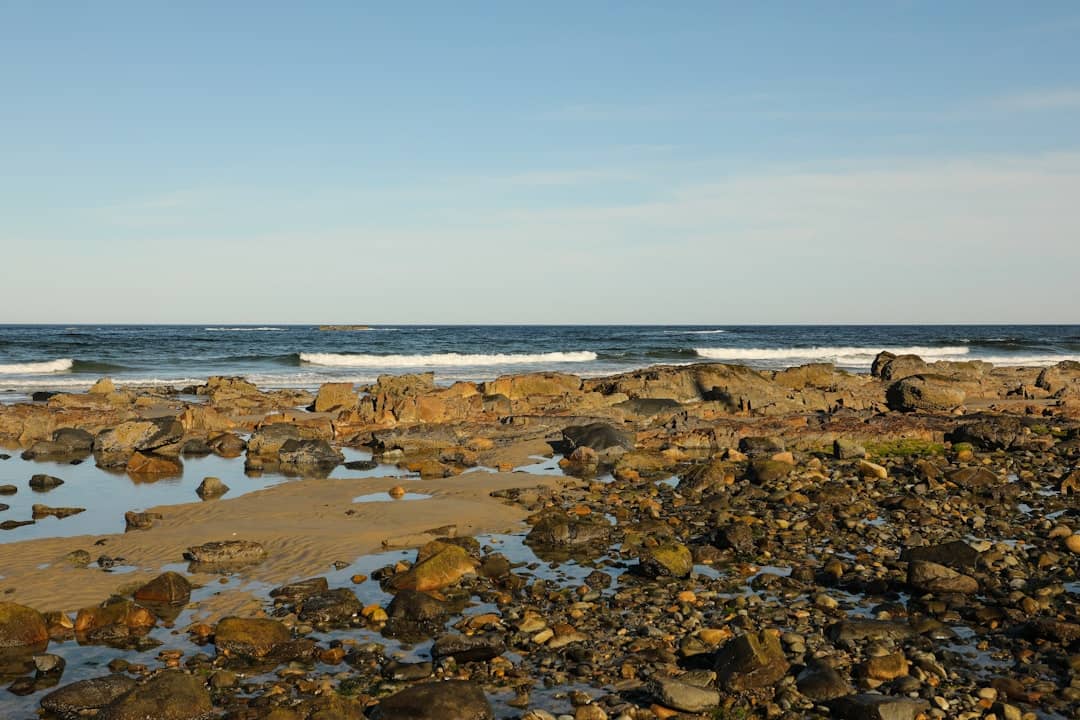
Acadia carries a 4.9 rating from 24,003 Google reviews, the highest review count of any place in our entire Maine dataset. It is not a large park by western standards. Roughly 49,000 acres, most of it on Mount Desert Island, and you can drive its scenic loop in an afternoon. What it has instead of scale is density: granite summits that fall straight into the Atlantic, a carriage road network built for horses and now used by cyclists, and more coastline per acre than almost any park in the system.
The headline stops, with their corpus ratings:
- Cadillac Mountain: 4.9 from 1,528 reviews. The summit road requires a timed vehicle reservation during the busy months, booked through recreation.gov on a rolling release. This catches people out constantly.
- Sand Beach: 4.8 from 970 reviews. A pocket of coarse sand between headlands, with genuinely cold water.
- Thunder Hole: 4.6 from 3,222 reviews. Wildly oversubscribed and only impressive on a rising tide with real swell running.
- Jordan Pond Path Trailhead: 4.8 from 569 reviews. A flat loop around clear water with the Bubbles at the far end.
- Beehive Trail: 4.9 from 583 reviews. Iron rungs and ladders bolted to a cliff face. Not for anyone uneasy with exposure, and not a descent route.
- Bass Harbor Head Light Station: 4.4 from 4,616 reviews. The lowest-rated of the marquee stops, mostly because the parking is small and the view of the lighthouse is more restricted than the photographs suggest.
- Hulls Cove Visitor Center: 4.5 from 2,546 reviews. Worth twenty minutes at the start of a first visit.
Acadia takes an entrance fee, and campground and Cadillac reservations run on rolling windows through recreation.gov. Current fees and timing are on nps.gov and change often enough to be worth checking. For more see our Acadia itinerary and best hikes in Acadia guides.
The honest drawback: in July and August the Park Loop Road, Jordan Pond and the Sand Beach lot are congested by mid-morning, and the free island shuttle does not solve it. Late September is a materially better visit than mid-July.
Katahdin Woods and Waters National Monument
Roughly 87,500 acres of forest, river and mountain east of Baxter State Park, donated to the federal government and designated a national monument. In our corpus it carries a 4.3 rating from 77 reviews. Set that against Acadia's 24,003 and you have the clearest picture anyone can give you of how differently these two places are used.
The monument is undeveloped on purpose: no visitor centers of the kind Acadia has, limited signage, gravel roads rough on a low-clearance car, and no cell service. The draw is a seventeen-mile loop road with viewpoints back toward Katahdin, paddling on the East Branch of the Penobscot, and some of the darkest night sky in the eastern United States. It holds an International Dark Sky Sanctuary designation.
Go if you want quiet and are equipped for it: full tank, spare tire, paper map, food. The 4.3 rating is not a knock on the landscape; it reflects people arriving without the right vehicle or the right expectations.
The three smaller units
Saint Croix Island International Historic Site, near Calais on the New Brunswick border, marks the spot where a French expedition under Pierre Dugua and Samuel de Champlain wintered in 1604, an attempt at settlement that predates Jamestown and Plymouth and that nearly killed everyone involved. The important practical fact: you cannot go to the island. It is closed to public landing. What exists is a mainland interpretive site off Route 1 with a short trail and bronze figures. It is a half-hour stop, not a destination, and it is a long way from anywhere else.
The Appalachian National Scenic Trail runs about 280 miles through Maine and ends at Baxter Peak on Katahdin. The Maine section includes the Hundred-Mile Wilderness, the longest stretch on the whole trail without a road crossing or resupply point, and it is consistently rated among the hardest terrain on the route. Day hikers can access it in dozens of places; see our guide to the Appalachian Trail in Maine.
Maine Acadian Culture covers the upper St. John Valley, recognizing the Acadian communities that settled the far north after the deportations of the eighteenth century. There is no park boundary. It is a partnership designation across working towns, and the Acadian Village in Van Buren (4.7 from 71 reviews) is its most visitable single piece.
How the units compare
| Site | Designation | Region | Realistic visit |
|---|---|---|---|
| Acadia | National Park | Mount Desert Island, Downeast | Two to four days |
| Katahdin Woods and Waters | National Monument | Northern Maine, near Millinocket | A full day, high-clearance vehicle |
| Appalachian Trail | National Scenic Trail | Runs the length of western and northern Maine | Anything from an hour to a month |
| Saint Croix Island | International Historic Site | Calais, on the Canadian border | Thirty minutes, mainland only |
| Maine Acadian Culture | Affiliated area | St. John Valley, far north | A driving day through several towns |
Baxter State Park is not a national park
This is the single most common misunderstanding in Maine trip planning. Mount Katahdin (the state's highest point and the terminus of the Appalachian Trail) sits inside Baxter State Park (4.8 from 854 reviews), which was assembled and donated by Governor Percival Baxter under a deed requiring it be kept "forever wild." It is state land, and its rules are stricter than most national parks:
- Day-use parking reservations are required for the popular trailheads, and they are released on a rolling window that fills within minutes for summer weekends.
- Vehicle numbers are capped. When a lot is full, the gate closes; there is no waiting it out.
- Camping is limited, primitive and booked far ahead. Roaring Brook Campground (4.8 from 109 reviews) is the main jumping-off point for the Katahdin trails.
- No pets, no motorcycles, and limited services of any kind. There are no stores inside the park.
If Katahdin is the reason for the trip, read our guide to the Knife Edge before you commit, and base yourself in Millinocket. The Mount Katahdin Scenic Overlook in Medway (4.8 from 782 reviews) gives you the mountain from the road if you would rather look than climb.
Other federal land people ask about
Maine has no national forest of its own, but a slice of the White Mountain National Forest crosses the state line into Oxford County around Evans Notch, near Bethel. Forest Service land, with different rules and fewer restrictions. The state also holds several national wildlife refuges, Rachel Carson in the south and Moosehorn Downeast among them, which are Fish and Wildlife Service land: quiet, low-key, and oriented toward birds rather than views.
And if you are down in Lubec, Roosevelt Campobello International Park sits just across the bridge on Campobello Island. It is jointly run by the United States and Canada, it is not a National Park Service unit, and it is in New Brunswick, so you need a passport and a border crossing. Nearby Quoddy Head State Park (4.9 from 1,387 reviews) is the easternmost point in the country and needs no paperwork.
Which one to actually visit
If you have one trip: Acadia, in September. It has the scenery, the infrastructure and the towns around it. If you have already done Acadia and want its opposite, take Katahdin Woods and Waters or Baxter, but plan those seriously, because the north woods do not forgive an underprepared day trip. Everything else here is a stop along the way rather than a reason to travel.
For the broader picture of protected land in Maine, see our guides to Maine's state parks and the mountains worth climbing.
Frequently asked questions
How many national parks are in Maine?
One. Acadia National Park is the only unit in Maine carrying National Park status. The National Park Service administers four other Maine units with different designations. Katahdin Woods and Waters National Monument, Saint Croix Island International Historic Site, the Appalachian National Scenic Trail, and the Maine Acadian Culture affiliated area, which is why you sometimes see the state credited with more than one.
Is Baxter State Park a national park?
No. Baxter State Park is state land, given to Maine by Governor Percival Baxter with a deed requiring it stay undeveloped. It contains Mount Katahdin, the state's highest peak and the northern end of the Appalachian Trail. Its access rules are tighter than most national parks: day-use parking reservations are required at the popular trailheads, vehicle numbers are capped, and pets are not allowed.
Do you need a reservation to visit Acadia National Park?
Not for the park as a whole, but yes for the Cadillac Mountain summit road during the busy season, which requires a timed vehicle reservation released through recreation.gov on a rolling window. Campgrounds also book through the same system. Entrance fees apply and both fees and reservation timing change, so confirm current requirements on nps.gov before you travel.
What is the best time of year to visit Maine's national parks?
Mid-September through early October. Acadia's crowds thin out sharply after Labor Day, the light gets better, the bugs are gone, and foliage arrives inland first. July and August are the warmest and the most congested. Winter closes most of the Acadia loop road to cars and shuts Baxter to vehicle access entirely, though both stay open to those willing to ski or snowshoe in.