1
Peaks Island
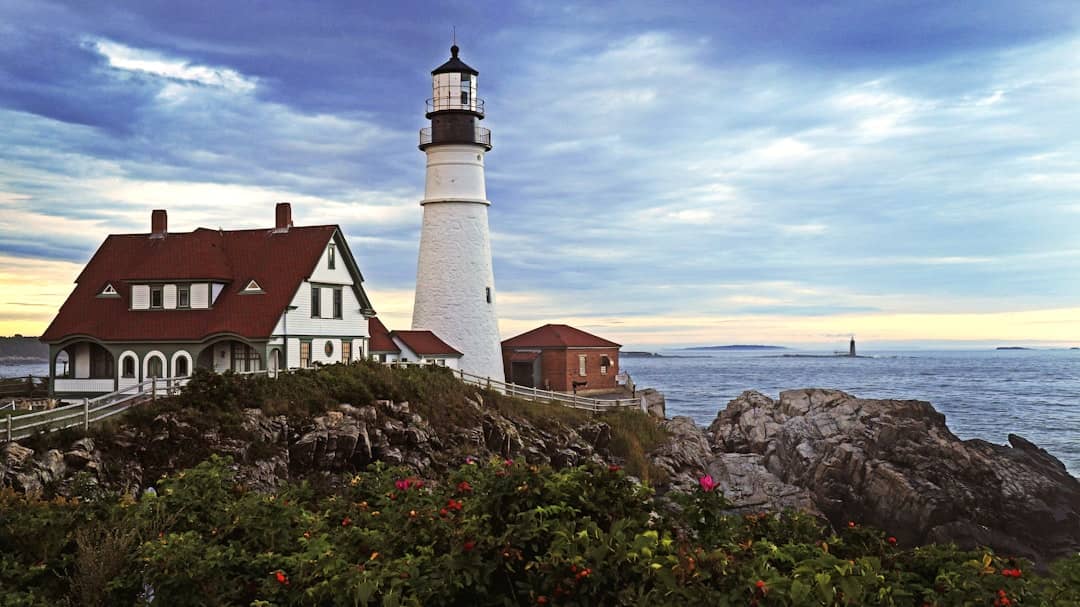
See main listingA fifteen-minute ferry from Portland: a car-light island of bikes, beaches and a working year-round community.
Details

Guide
Maine islands number somewhere north of four thousand, depending on where you draw the line between an island and a rock with a tree on it. Only about fifteen of them still have year-round communities that you cannot drive to, and those fifteen are the interesting ones. The rest split into islands with bridges, islands with ferries, and islands you need your own boat to reach, and which category you are dealing with changes the trip completely.
Before picking one, sort them by access, because that determines everything else about the day.
One thing worth saying at the outset: the year-round islands are working communities, not attractions. People fish, go to school and bury their dead on them. The good visitors are the ones who notice that.
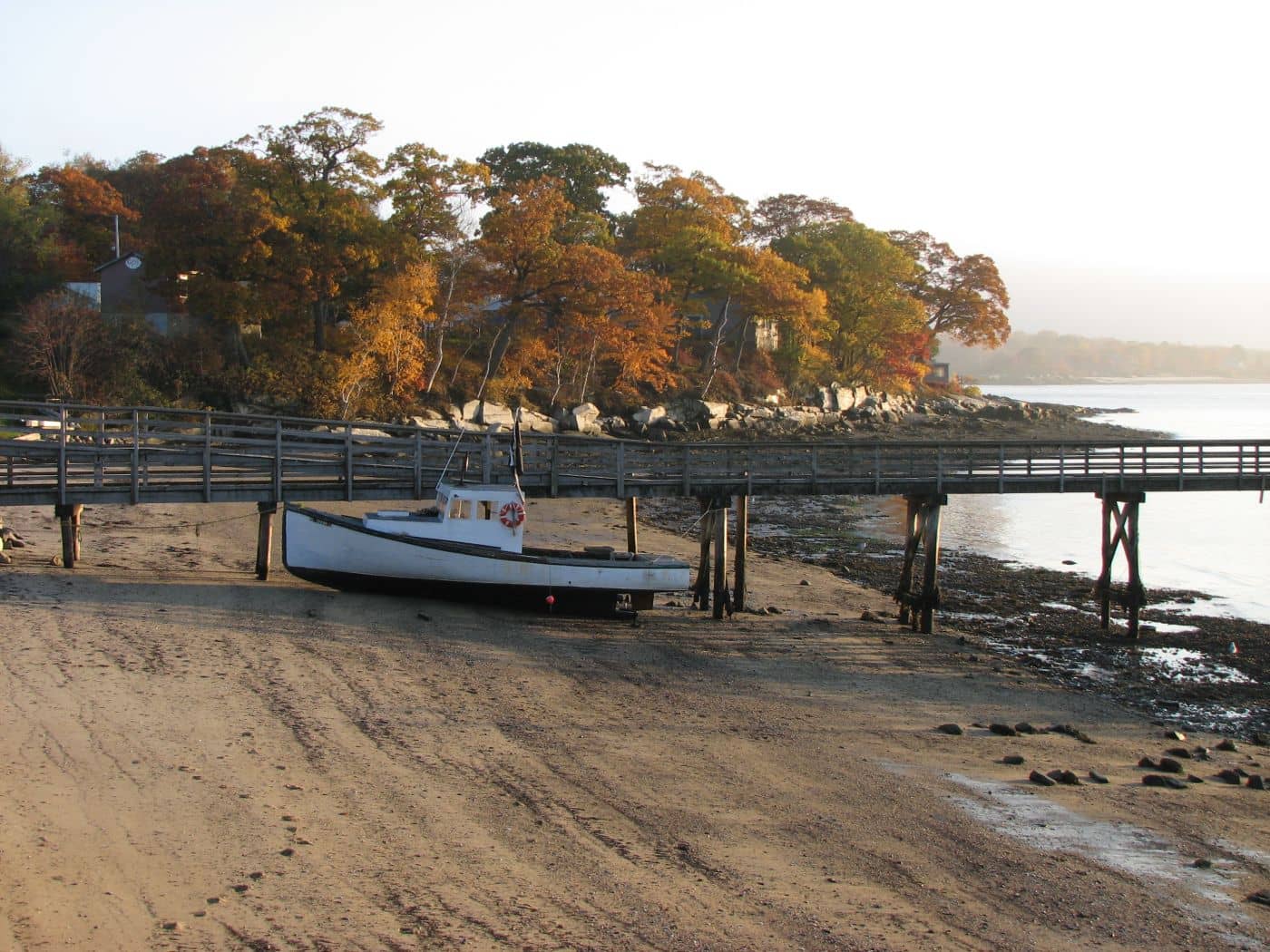
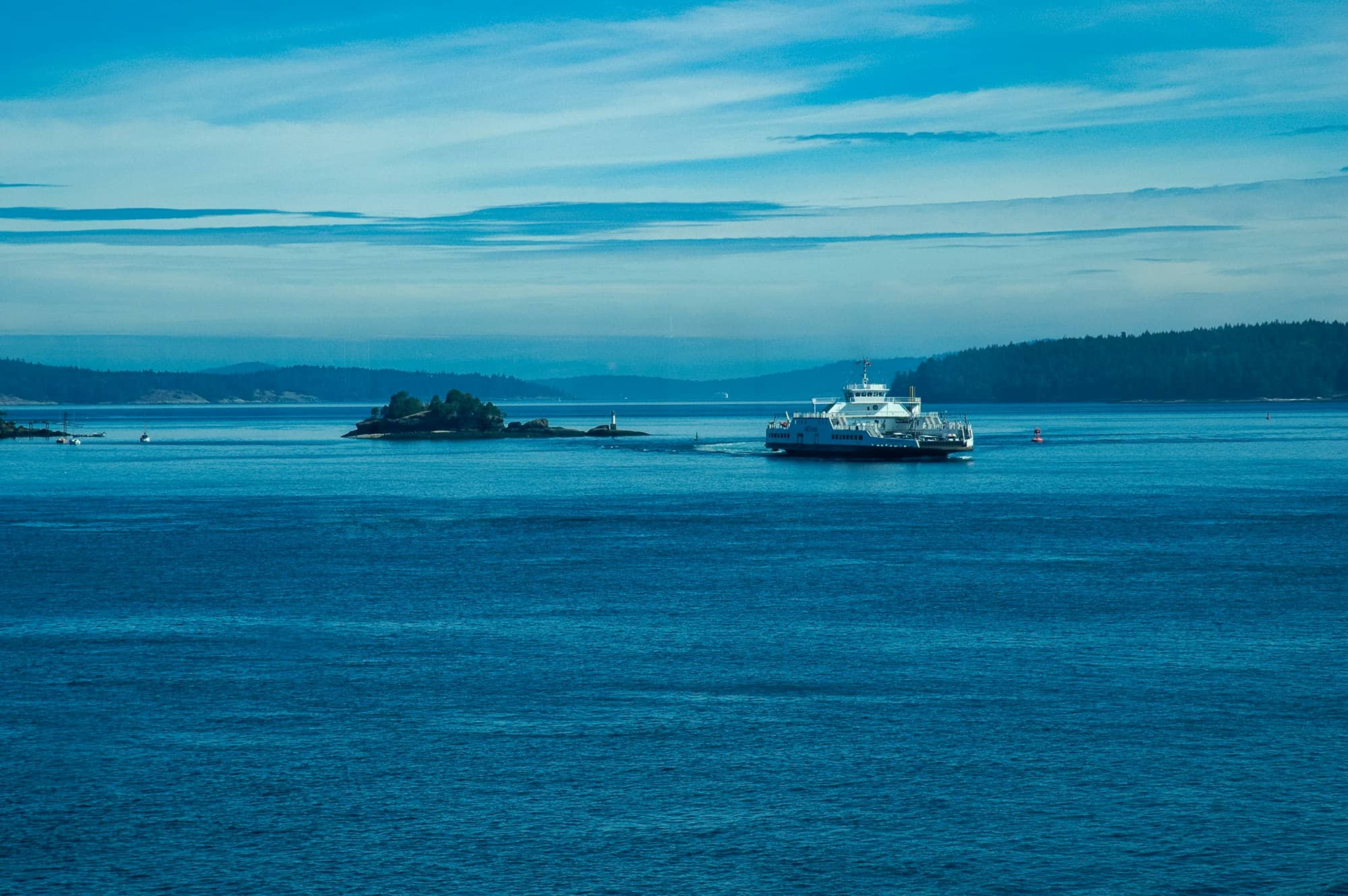
The easiest islands in Maine to reach, and the best introduction. Casco Bay Lines runs year-round public ferries from the Portland waterfront to a string of inhabited islands, and it is genuinely public transport (commuters, groceries, contractors' vans) rather than a tour.
Peaks Island is the closest, roughly a seventeen-minute crossing, and the one to take if you have half a day. You can walk or bike the perimeter road in a couple of hours, the back shore is open Atlantic with almost nothing built on it, and there are rental bikes and golf carts by the landing. It is also the busiest by a wide margin on an August Saturday.
Beyond Peaks the boats get quieter: Long Island, Great and Little Diamond, Chebeague and Cliff Island, the last of which is small enough that arriving feels slightly intrusive. Our Casco Bay islands guide breaks down the individual runs.
Two other Portland-area islands are worth knowing. Mackworth Island State Park in Falmouth (4.8 from 517 reviews) is joined to the mainland by a causeway, so no boat is needed: a 1.25-mile shore loop with a small forest of visitor-built fairy houses along it, and the easiest island walk in the state. And Fort Gorges (4.8 from 133 reviews) is a granite Civil War fort sitting alone on a ledge in Portland harbor, reachable only by kayak or private boat, with no facilities and no supervision.
Ten miles out from the nearest mainland, Monhegan is the island most worth the effort. Ferries run in season from Port Clyde, New Harbor and Boothbay Harbor; the Port Clyde run passes Marshall Point Lighthouse (4.8 from 1,458 reviews) on the way out.
Visitors do not bring cars. There is a village of a few hundred people in summer and well under a hundred in winter, no paved roads to speak of, and roughly twelve miles of hiking trails covering most of the island, including Cathedral Woods, a stand of tall spruce where people have been building small stick houses for generations, and the headlands on the seaward side, which are among the highest ocean cliffs on the Maine coast. Monhegan Lighthouse (4.8 from 45 reviews) sits on the high ground in the middle with a museum beside it.
Monhegan has been an artists' colony for well over a century, and the reason is visible the moment you get off the boat: the light is different out there. Several galleries and studios open to visitors in season.
The honest drawbacks are real. The crossing is about an hour on open water and it can be rough. Fog cancels boats. Lodging is limited and books far ahead. There is no bank, few card readers historically, and services shut down almost entirely outside the summer season. A day trip gives you about four or five hours ashore, which is enough for the trails but not enough for the island. See our Monhegan Island guide for the boat options.
This is the densest island archipelago on the coast, and it holds most of the year-round communities.
Vinalhaven is the largest, with over a thousand year-round residents and a working lobster fleet that is among the most productive in the state. The state ferry from Rockland takes about seventy-five minutes and carries cars. What people go for are the flooded granite quarries: the island supplied building stone to half the East Coast in the nineteenth century, and the abandoned pits are now the best freshwater swimming in the midcoast.
North Haven, across a narrow thoroughfare, is smaller, wealthier and quieter. Islesboro is a twenty-minute ferry from Lincolnville and has a summer-colony history alongside its year-round village. Swan's Island runs from Bass Harbor at the bottom of Mount Desert.
Two are genuinely hard to reach. Matinicus sits about twenty miles out, the ferry runs only a handful of times a month, and most traffic goes by small plane. Isle au Haut is reached by mailboat from Stonington, and roughly half of it belongs to Acadia National Park: a section of the park with its own trail network, its own tiny campground at Duck Harbor, and a fraction of one percent of the visitors that Mount Desert gets. If you want Acadia without Acadia's crowds, that is the answer, and it requires booking both the boat and the campsite well ahead.
Mount Desert Island is an island you drive onto, and the largest on the Maine coast. Everything most people mean by Acadia is on it.
The one that requires timing is Bar Island (4.7 from 220 reviews), reached on foot from downtown Bar Harbor across a gravel land bridge (4.8 from 553 reviews) that only exists at low tide. The window is roughly ninety minutes either side of low water. People misjudge it every summer and end up either wading back or paying for a boat, so check a tide table and set an alarm.
Off the southern shore, the Cranberry Isles (Great Cranberry and Islesford, properly Little Cranberry) are served by mailboat from Northeast Harbor and Southwest Harbor. They are small, lived-in and almost entirely undeveloped for tourism, which is the appeal. Baker Island Lighthouse (4.2 from 16 reviews) sits further out and is visited on park boat tours. Boat operators run from the quiet side of the island too, including Island Cruises out of Bass Harbor (5.0 from 391 reviews) and Swan's Island Charters (5.0 from 36).
You can get to several genuinely island-feeling places without ever booking a boat.
Bailey Island in Harpswell is reached over the Bailey Island Bridge (4.9 from 187 reviews), built from stacked granite slabs laid open like a lattice so the tide runs straight through: a cribstone design that exists nowhere else in the world. On the island, the Giant's Stairs shore path (4.7 from 532 reviews) runs along a ledge of stepped rock above the water, Bailey Island Beach holds 4.8 from 200 reviews, and the Cliff Trail (4.7 from 313) on the way out gives you the best elevated view of the bay. Our Bailey Island guide has the detail.
Deer Isle is reached over a 1930s suspension bridge (4.8 from 56 reviews) that still narrows the traffic to a crawl, and it leads to Stonington at the far end, a fishing port that regularly lands more lobster than anywhere else in Maine. Great Wass Island Preserve (4.7 from 222 reviews) out past Jonesport is bridged too, and its jack pine barrens and open coastal ledge feel further from anywhere than most places you need a boat to reach.
Two lighthouse islands round it out. Seguin Island Light Station (5.0 from 38 reviews) sits a couple of miles off the mouth of the Kennebec and is visited by boat from Popham; Burnt Island Light (4.6 from 91 reviews) off Southport is run by the state's marine resources department and opens for tours in season. Eagle Island State Historic Site (4.6 from 25 reviews) in Casco Bay was the summer home of the Arctic explorer Robert Peary and is boat-access only.
| Island | Getting there | Cars | Day trip | Best for |
|---|---|---|---|---|
| Peaks Island | Ferry from Portland | Not needed | Yes, half a day | A first island, biking, easy logistics |
| Chebeague and Cliff | Ferry from Portland | Not needed | Yes, with planning | Quiet, few visitors |
| Monhegan | Ferry from Port Clyde, New Harbor or Boothbay | No | Possible, better overnight | Hiking, cliffs, art |
| Vinalhaven | State ferry from Rockland | Yes | Yes, long day | Quarry swimming, working harbor |
| Islesboro | State ferry from Lincolnville | Yes | Yes, easy | Cycling, a short crossing |
| Isle au Haut | Mailboat from Stonington | No | Tight; plan to stay | Acadia trails without crowds |
| Matinicus | Infrequent ferry or small plane | No | No | Serious remoteness |
| Bar Island | On foot at low tide | No | Yes, ninety minutes | A tide-window novelty from Bar Harbor |
| Bailey Island | Drive over the cribstone bridge | Yes | Yes | Shore walks, lobster, no boat needed |
| Deer Isle | Drive over the suspension bridge | Yes | Yes, long day | Crafts, Stonington, onward boats |
Staying the night is a different experience from a day trip, and most of the ways to do it are limited enough to need planning months out.
Inns and rentals exist on the larger year-round islands (Monhegan, Vinalhaven, Islesboro, Peaks) and the supply is genuinely small. Monhegan in particular has a few dozen rooms for the whole island, and peak weeks are taken by the previous year's guests. Book early or take a shoulder-season date.
Warren Island State Park, a small island off Islesboro in Penobscot Bay, is the only state park campground on an island. It has a handful of sites, a shelter and no road access whatsoever. You arrive in your own boat or you do not arrive. Sites book through the state reservation system.
Duck Harbor on Isle au Haut is Acadia's island campground: a few lean-tos, reached by mailboat from Stonington, booked through recreation.gov. It is one of the hardest reservations in the national park system relative to its size, and it puts you on park trails that see a rounding error of Mount Desert's traffic.
Then there is the option most visitors never hear about. The Maine Island Trail is a water trail running the length of the coast, stitched together from state-owned islands and privately owned ones whose owners allow access. Several hundred sites are on it, many of them open for day use or low-impact overnight camping, and the whole thing is maintained largely by the paddlers who use it. It is the best sea kayaking in the eastern United States. It also requires competence: cold water, strong tidal currents, fog, and long open crossings between shelter. This is not a first-time paddling trip.
Three separate operations cover most public island travel, and they behave differently.
Fares, schedules and vehicle reservation rules all change between seasons. Check the operator's own site the week you travel rather than trusting a printed schedule.
Work backward from the last boat. This is the single rule that matters. Find the last departure, subtract a buffer, and build the day inside that. Foot passengers get bumped rarely, but boats do fill and weather does cancel.
Take less than you think and more water than you think. Several islands have one small store with limited hours and no ATM, and card acceptance is not universal. Carry cash.
Bikes beat cars almost everywhere. On Peaks, Islesboro, Vinalhaven and Chebeague a bicycle covers the island comfortably and costs a fraction of a vehicle ferry ticket. Bring your own or rent at the landing.
Fog is the real variable. June and July fog can close in fast and cancel a crossing with no notice, and it is worst on the outer islands. Build a flexible day rather than a tight connection.
Respect the working parts. Ferry landings, wharves and gear yards are workplaces. Do not park in front of them, do not walk through stacked traps, and do not photograph people at work without asking. The islands that stay welcoming stay that way because most visitors get this right.
Somewhere above four thousand along the coast, depending on the size threshold used. Some counts run higher, some lower, and none of them settle the question of what counts as an island. The number that matters more is about fifteen: that is roughly how many unbridged Maine islands still have year-round communities, down from hundreds a century ago.
Monhegan for hiking, cliffs and the art history, if you can spare an overnight and tolerate an hour on open water. Peaks Island if you have half a day and want the easiest possible logistics from Portland. Vinalhaven for quarry swimming and a genuine working harbor. Isle au Haut if what you actually want is Acadia's trails without Acadia's crowds.
Easily, and often better without one. Casco Bay Lines from Portland takes foot passengers with no reservation, and Peaks, Chebeague and Cliff are all walkable or bikeable. Monhegan and Isle au Haut do not take visitor cars at all. Even on the islands where the state ferry carries vehicles, a bicycle usually covers the ground more cheaply and with far less booking anxiety.
By passenger ferry from Port Clyde, New Harbor or Boothbay Harbor, seasonally, with the crossing running roughly an hour on open water. Cars stay on the mainland, and parking near each landing is paid and limited. Fog and heavy weather cancel sailings, so leave slack in your plans and book lodging well ahead if you intend to stay the night.
A fifteen-minute ferry from Portland: a car-light island of bikes, beaches and a working year-round community.
Tools
Guides
Destinations
Downeast & Acadia
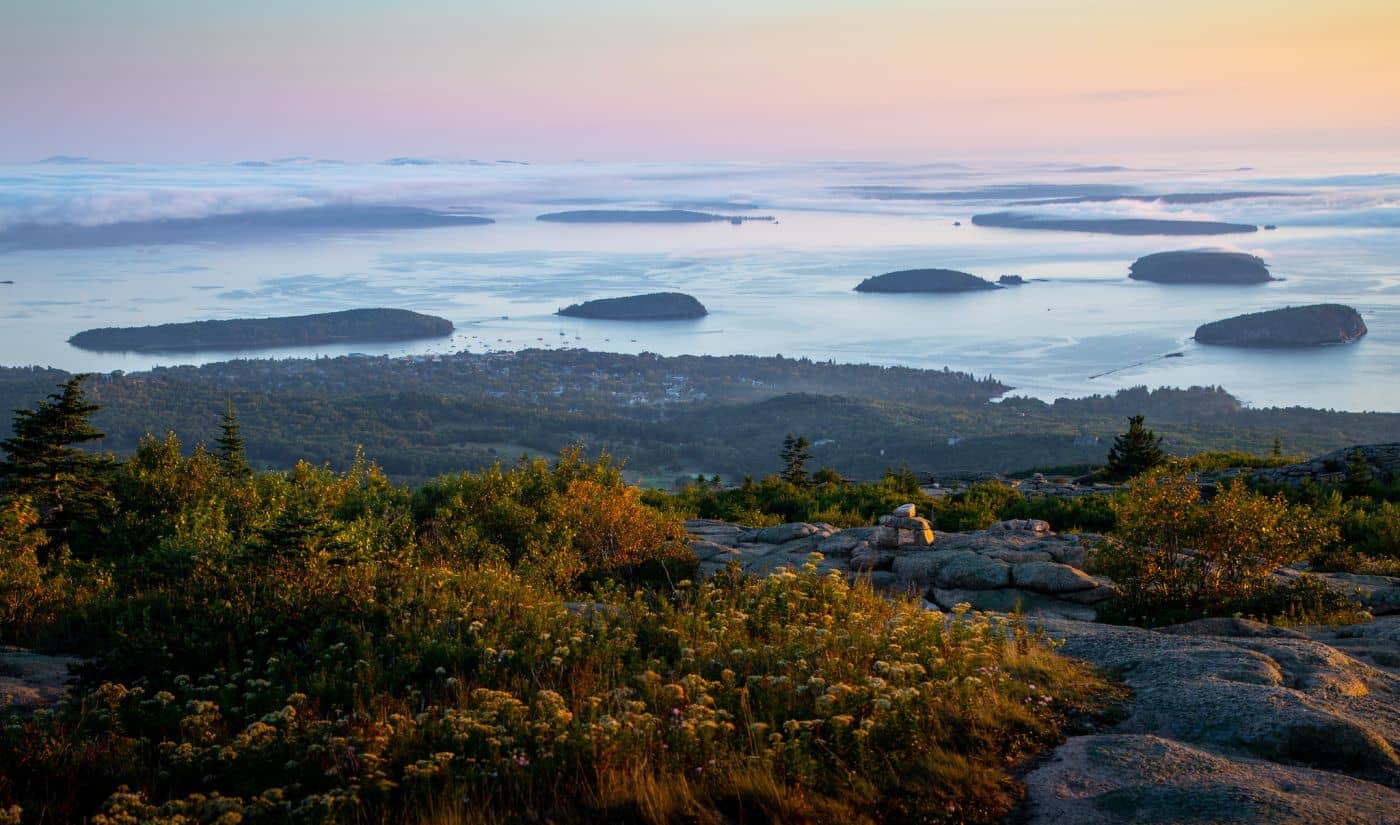
Gateway to Acadia National Park - Cadillac Mountain, puffin cruises, and a harbor town that fills with cruise ships from May to October.
Southern Maine Coast
Dock Square boutiques, Goose Rocks Beach, and the Bush family's Walker's Point - the quintessential coastal Maine summer town.
Greater Portland
Maine's largest city - a working waterfront, Old Port cobblestones, and a food scene that punches well above its weight.
Midcoast Islands
Shipbuilding heart of Maine since 1743 - Bath Iron Works still launches destroyers past the Maine Maritime Museum on the Kennebec.
Midcoast Islands
A Midcoast harbor town built around boat trips, with the Coastal Maine Botanical Gardens just up the road.
Midcoast Islands
Where the mountains meet the sea - windjammer harbor, Mount Battie summit views, and an independent village with real soul.
Greater Portland
Flagship home of L.L. Bean, open 24/7 - outlets, a tidal river, and surprisingly good eating between the shopping.
Southern Maine Coast
Postcard-perfect village of sea captains' mansions, Lower Village shops, and easy walks to Mother's Beach and Gooch's Beach.