
Guide
What Is Mud Season in Maine?

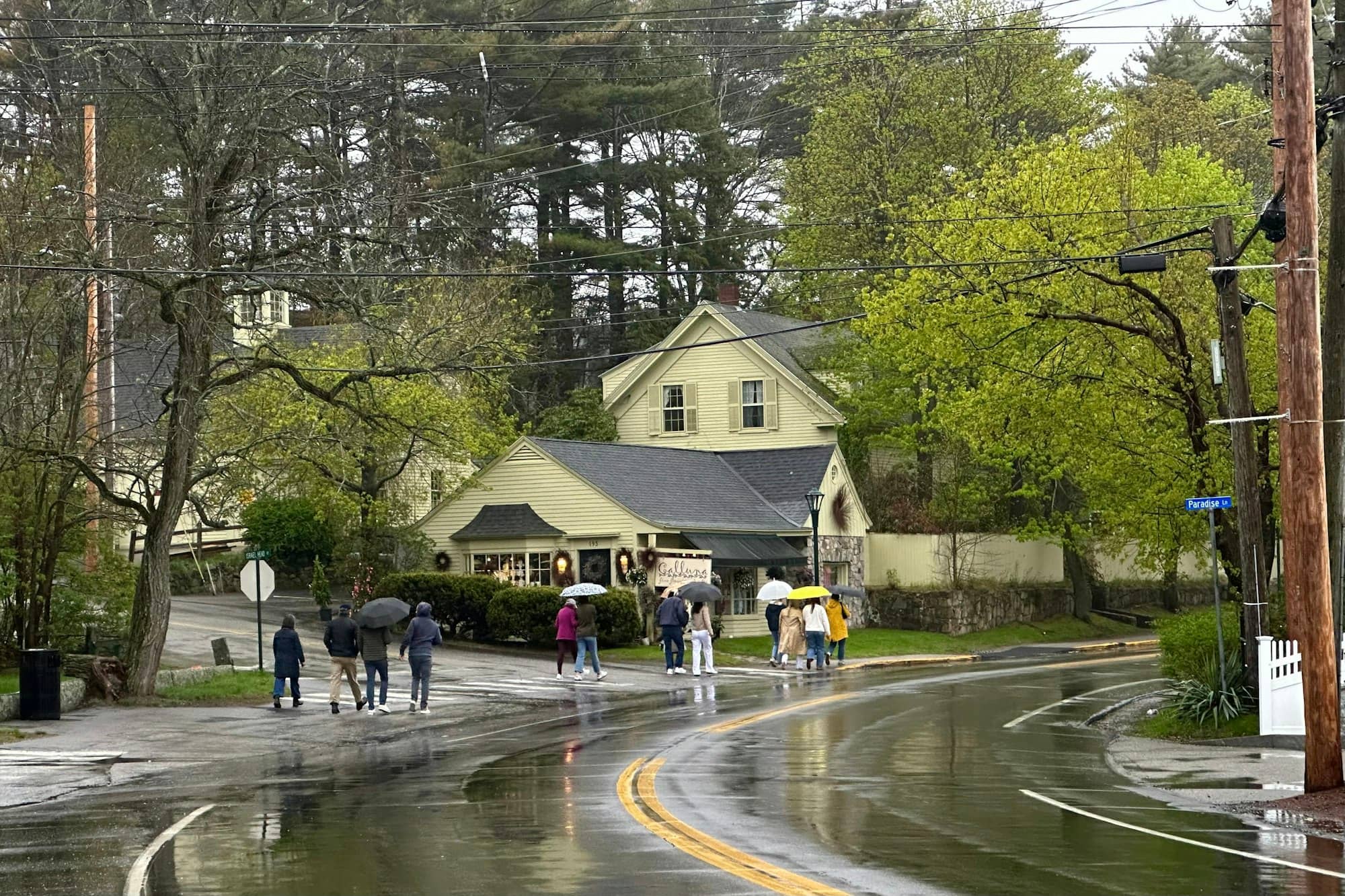
Mud season is the spring transition when thaw and water leave some trails and unpaved roads soft or difficult to use. Plan around conditions at the actual destination, not a single statewide date. A Maine trip still works: give city days, museums and suitable local outings a larger role while sensitive routes recover.
What changes during mud season?
| Part of the trip | Planning issue | Better approach |
|---|---|---|
| Hiking trail | Mud, snow or ice can remain | Choose a route suited to its current condition |
| Unpaved access road | Spring access can be difficult | Do not assume a mapped road is a usable approach |
| City day | Less dependence on a backcountry route | Give museums and local walks a main role |
| Multi-region itinerary | Conditions differ by location | Make each outdoor choice separately |
Maine’s early-season hiking guidance identifies snow, ice, mud and difficult dirt-road access as spring concerns. Maine Audubon’s mud-season trail advice explains the strain on wet trail surfaces. A dry street in town does not establish the condition of an upland route.
When does it happen?
Treat it as a condition-led spring period rather than a holiday with fixed opening and closing dates. The season guide gives the larger calendar, while the winter guide explains the season the state is leaving behind.
The important question is whether the chosen route and approach suit the day. A planned Camden Hills outing and an Acadia visit need their own decisions. The same label does not describe every elevation and surface.
What should you do instead of forcing a hike?
Give Portland a city day with the museum guide and Portland Museum of Art as starting points. On the Midcoast, Rockland and its museums supply a different kind of main activity.
The Camden and Rockland weekend also gives a local trip useful shape without requiring every hour to be a trail hour. Keep a suitable town outing and an indoor activity in the plan from the beginning, not as consolation prizes after another plan fails.
What should you skip?
Skip forcing access along a soft or restricted route simply because it appears in an itinerary. A Maine road trip is a sequence of choices, not an obligation to complete every mapped stop. The trip planner helps keep alternatives in the same area.
Also skip widening a trail by going around every wet section. Choose another appropriate outing when the route is unsuitable, and follow land-manager closures. The purpose is a good spring visit, not preserving a plan at the expense of the place it was meant to enjoy.
What else should you know?
Is mud season the same date everywhere?
No. The useful decision concerns the actual route and conditions. Do not apply one statewide cutoff to every outing.
Can a spring trail still have snow or ice?
Yes. Maine’s early-season guidance explicitly includes snow and ice alongside mud. Town weather alone does not describe the trail.
Does a mapped access road guarantee a usable approach?
No. Spring dirt-road conditions can make access difficult. A line on the map is not a current road-condition report.
Is it still worth visiting Maine?
Yes, with a trip built around suitable activities. City meals, museums and local outings make a coherent visit without forcing a backcountry plan.
What is the best adjustment?
Keep a focused base and a worthwhile alternative nearby. Changing the outing is better than turning unsuitable conditions into the main event.