1
Cape Elizabeth
See main listingHome of Portland Head Light - Maine's oldest lighthouse - plus Two Lights State Park and the beach at Crescent State Park.
Details

Guide
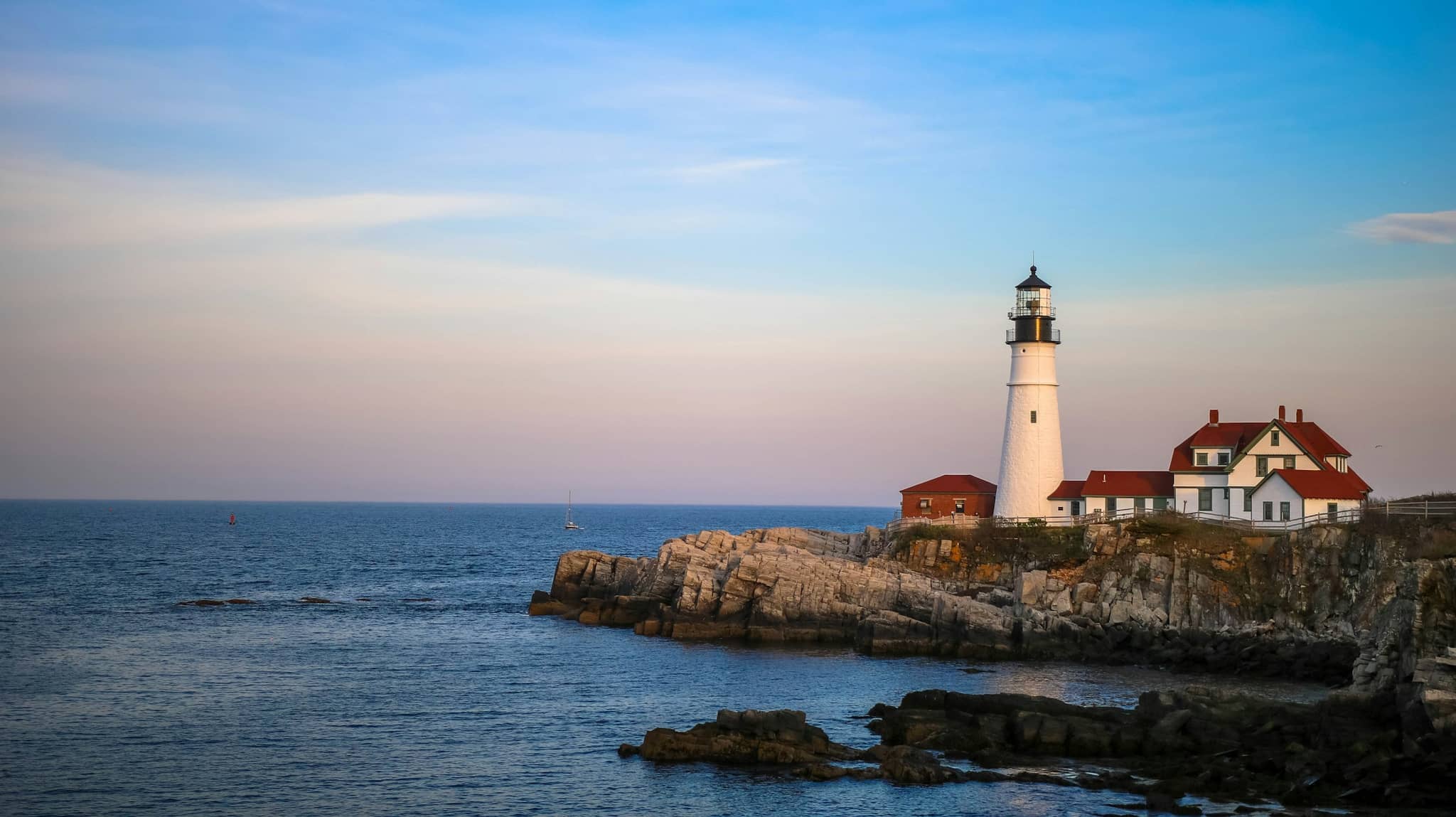
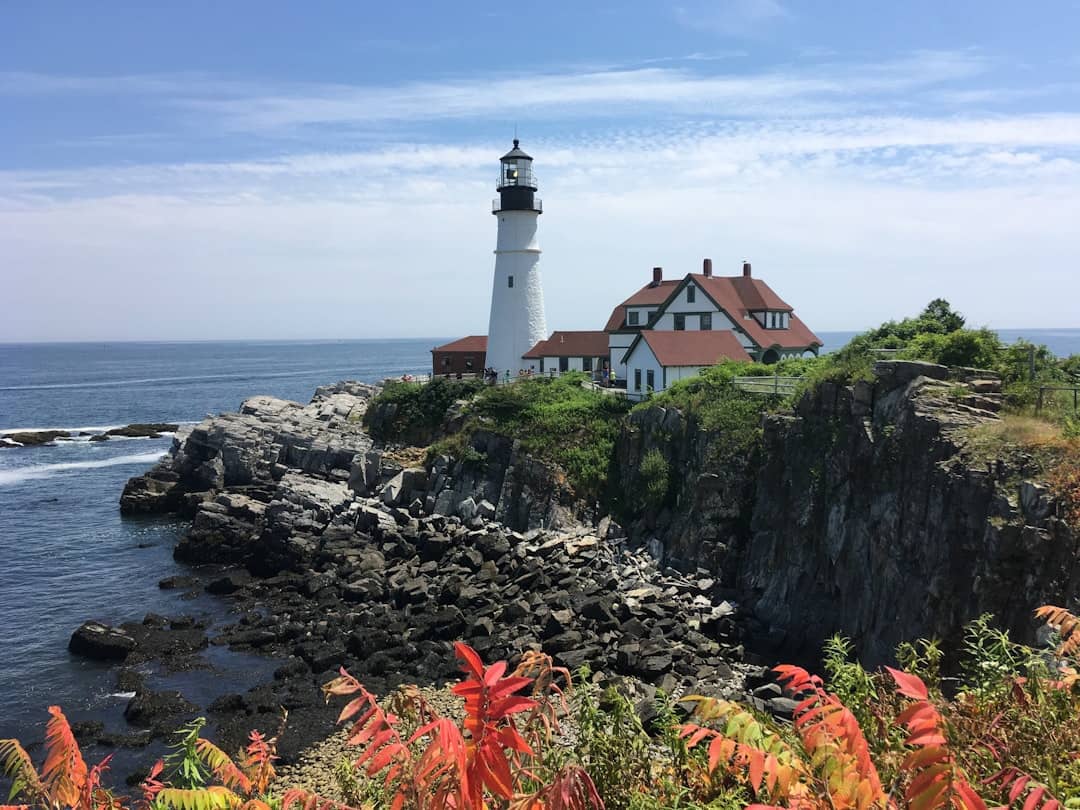
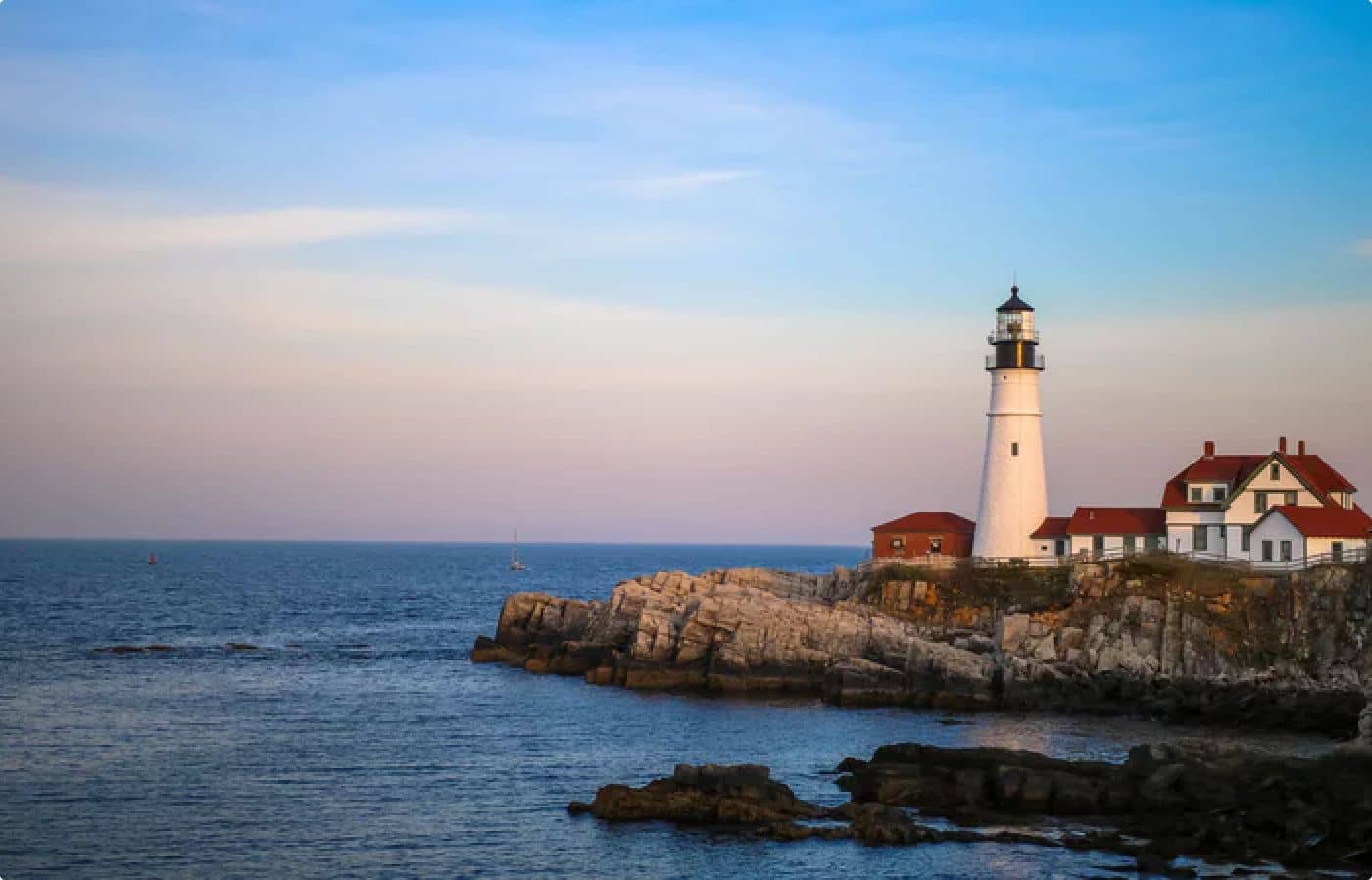
Portland Head Light is the lighthouse on the postcard, and the one people most often misunderstand before they arrive. It is Maine's oldest light station, first lit in 1791, standing on black rock at the mouth of Portland Harbor in Cape Elizabeth. The grounds are free and open every day of the year. The tower is not open, the parking is not free, and knowing both before you drive out saves the visit.
Take the disappointment first, because it is the one that spoils people's mornings. You cannot climb the tower. Portland Head Light is an active aid to navigation maintained by the Coast Guard, and the tower door stays shut to the public for all but a single day each September, when Maine Open Lighthouse Day opens a handful of towers statewide with a volunteer at the bottom counting people up the stairs. The American Lighthouse Foundation publishes which lights take part each year. Every other day, the closest you get to the inside of the tower is the base of it.
What you can do is everything else. The keepers' quarters, a shingled house built in 1891 against the tower's flank, holds the Museum at Portland Head Light, which runs a seasonal schedule and displays a collection of Fresnel lenses and station artifacts. The lawn, the shoreline path, the fort ruins and the whole ninety-acre park around it are open dawn to dusk, all year, with no admission charge. The Town of Cape Elizabeth owns and manages the property; the Coast Guard keeps only the light and the fog signal.
So this is a place to walk, look and sit on a rock, not a place to tour. Budget forty-five minutes for the view and the photograph, closer to two hours if you want the shoreline and the batteries too.
Fort Williams Park charges for parking in its main lots, and the confusion this causes is out of proportion to the cost. The paid lots sit at the Picnic Shelter, Parade Ground, Ship Cove and Central Parking areas, on pay-and-display meters that take cards only. There is also an overflow lot with no charge. In July and August the lots near the lighthouse fill by mid-morning and the entry line backs up onto Shore Road, which is the real cost of a late arrival.
Arrive before nine or after four in high summer and you will park where you want to. Off season, none of this is a problem. Fort Williams Park itself carries a 4.8 rating from 3,781 Google reviews, separate from the 16,744 reviews on the lighthouse itself, which together make this the most-reviewed outdoor attraction in Maine.
Nearly everyone stops at the first railing, gets the tower head-on with a lot of lawn in the frame, and leaves. Two better vantage points sit within a five-minute walk, and reviewers rate them higher than the main one.
Light matters more than position. The tower faces roughly east, takes direct sun in the morning and falls into its own shadow by mid-afternoon. Sunrise is the photographer's slot and worth the alarm; late afternoon is better from the north side.
Look offshore while you are there. The squat granite tower standing alone on a ledge a mile out is Ram Island Ledge Light (4.6 from 46 reviews), which has no public access of any kind and is only ever seen from land or from a boat.
Construction started in 1787 under the Commonwealth of Massachusetts, which is what Maine was at the time. The federal government took responsibility for the nation's lighthouses in 1790, Congress funded the finish, and the light was first lit on January 10, 1791, making it the oldest lighthouse in Maine and among the oldest still standing in the country.
The best story attached to it is written on the rock. On Christmas Eve in 1886 the bark Annie C. Maguire ran onto the ledge directly below the tower. Keeper Joshua Strout and the people who came down to help got everyone aboard off the wreck, reportedly rigging a ladder across as a gangplank. The event is still painted on the rock where it happened, and most visitors walk past it without noticing.
The Coast Guard took over the station in 1939 and automated it late in the 20th century. The property was leased to the Town of Cape Elizabeth in 1990 and deeded outright in 1993, which is why a municipal parks department now runs the most famous lighthouse in America.
The park is a decommissioned coastal artillery post, and the leftovers are more interesting than most people expect. Goddard Mansion (4.5 from 107 reviews) is a burned-out stone shell of an 1850s house, roofless and open to the sky, a short walk uphill from the lighthouse. Battery Blair and Battery Keyes are concrete gun emplacements set into the slope, unlit inside and free to walk through. Ship Cove is the small beach at the north end where you can get down to the water.
Bite into Maine operates from a truck in the park at 1000 Shore Road and holds a 4.8 rating from 804 reviews, which is unusually high for anything selling lobster rolls next to a landmark. They run several styles rather than one, and the line moves. The season is short and weather-dependent, so treat it as a bonus rather than a plan.
Ten minutes down the road, The Lobster Shack at Two Lights (4.3 from 3,711 reviews) is the alternative: a seasonal, order-at-the-window place on the rocks with picnic tables and no indoor comfort to speak of. The rating is lower than the food deserves, largely because the wait and the weather do the damage. There is a fuller account in our Lobster Shack guide.
Portland Head Light on its own is a stop, not an outing. Cape Elizabeth strings several genuinely good places along the same seven miles of road, and the drive between them is short.
From the lighthouse it is about fifteen minutes back into Portland, and the town page for Cape Elizabeth covers what else is on the peninsula. If lighthouses are the point of the trip rather than a stop on it, the lighthouses near Portland roundup covers the five you can reach inside forty minutes, and Maine lighthouses takes it statewide.
June through October is the reliable window for the museum and the food. May and November give you the light without the crowd. Winter is the connoisseur's visit. The park stays open, the lot is empty and storm surf breaks over the ledge. Dress for it; there is no shelter on that lawn.
Not the tower. The lighthouse tower is closed to the public except for one day each September during Maine Open Lighthouse Day. The keepers' quarters next to it houses the Museum at Portland Head Light, which is open on a seasonal schedule, and the grounds around the tower are open every day.
Forty-five minutes covers the walk from the lot, the viewpoints and photographs. Give it two hours if you also want the Cliff Walk, Goddard Mansion and the gun batteries, and half a day if you are pairing it with Two Lights or Crescent Beach.
The park has no admission charge, but the main lots near the lighthouse are pay-and-display and take cards only. There is a separate overflow lot with no charge. In July and August the close lots fill by mid-morning, so arriving early matters more than the fee does.
Sunrise. The tower faces east, so morning sun lights its face and the water behind it, and the parking lot is empty. By mid-afternoon the tower shades itself; late afternoon works better from the north viewpoint, where you get the tower against open ocean instead of the keepers' house.
Home of Portland Head Light - Maine's oldest lighthouse - plus Two Lights State Park and the beach at Crescent State Park.
Maine's largest city - a working waterfront, Old Port cobblestones, and a food scene that punches well above its weight.
Tools
Guides

Destinations
Downeast & Acadia
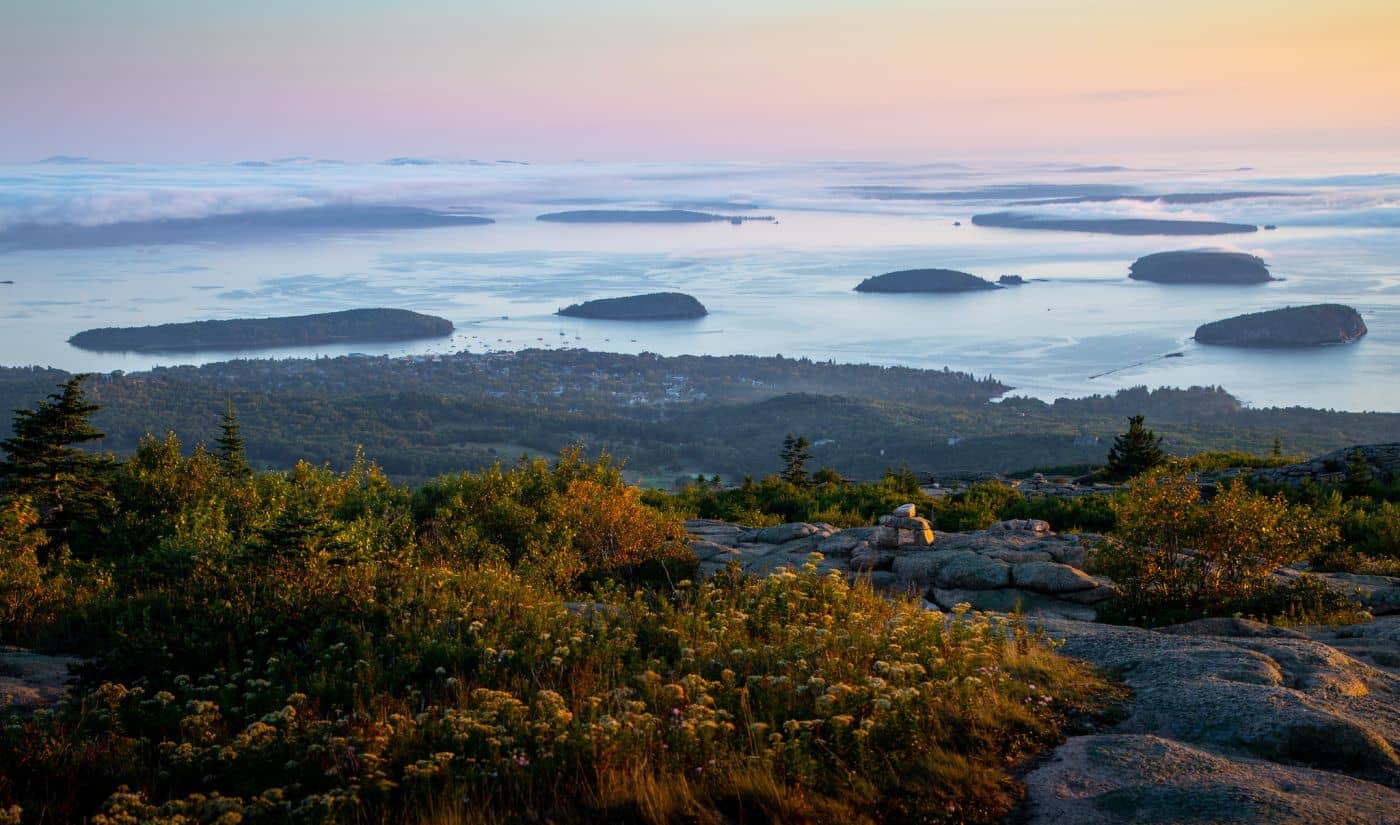
Gateway to Acadia National Park - Cadillac Mountain, puffin cruises, and a harbor town that fills with cruise ships from May to October.
Southern Maine Coast
Dock Square boutiques, Goose Rocks Beach, and the Bush family's Walker's Point - the quintessential coastal Maine summer town.
Greater Portland
Maine's largest city - a working waterfront, Old Port cobblestones, and a food scene that punches well above its weight.
Midcoast Islands
Shipbuilding heart of Maine since 1743 - Bath Iron Works still launches destroyers past the Maine Maritime Museum on the Kennebec.
Midcoast Islands
A Midcoast harbor town built around boat trips, with the Coastal Maine Botanical Gardens just up the road.
Midcoast Islands
Where the mountains meet the sea - windjammer harbor, Mount Battie summit views, and an independent village with real soul.
Greater Portland
Flagship home of L.L. Bean, open 24/7 - outlets, a tidal river, and surprisingly good eating between the shopping.
Southern Maine Coast
Postcard-perfect village of sea captains' mansions, Lower Village shops, and easy walks to Mother's Beach and Gooch's Beach.