1
Bar Harbor
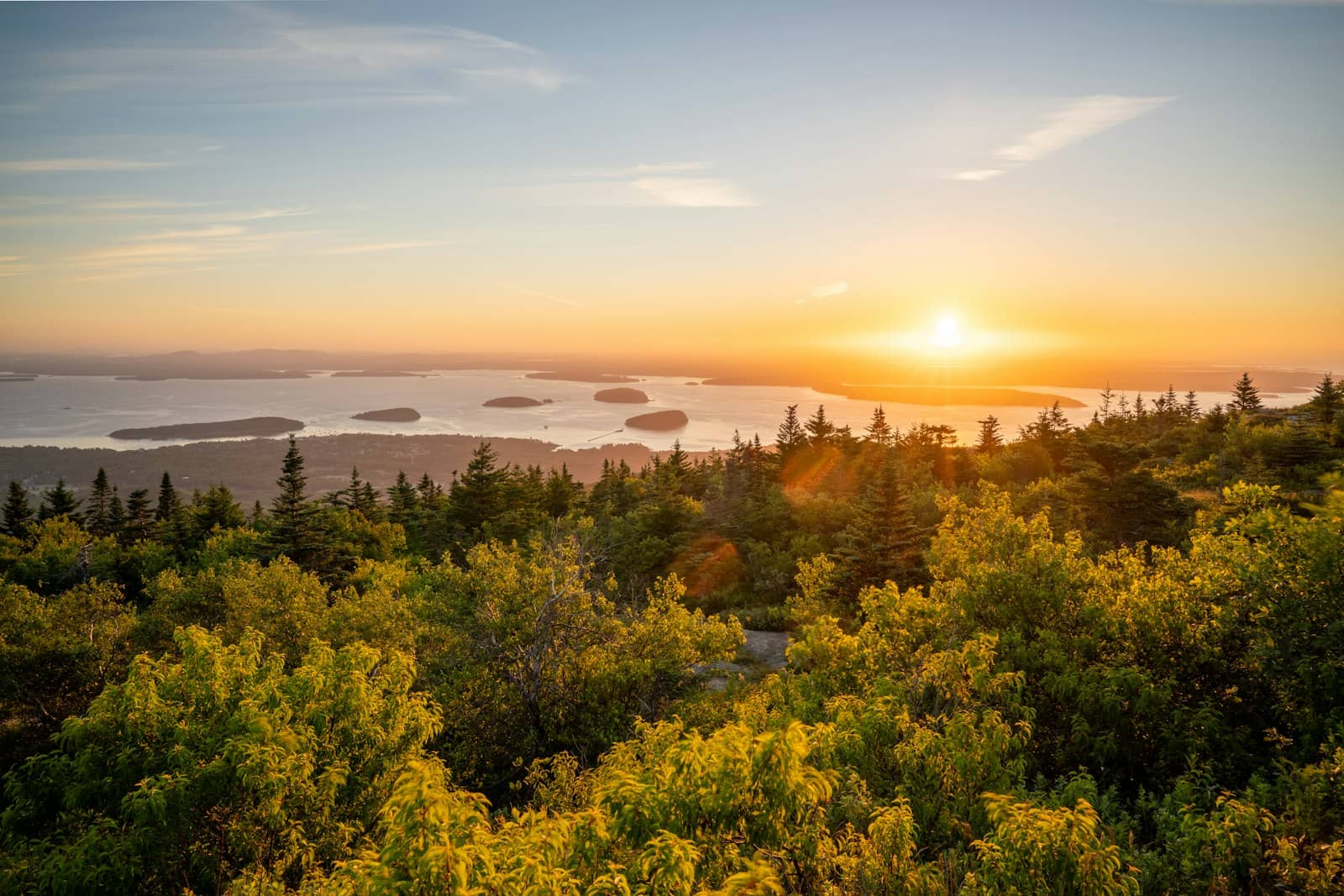
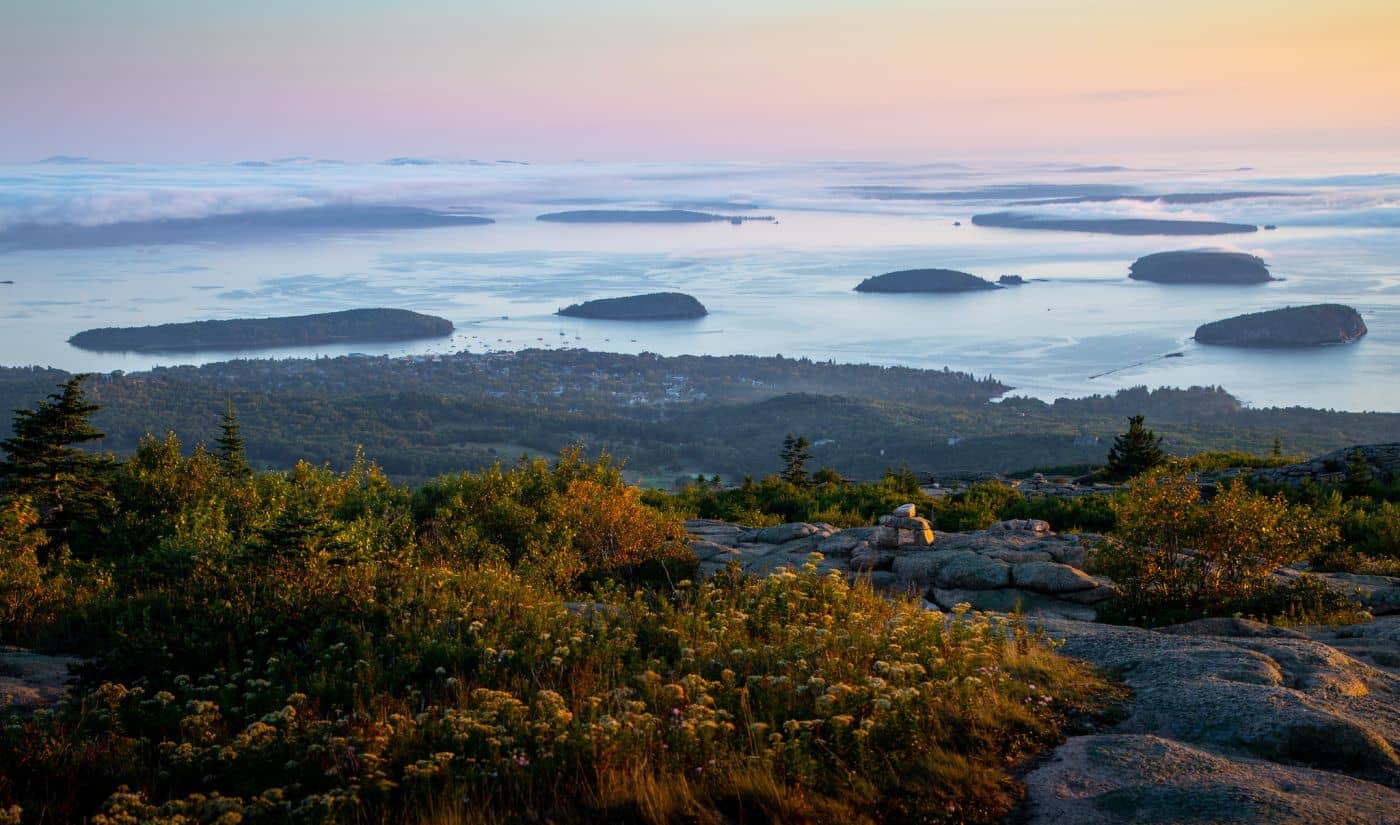
See main listingGateway to Acadia National Park - Cadillac Mountain, puffin cruises, and a harbor town that fills with cruise ships from May to October.
Details

Guide
Whale watching out of Bar Harbor is not a harbor cruise with a whale attached. The boats run twenty to thirty miles into open ocean to reach the feeding grounds, the round trip eats most of a half day, and the water out there behaves nothing like Frenchman Bay. Done right it is the single best wildlife experience in this part of Maine. Done on the wrong day, with the wrong stomach, it is four hours you will not enjoy. Here is how to tell the difference before you book.
The Gulf of Maine is a feeding ground, not a nursery. Whales come north in spring to eat and leave in fall, and what they are eating (herring, sand lance, krill) decides where the boats go on any given day. Four animals make up most sightings.
You may also see basking sharks, ocean sunfish, harbor and gray seals on the near-shore ledges, and a lot of seabirds. North Atlantic right whales pass through and are critically endangered. Federal rules require vessels to stay several hundred yards clear, so if a captain announces a right whale, expect the boat to back off rather than approach. That is the law working, not the crew being cautious.
For a wildlife outing, the Puffins and Whales in Maine: When and Where to Go compares seasons, departure ports, cruise lengths and the operators’ published fares.
Choose the port that fits the overnight base. Bar Harbor Whale Watch publishes trips of 3–5.5 hours from late May to early October, with fares of $84 for ages 15+, $72 for ages 6–14 and $35 for younger children. Cap'n Fish's Boothbay Harbor whale watch is a 3.5-hour trip with published fares of $91 for ages 13+, $81 for ages 2–12 and $21 for younger children. The age bands differ, so the headline adult prices do not answer every family's cost comparison. [1] [2] Choose Bar Harbor for an Acadia-based holiday and Boothbay Harbor for that Midcoast stay. The puffin-and-whale season guide adds New Harbor's shorter puffin outing as a different option. Give the selected cruise its own day block and use an all-day parking arrangement for the longer excursion.
The season runs roughly from late spring through October and peaks in July and August, when the bait is thickest and the schedules fullest. Early in the season the boats run fewer trips and the weather is less settled. By late September the crowds have thinned and sightings are often still strong, which makes shoulder season a good bet if your dates are flexible.
Time of day matters less than sea state. Morning trips are usually calmer because the wind builds through the afternoon, and a morning departure also leaves you the rest of the day in Bar Harbor or inside Acadia National Park. If you are choosing between two departures on a breezy forecast, take the earlier one.
This is the part most people do not expect. The productive feeding grounds off Mount Desert Island are well offshore. Boats commonly work the water around Mount Desert Rock, a bare granite ledge roughly twenty-five miles south of the island that carries a lighthouse and a College of the Atlantic research station, and the banks beyond it. Reaching that water and getting back is why a Bar Harbor whale trip typically runs three to four hours, and why the fleet leans on big offshore catamarans rather than the wooden boats running harbor tours.
Two consequences follow. First, most of your trip is transit, not whales. Bring layers and something to drink and treat the ride out as part of it. Second, whether the trip sails at all is a sea-state decision made that morning, not a rain decision. Trips get cancelled on clear days with a big swell, and that is the right call.
The dedicated whale fleet leaves from the town pier and the Bar Harbor Inn pier at the foot of Main Street, within a couple of minutes' walk of Agamont Park: 4.7 · 1,775 reviews, Newport Dr, which is the green above the pier where everyone gathers before boarding. Bar Harbor Whale Watch Co. runs the large offshore catamaran trips, including the combined whale-and-puffin runs out toward the seabird islands.
The other operators on the same waterfront are worth knowing because they solve different problems:
Book ahead in July and August. These boats sell out, and the alternative (arriving at the pier hoping) usually ends with you on the schooner instead. For charter fishing rather than wildlife viewing, see our guide to Bar Harbor fishing charters.
Nobody controls where the whales are. Most Maine operators carry some form of sighting guarantee (typically a rain-check rather than money back) but terms differ by company and by trip type, and a combined whale-and-puffin trip may be covered differently from a straight whale run. Read that clause on the operator's own site before you pay, especially if you are in town for one night and could not use a rain-check anyway.
The honest expectation: on a good summer day you will see multiple whales, probably finbacks and minkes, quite possibly humpbacks. On a bad one you will see a lot of ocean, some seabirds and a distant blow. It is wildlife, and the boats that promise otherwise are the ones to distrust.
Take this seriously. Twenty-five miles offshore in the Gulf of Maine, a swell that looks unremarkable from the pier turns into a long, slow roll for hours, and a meaningful share of passengers on any given trip get sick. If you are at all prone:
Dress for water twenty degrees colder than the town you left. A calm 75-degree afternoon on Main Street is a windy 55 at Mount Desert Rock, and the spray is cold. Bring a windproof layer, a hat and sunglasses. Glare off the water is relentless even under cloud. Binoculars help; the crew will spot blows long before you can.
There is no shame in skipping it. Small children, anyone with a fragile stomach, and anyone with only a few hours in town are usually better served by a Frenchman Bay nature cruise or a lobster boat trip, both of which stay in sheltered water and get you back in half the time. On land, the shore path and the sandbar walk out to Bar Island (4.7 · 220 reviews) at low tide give you the same coastline from the other side, and our Acadia wildlife guide covers what you can find without a boat at all.
For puffins specifically, the Bar Harbor combined trips run out toward the protected seabird nesting islands, and the birds are only ashore for part of the summer. See where to see puffins in Maine for the timing. And if you want more of Bar Harbor beyond the water, our things to do in Bar Harbor guide has the rest.
Plan on 3–5.5 hours on the water, plus check-in and boarding time, and longer for combined whale-and-puffin trips. The feeding grounds are twenty to thirty miles offshore, so a large share of that time is transit. Add time for parking and boarding. Arrive well before departure, since these boats leave on schedule.
July and August have the most trips and the warmest, calmest conditions, but late August into September is arguably the sweet spot: sightings hold up, the boats are less full, and the town has emptied out. Trips generally run from late spring into October, weather permitting.
No. Most operators offer a sighting guarantee in the form of a return-trip voucher rather than a refund, and the terms vary by company and by trip type.
Not from inside the park itself. The boats leave from the town pier and the inn pier in Bar Harbor, which sits on Mount Desert Island alongside Acadia, so it is a short walk or drive from most of the park's north end. Southwest Harbor and Bass Harbor on the island's quiet side have their own smaller cruise operators, but the dedicated offshore whale fleet is in Bar Harbor.
Gateway to Acadia National Park - Cadillac Mountain, puffin cruises, and a harbor town that fills with cruise ships from May to October.
Tools
Guides

Destinations
Downeast & Acadia
Gateway to Acadia National Park - Cadillac Mountain, puffin cruises, and a harbor town that fills with cruise ships from May to October.
Southern Maine Coast
Dock Square boutiques, Goose Rocks Beach, and the Bush family's Walker's Point - the quintessential coastal Maine summer town.
Greater Portland
Maine's largest city - a working waterfront, Old Port cobblestones, and a food scene that punches well above its weight.
Midcoast Islands
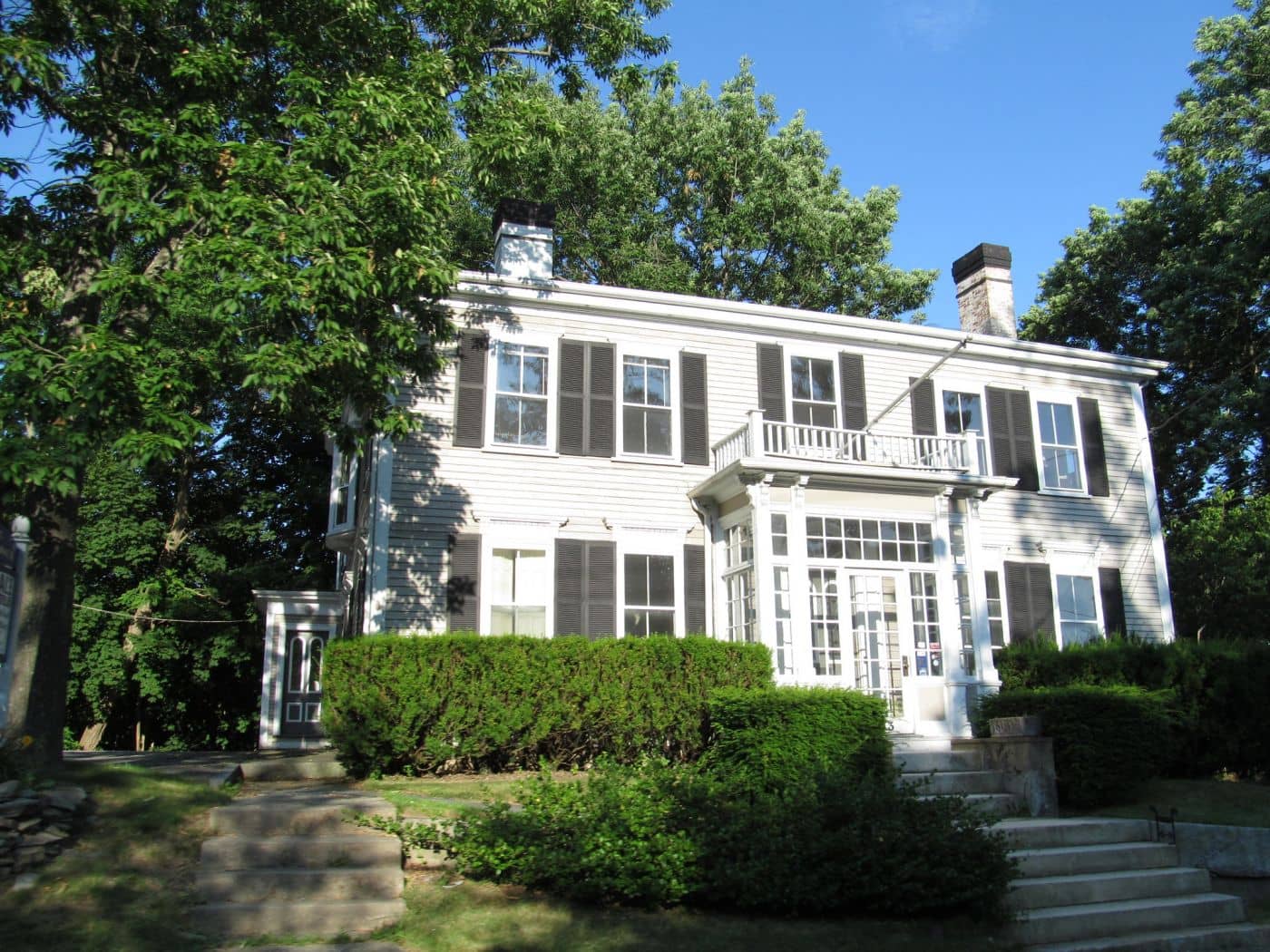
Shipbuilding heart of Maine since 1743 - Bath Iron Works still launches destroyers past the Maine Maritime Museum on the Kennebec.
Midcoast Islands
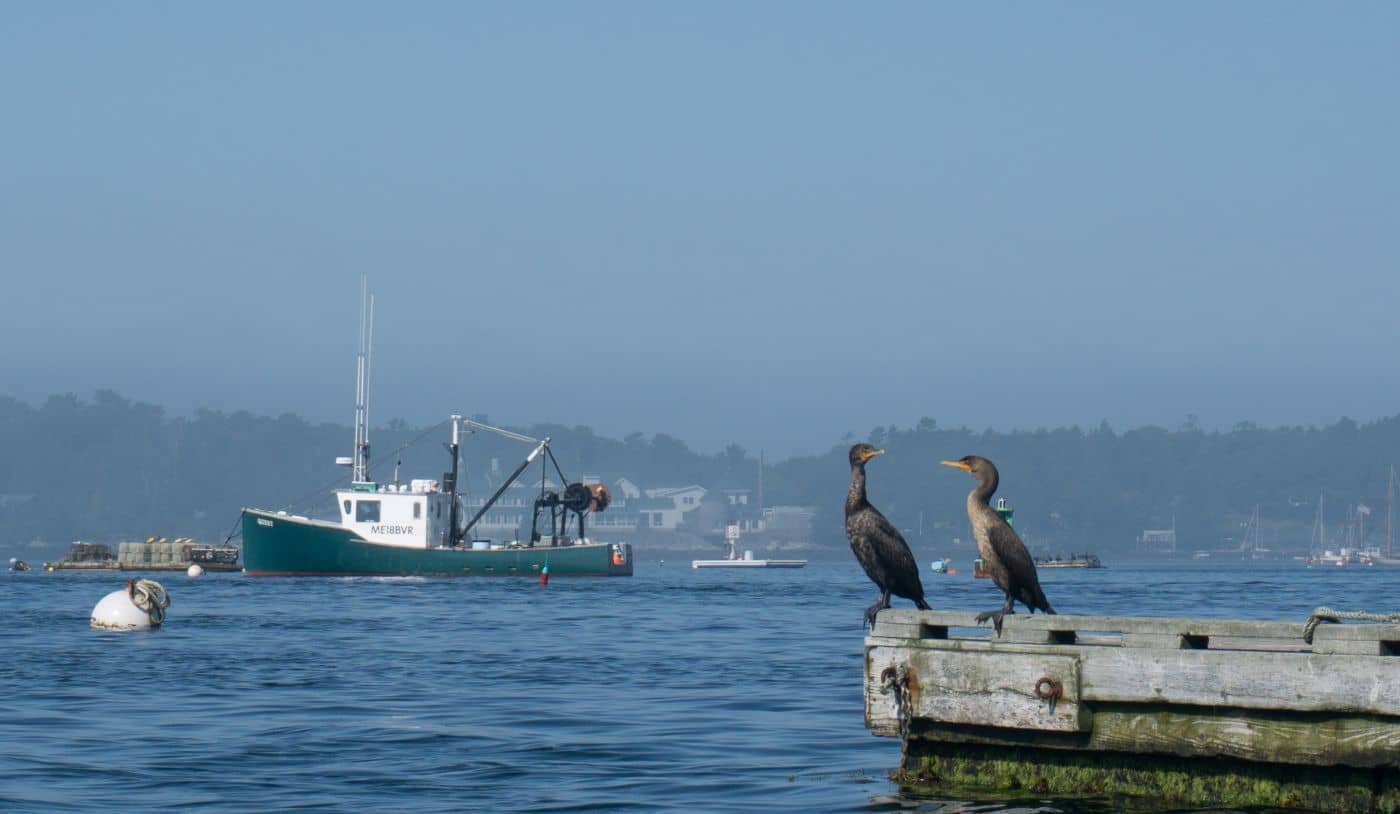
A Midcoast harbor town built around boat trips, with the Coastal Maine Botanical Gardens just up the road.
Midcoast Islands
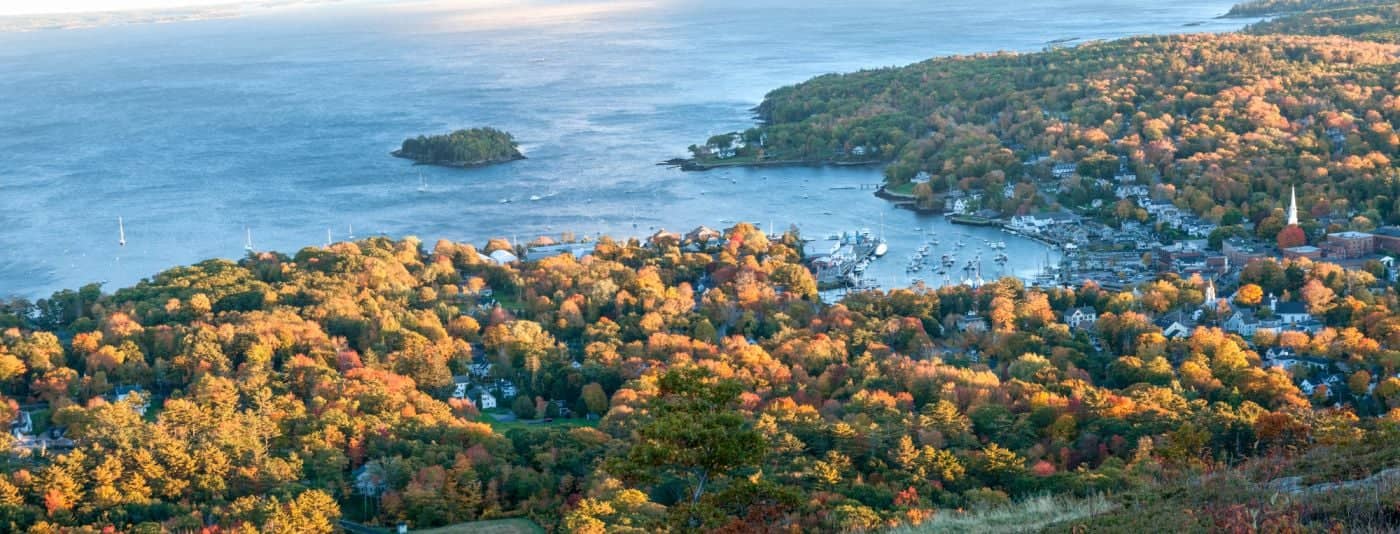
Where the mountains meet the sea - windjammer harbor, Mount Battie summit views, and an independent village with real soul.
Greater Portland
Flagship home of L.L. Bean, open 24/7 - outlets, a tidal river, and surprisingly good eating between the shopping.
Southern Maine Coast
Postcard-perfect village of sea captains' mansions, Lower Village shops, and easy walks to Mother's Beach and Gooch's Beach.