1
Bar Harbor
See main listingGateway to Acadia National Park - Cadillac Mountain, puffin cruises, and a harbor town that fills with cruise ships from May to October.
Details

Guide
Things to do in Acadia National Park, Maine, include mountain views, coastal walks and tidal stops, with access and effort shaping a day in the park.
Acadia packs a summit road, a surf-hammered granite shore, a carriage-road network closed to cars and a working harbor town into a park you can cross in half an hour. This ranks what people actually do there, most-visited first, and says plainly what each one costs you in effort, timing and patience.
Compiled from published reviews, official sites and our own research; assessed remotely without firsthand experience.
Compiled from published reviews, official sites and our own research; assessed remotely without firsthand experience.
The order below follows Google review volume, which is the closest thing to a visitor count that exists in public data. It is a crowd forecast more than a quality ranking: the places at the top are where the tour buses stop, and some of the best hours in the park are a long way down the list. Every rating and review count here comes from that same public record.
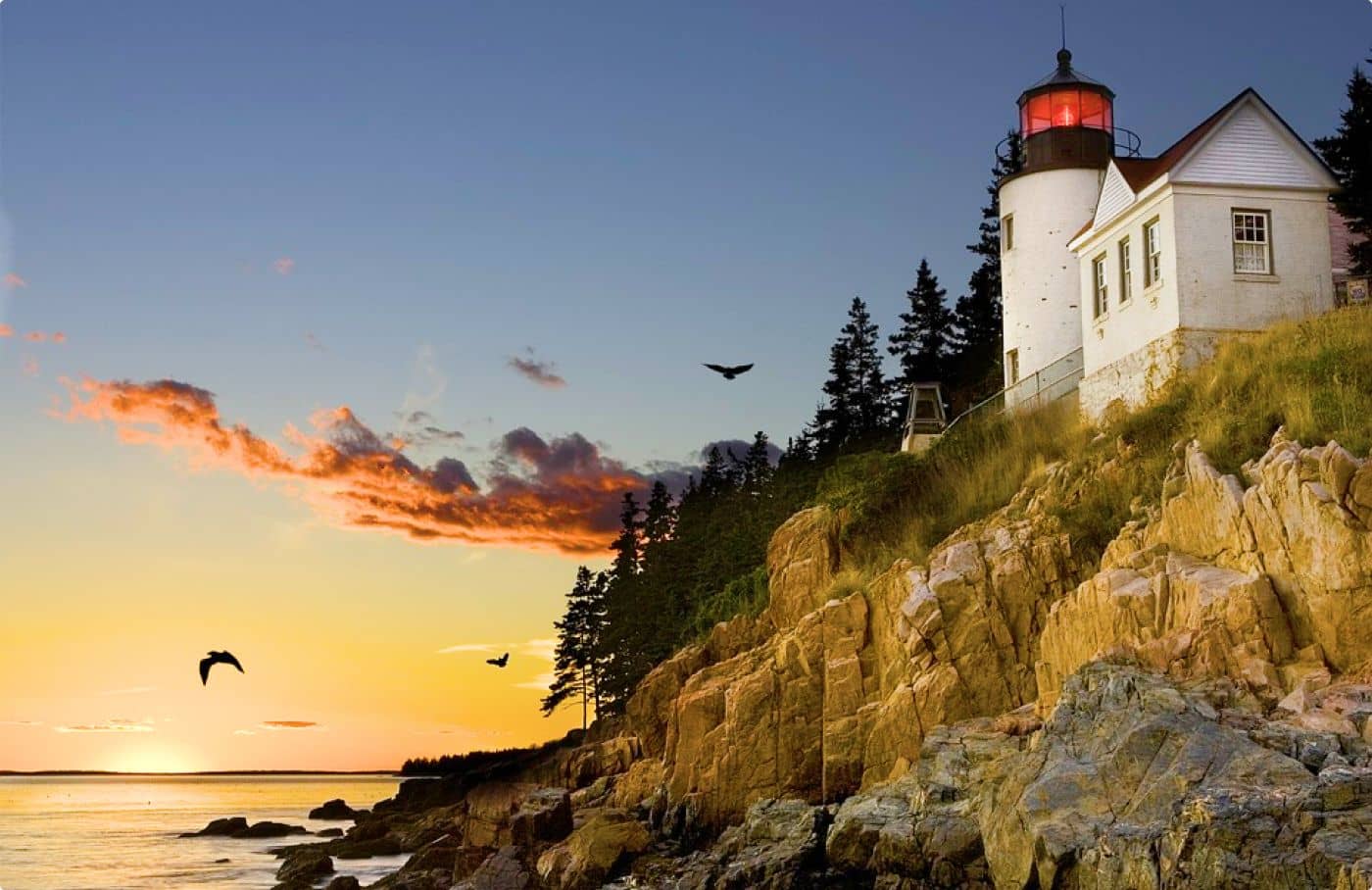
Rated 4.4 from about 4,600 reviews, and the most photographed lighthouse in a state with around sixty-five of them. The classic view is from the rocks below and west of the tower, down a short flight of stairs from the parking lot.
The orientation is the thing people get wrong. Those rocks face west, so this is a sunset stop. Arriving at dawn puts the sun behind the tower and the tower in flat shade, which is a long drive to discover. It also sits on the quiet Tremont side of the island, so the trip doubles as an escape from the Park Loop Road, though the parking lot is small and full by sunset in August.
Rated 4.6 across roughly 3,200 reviews, and the single most conditional attraction in the park. A wave traps air in a granite chamber and forces it out with a boom you feel through the rock, but it needs a rising tide and a real swell running in from offshore at the same time.
On a flat, calm day at low water it is a wet hole in a rock with a queue, which is what a great many of those reviewers saw. Check the tide before you go. The corollary is the safety point: the conditions that make it spectacular are the conditions that wash people off the lower stairs, and the lower platform closes when a storm swell is running.
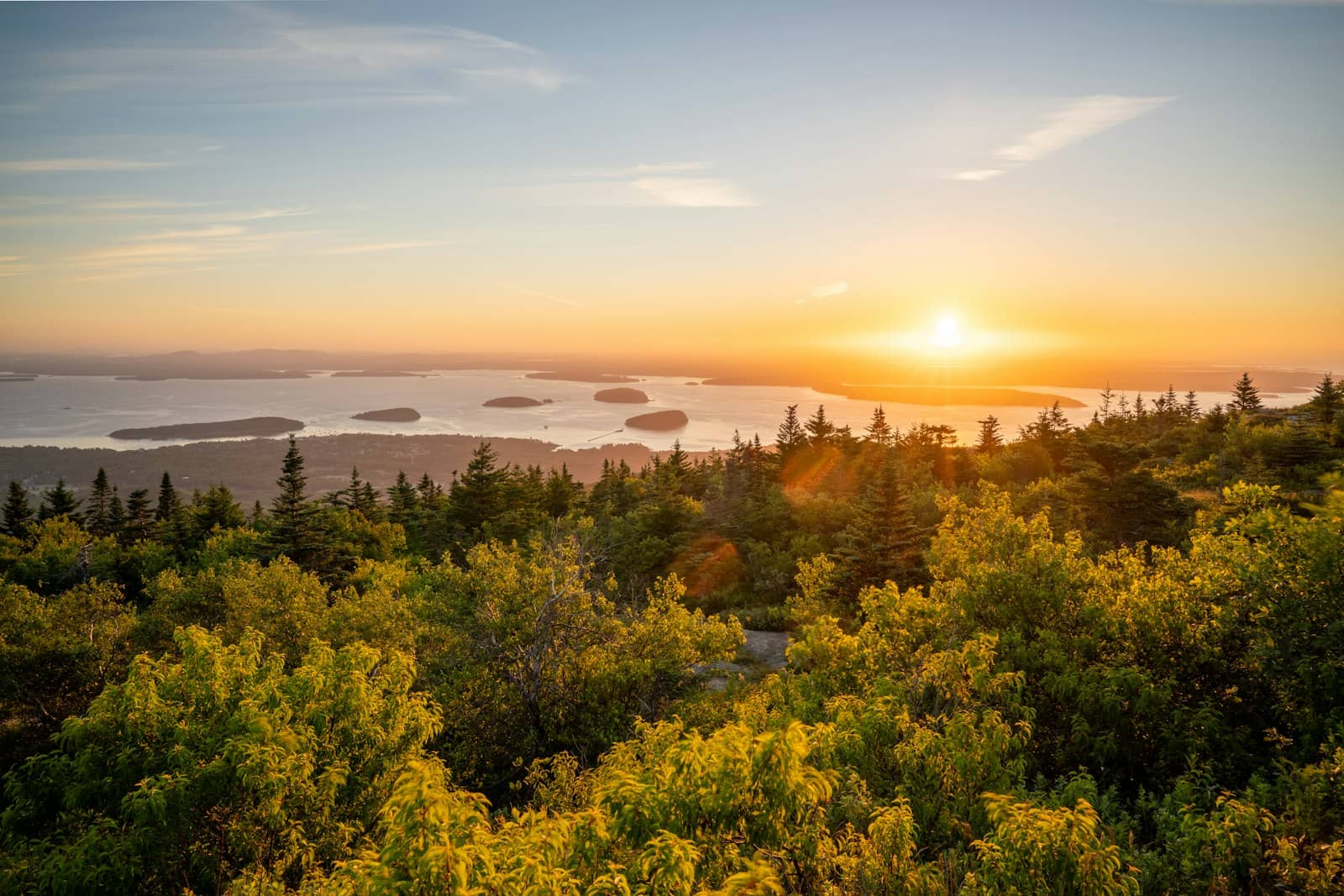
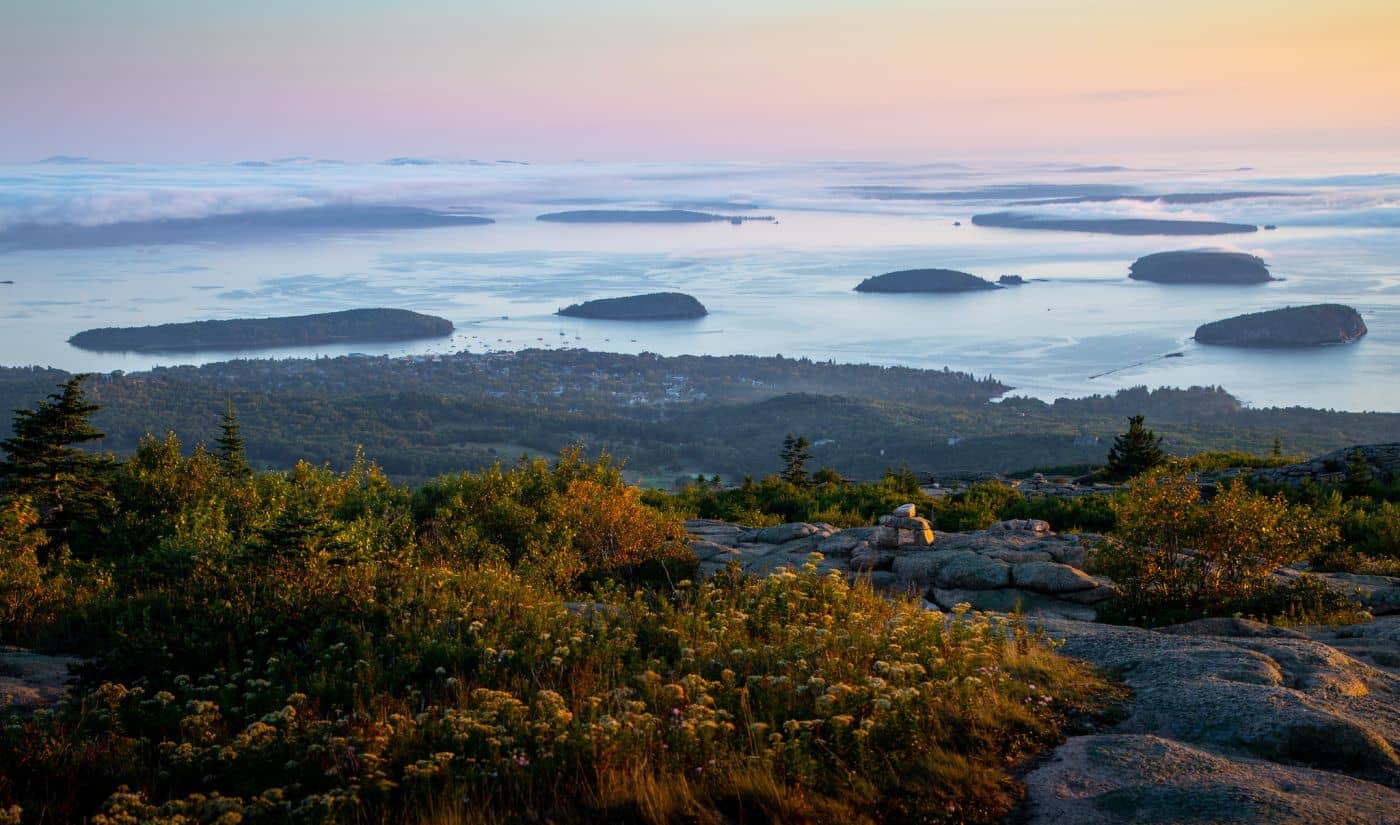
Rated 4.9 from more than 1,500 reviews, the highest point on the Atlantic coast of the United States at 1,530 feet, and for about ten weeks around midwinter the first ground in the country to catch the sunrise. That last claim is usually stretched to half the year; ranked against Maine's other candidates it is nearer ten weeks.
The summit is a 3.5-mile drive rather than a climb, which is why it is busy. During the reservation season a timed vehicle slot is required for that road, booked separately from your entrance pass, and the sunrise slots go first. Sunset is the easier trip by a wide margin: same view, same road, no alarm, far less competition. The North Ridge and South Ridge trails reach the top on foot and need no booking, because the reservation applies to the road.
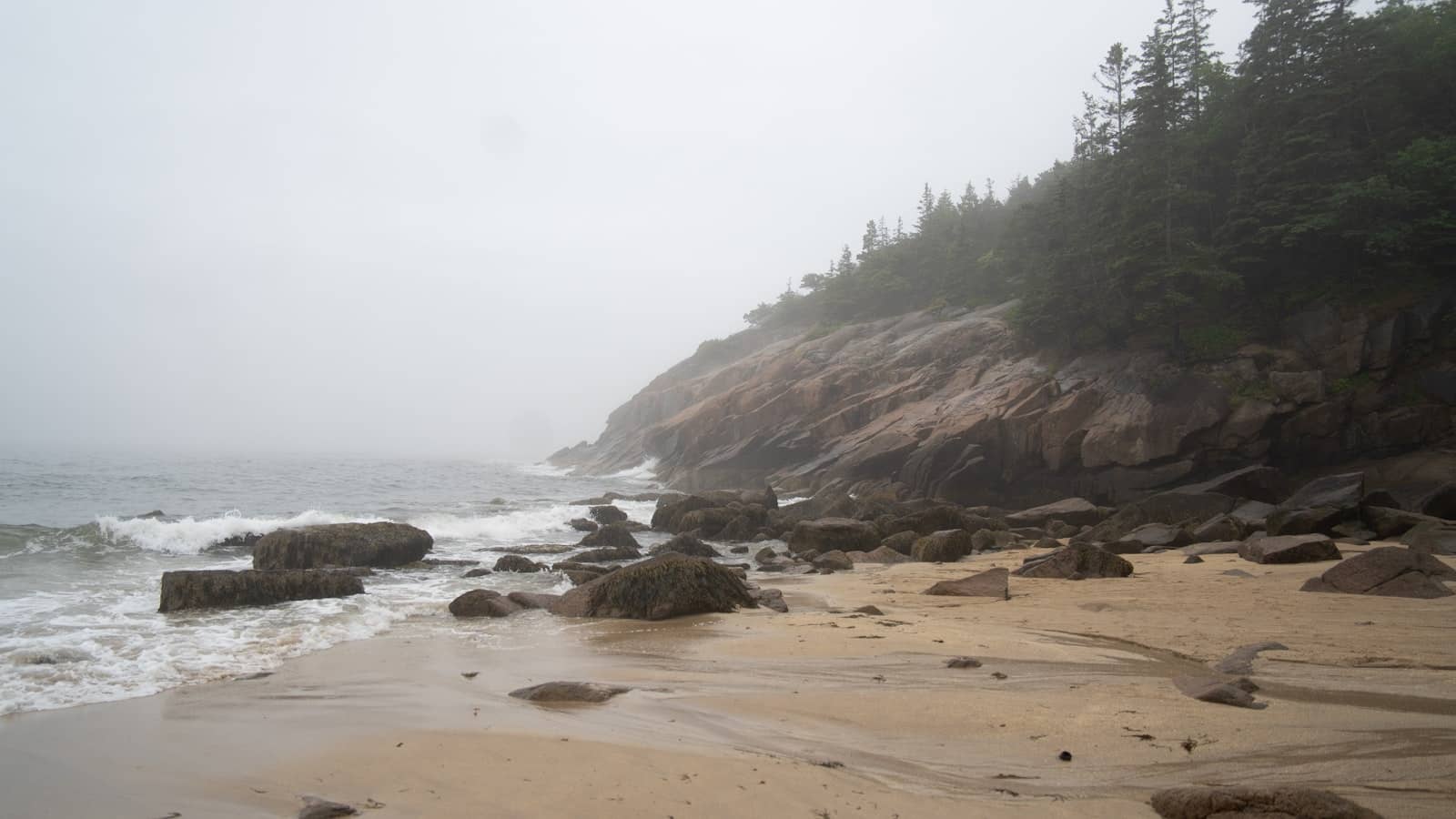
Sand Beach is rated 4.8 from around 970 reviews and the Ocean Path trailhead 4.8 from roughly 480. Take them together, because they share a parking lot and the walk is the better half.
The beach is a crescent of pale sand — much of it ground shell rather than rock — held between two granite headlands. The water is the part to be realistic about: this is open ocean, and even at its late-August peak it sits in the fifties Fahrenheit. People swim briefly and loudly.
The Ocean Path runs about two miles from the beach along the top of the shore, past Thunder Hole, to the cliffs at Otter Point. It is wide, level and never leaves the coast, which makes it the best return on effort in the park: almost everything people come to look at, from a path that asks nothing of you. Go early, when it is close to empty and the light comes straight up the coast.
The Jordan Pond path is rated 4.8 from around 570 reviews. A 3.3-mile loop runs round an exceptionally clear glacial pond with two rounded hills at the far end; the northern half crosses bog on log bridges, the southern half is easy going.
The clarity is protected rather than lucky — this is a public water supply, so there is no swimming or wading. The Jordan Pond House at the south end has served tea and popovers on the lawn since the nineteenth century, which makes it the one genuinely traditional thing to do in the park, and the wait in season is long.
Rated 4.9 from about 580 reviews, and the climb with the largest reputation relative to its length. It is well under a mile to the top, but a good part of that goes up a cliff face on iron rungs and ladders bolted into the granite, with a long drop beside you and nowhere to step aside.
This is the thing to understand about Acadia's trails generally: difficulty is not measured in distance here. Do not start it in the wet, do not start it carrying a small child, and think hard if heights are a problem, because the point of no return comes early and the ladders are one-way in practice. Gorham Mountain, rated 4.9 from around 270 reviews, is the version of the same reward without the exposure.
Rated 4.8 from roughly 550 reviews, and the only entry on this list that does not exist for most of the day. A gravel bar surfaces at the end of Bridge Street in Bar Harbor for about ninety minutes either side of low water, and you walk from a residential street to an island.
The failure mode is well documented and entirely avoidable: the bar floods from both ends at once rather than gradually, people are cut off on it every summer, and the walk back always takes longer than it looked from the island. Cross early in the window rather than late, and set an alarm.
Forty-five miles of crushed-stone road run through the eastern half of the island, built between 1913 and 1940 and closed to cars ever since. That makes them the best cycling in the park and, in winter, its ski and snowshoe network. Seventeen hand-cut granite bridges are scattered through it, each one different, and hunting them down is a better plan for a day than simply riding.
They also solve the August problem: when every coastal parking lot is full and the Loop Road is a queue, the carriage roads are quiet, shaded and inland.
Rated 4.5 from about 2,500 reviews, which says more about how many people start here than about the building. It earns a stop at the beginning of a first visit and specifically when plans are not yet fixed: rangers know which trails are closed, whether the Precipice is shut for nesting peregrines, and which parking lots are already full, none of which a website reports in real time.
Most first visits never cross Somes Sound. Echo Lake Beach, rated 4.7 from around 190 reviews, is fresh water that actually reaches swimmable temperatures. Beech Mountain and Acadia Mountain are proper climbs with a fraction of the Beehive's traffic. The Wild Gardens of Acadia at Sieur de Monts, rated 4.6 from roughly 720 reviews, is a half-hour botanical garden arranged by habitat, and doing it early makes the rest of the park legible.
Further out, the Schoodic Peninsula is the mainland piece of the park, about an hour round by road or a seasonal passenger ferry from Bar Harbor, with some of the most dramatic granite in Acadia and almost nobody on it.
Park once. The single biggest saving available is walking the Ocean Path between Sand Beach, Thunder Hole and Otter Cliff rather than driving and re-parking at each. The free Island Explorer shuttle runs the corridor in season and removes the parking problem outright, which is the best piece of logistics advice for a July or August trip.
Time the two things that are timed. Bar Island needs low water; Cadillac needs a reservation in season. Everything else is flexible, and everything else is better before nine in the morning.
By visitor volume it is Bass Harbor Head Light, and by reputation it is sunrise from Cadillac Mountain. By value for the effort it is neither: the Ocean Path from Sand Beach to Otter Cliff gives you almost everything the park is famous for on a flat, wide walk that takes an hour and asks nothing of you.
Two full days covers the Park Loop Road, one Cadillac sunrise or sunset and a half-day hike. Three or four lets you add the quiet side of the island west of Somes Sound, the carriage roads on a bike, or Schoodic, without rushing any of it.
Easily. The Park Loop Road, the Cadillac summit road, Jordan Pond House, the Wild Gardens and the Bar Harbor Shore Path all involve little or no climbing, and the Ocean Path is flat for its whole length. The park's reputation for iron rungs comes from a handful of trails, not from most of it.
Two things that are timed rather than optional: low water at the Bar Island bar, which only exists for about three hours a day, and the light on the Ocean Path early in the morning before the Loop Road fills. Everything else can be done at any hour and will still be there in the afternoon.
Only on a rising tide with a swell running. It is the one attraction in the park that genuinely does nothing on the wrong day, and the queue is the same either way, so check the tide before making the stop rather than after.
Gateway to Acadia National Park - Cadillac Mountain, puffin cruises, and a harbor town that fills with cruise ships from May to October.
The working harbor on the quiet side of Mount Desert Island, with boatyards, Bass Harbor Head Light and easy Acadia access.
The quiet, moneyed side of Mount Desert Island, with a marina, two famous gardens, and fast access to Acadia.
Gateway to Acadia - Main Street's shopping strip, the Colonel Black Mansion, and the scenic Union River dam walk.
Tools
Guides


Destinations
Downeast & Acadia
Gateway to Acadia National Park - Cadillac Mountain, puffin cruises, and a harbor town that fills with cruise ships from May to October.
Southern Maine Coast
Dock Square boutiques, Goose Rocks Beach, and the Bush family's Walker's Point - the quintessential coastal Maine summer town.
Greater Portland
Maine's largest city - a working waterfront, Old Port cobblestones, and a food scene that punches well above its weight.
Midcoast Islands
Shipbuilding heart of Maine since 1743 - Bath Iron Works still launches destroyers past the Maine Maritime Museum on the Kennebec.
Midcoast Islands
A Midcoast harbor town built around boat trips, with the Coastal Maine Botanical Gardens just up the road.
Midcoast Islands
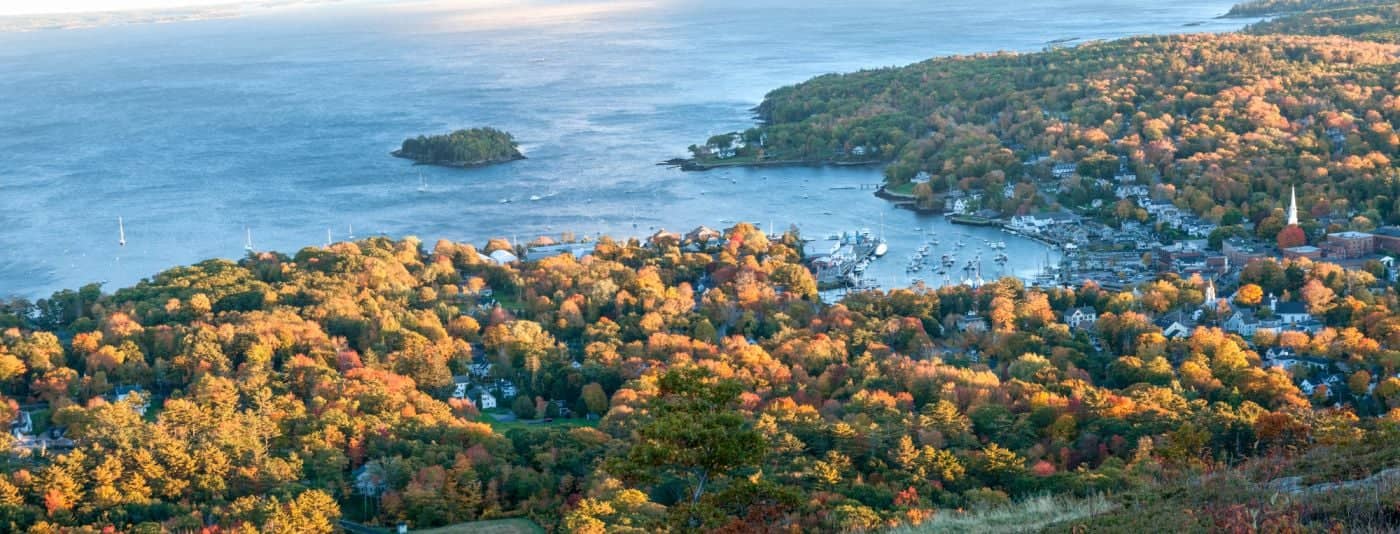
Where the mountains meet the sea - windjammer harbor, Mount Battie summit views, and an independent village with real soul.
Greater Portland
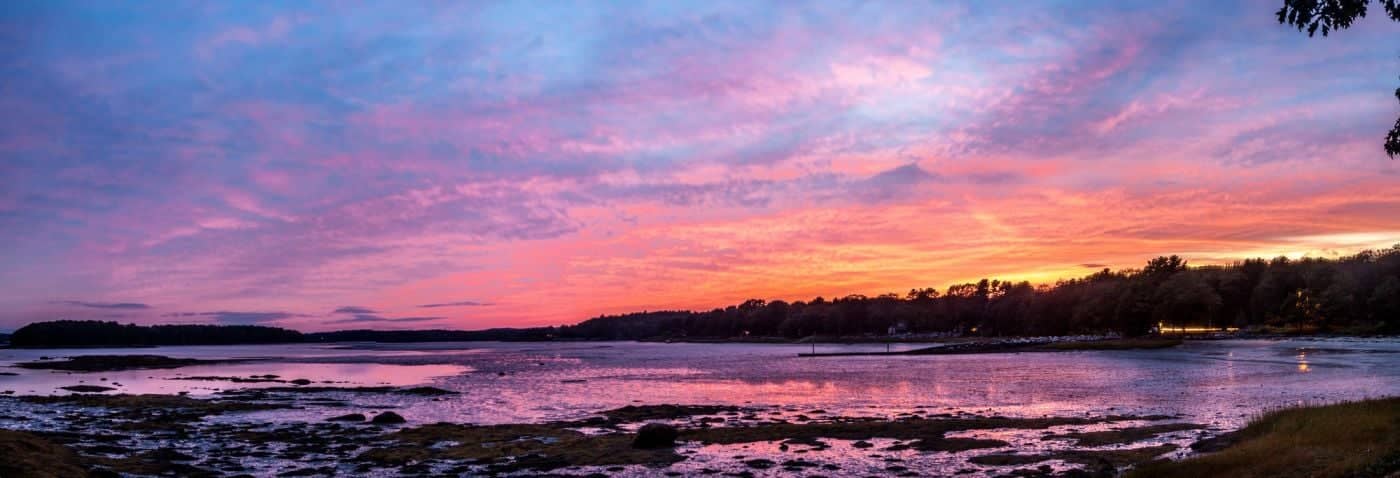
Flagship home of L.L. Bean, open 24/7 - outlets, a tidal river, and surprisingly good eating between the shopping.
Southern Maine Coast
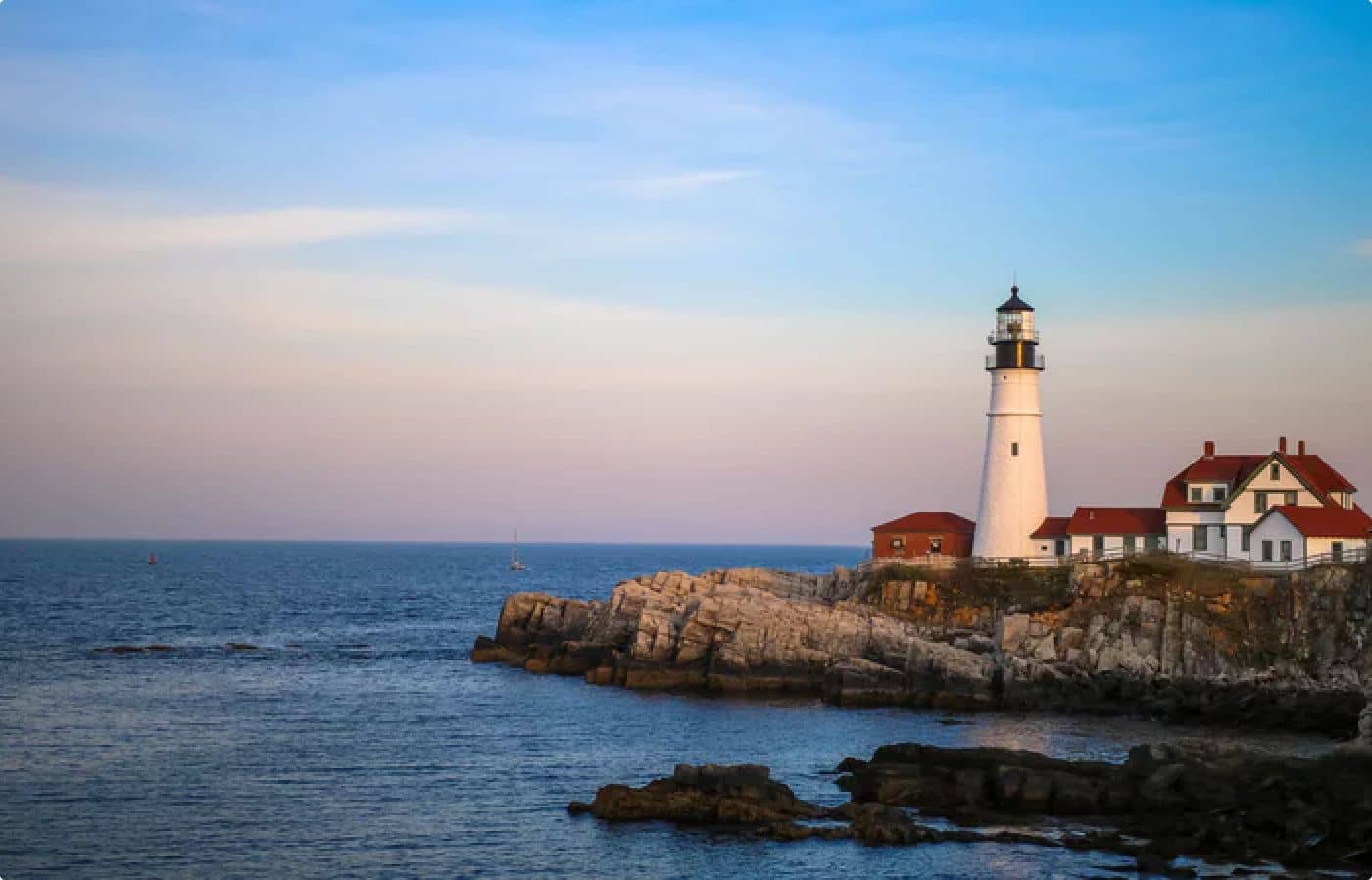
Postcard-perfect village of sea captains' mansions, Lower Village shops, and easy walks to Mother's Beach and Gooch's Beach.