Guide
Maine Coast Guide: Beaches, Harbors and Acadia

Choose Ogunquit for a beach-and-walking stay, Kennebunkport for a riverfront village with separate beach outings, York for Short Sands or Long Sands, and Old Orchard Beach for a pier-and-beach setting. Pick one as your base. They are different southern-coast holidays, not four mandatory stops.
Updated September 2026
Use one southern town for a beach-centered stay, and use distinct overnight blocks when the purpose is a longer journey along the coast. Those are two different trip lengths, so they need different lodging decisions. A beach weekend does not require every coastal region; a week that reaches Acadia should not be planned as repeated day trips from the south.
The southern-town comparison comes first because it is a complete holiday choice in its own right. The rest of the guide broadens the scope to city, peninsula, island and park visits. Read those sections as ways to shape the journey you have time for. Give an island or a peninsula its own place in the schedule instead of collecting detours until no time remains at the destination.
Related planning guides: Ogunquit vs Kennebunkport, Maine: Choose Your Stay; Maine vs Cape Cod: Which Coastal Trip Fits?; Can You Swim in the Ocean in Maine?; Is Maine Worth Visiting in November?; Is May a Good Time to Visit Maine?; Maine Lobster Roll Prices 2026: A $29–$38 Snapshot; Maine Ocean Temperatures: Four Stations, 4.5°F Apart; Best Time to Visit Maine: Choose by Trip and Month.
Which southern Maine beach town fits your trip?
The southern coast offers several versions of a beach holiday. Ogunquit combines beach access with Marginal Way. Kennebunkport puts a riverfront village at the center, with beaches as separate outings. York gives the trip a Short Sands or Long Sands focus, while Old Orchard Beach has a pier-centered beach setting. Choose the experience first, then the room.
| Town | Choose it for | Named anchor | Trade-off |
|---|---|---|---|
| Ogunquit | Sand plus a coastal walk | Ogunquit Beach and Marginal Way | Beach-lot parking is a substantial daily expense |
| Kennebunkport | Village meals and a beach outing | Dock Square and a Kennebunks beach | A village hotel is not automatically a beach-front stay |
| York | A beach-focused family day | Short Sands at Ellis Park or Long Sands | Beach and lighthouse visits still need separate time |
| Old Orchard Beach | Beach-and-pier atmosphere | The beach and pier area | Choose it for that setting, not a quiet harbor retreat |
What makes Ogunquit different from York?
Choose Ogunquit Beach when the sand, town and coastal walk all matter. Its Main Beach, Footbridge and North Beach entrances serve different approaches to the same beach system. In the town's 2026 fee table Main Beach is $9 hourly or $50 daily, while Footbridge and North Beach are $8 hourly or $45 daily. [1] [2]
Choose York's beaches when the beach is the larger part of the day. Short Sands has the Ellis Park setting, playground, restrooms and seasonal lifeguards listed by York's recreation department. Long Sands gives the itinerary a different stretch of shore. Nubble Lighthouse is the optional coast-viewing stop; it does not replace actual beach time. [3]
When is Kennebunkport the better choice?
Choose the Kennebunks when you want a village-and-river stay as much as a beach stay. Kennebunk and Kennebunkport face each other across the river, and the Kennebunk beach guide is separate from the Kennebunkport beach guide. The 2026 Kennebunk permit season for Gooch's, Middle and Mother's Beach is June 15–September 15; that rule is not a universal pass for neighboring towns. [4] [5]
Where does Old Orchard Beach fit?
Choose Old Orchard Beach for the beach-and-pier form of the holiday. It is a different setting from Camden's working harbor or Kennebunkport's riverfront village. The point is not to rank those places on one invented quality scale, but to stop a visitor booking one kind of coast while expecting another. The broader sections below put the southern beaches alongside Casco Bay, the Midcoast and Acadia.
What should you skip when planning a beach trip?
Skip a different town and parking lot every day unless the purpose is a road trip. Use the southern-coast long weekend for a deliberate three-town route, or stay near one chosen beach and keep the other towns optional. Maine's wider beach guide is for comparing shore settings; the coastal itinerary is for travelers who actually want to change regions.
What other planning questions does this route raise?
Which Maine beach town is best for a beach-and-walking stay?
Ogunquit is the first choice in this comparison because the beach and Marginal Way supply different parts of the same town-based holiday.
Should you stay in all four beach towns on one weekend?
No. Choose one base or follow a deliberate southern-coast itinerary. Repeated hotel changes and parking purchases remove time from the beach itself.
Sources (checked September 27–28, 2026)
- ogunquit.org — Municipal beach lots; payment apps; linked current town rates; checked 2026-09-27.
- ogunquit.gov — 2026 parking season, hours and all lot rates; checked 2026-09-27.
- yorkparksandrec.org — Short Sands setting and facilities; checked 2026-09-27.
- visitmaine.com — River, beaches and village geography; checked 2026-09-27.
- kennebunkmaine.us — Kennebunk beach permits and dates; checked 2026-09-27.
- cascobaylines.com — Year-round service; Fall 2026 and Winter 2026/27 schedules; checked 2026-09-27.
- monheganboat.com — Port Clyde departure and year-round service; checked 2026-09-27.
The Maine coast is 230 miles long and roughly 3,500 miles of shoreline, and both numbers are correct. The first is the distance from Kittery to Lubec as a gull flies it; the second is what you get when you follow every peninsula, cove and island. That gap is the starting point for exploring this coast, because it explains why two harbors you can see from each other are forty minutes apart by road, and why the coast rewards going deep rather than going far.
Compiled from published reviews, official sites and our own research; assessed remotely without firsthand experience.
Four coasts, not one
People talk about the Maine coast as a single thing. It is four, and they have almost nothing in common besides salt water.
| Stretch | Character | Anchor towns | Mapped places | Best for |
|---|---|---|---|---|
| Southern coast | Long sand beaches, resort towns, heavy traffic | Kittery, York, Ogunquit, Wells, Kennebunkport | 569 | Swimming, walkable villages, short trips from Boston |
| Casco Bay | City waterfront, islands, headlands | Portland, Cape Elizabeth, Freeport | 322 | Food, ferries, lighthouses |
| Midcoast | Long rock peninsulas between tidal rivers | Bath, Boothbay Harbor, Rockland, Camden | 525 | Harbors, schooners, museums, quiet |
| Downeast and Acadia | Granite, spruce, fog, real emptiness | Bar Harbor, Southwest Harbor, Lubec | 277 | The national park, and then solitude |
The counts come from our mapped corpus of 2,154 places across the state. Nearly 1,700 of them are in the four stretches above, a coastal strip rarely more than twenty miles deep holding the large majority of Maine's visitor infrastructure.
The southern coast: Kittery to Old Orchard Beach
This is the only part of Maine with continuous sand, and it looks the least like the rest of the state. The beaches are wide and shallow-shelving, the towns behind them are built for summer, and Route 1 runs the whole way as a strip of motels, outlets and lobster pounds.
York is the pivot point. Long Sands Beach (4.7 from 1,281 reviews) runs nearly two miles between the harbor and Nubble Light, and Sohier Park opposite the lighthouse (4.8 from 1,321) is the free viewing area everyone stops at. The Nubble itself (4.9 from 631) is the most photographed lighthouse in the state after Portland Head.
Ogunquit is the most walkable town on this stretch: a three-mile beach, a village you can cross on foot, and the Marginal Way (4.9 from 141 reviews for the trust that maintains it), a mile-and-a-quarter cliff path connecting the village to Perkins Cove. Kennebunkport is the wealthier version, with the inns and the Cape Porpoise working harbor behind them.
Be realistic about the drawbacks. Route 1 through Wells and Ogunquit backs up badly in July. Parking is a daily cost and a daily search. And this stretch feels more like the rest of coastal New England than anywhere else in Maine. If you came for spruce and granite, keep driving. Details on the sand itself are in our beaches guide.
Casco Bay and Portland
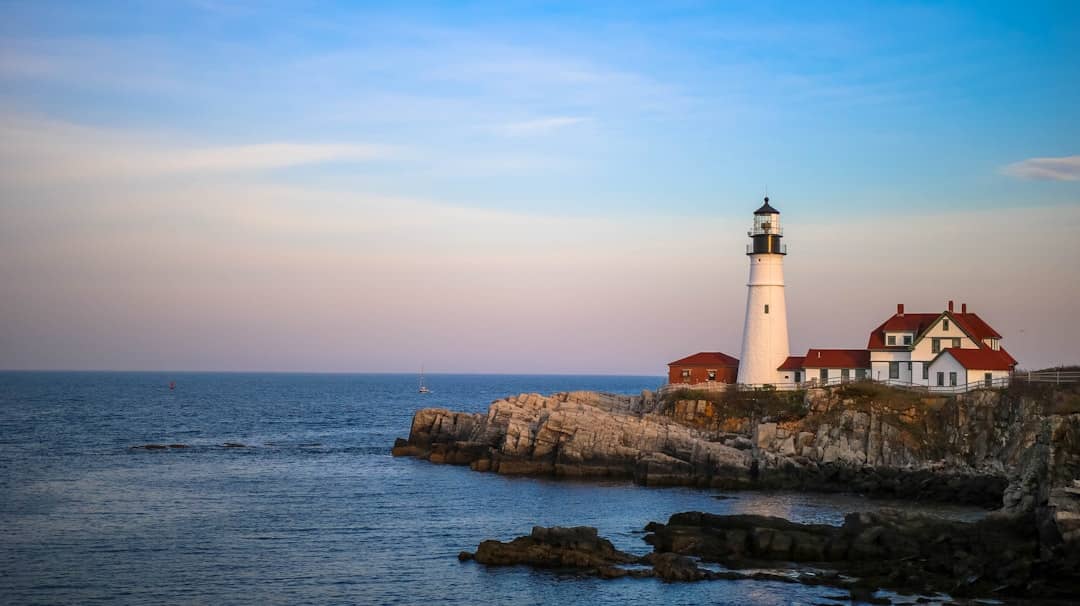
Cape Elizabeth is where the coast changes. Portland Head Light (4.8 from 16,744 reviews) stands on the headland in Fort Williams Park (4.8 from 3,781), which is a genuine park rather than a parking lot with a view. A hundred acres of shoreline, a ruined mansion and a mile of cliff walk. Two Lights State Park next door (4.7 from 1,578) puts you on bare rock facing open ocean.
Portland itself is the only city on the Maine coast with year-round depth: 149 mapped places, a working fish pier and Harbor Fish Market (4.7 from 1,537) still selling to the public off Commercial Street. South Portland holds two more lights, Bug Light (4.7 from 2,518) and Spring Point Ledge (4.8 from 747), the latter reached by walking out a granite breakwater.
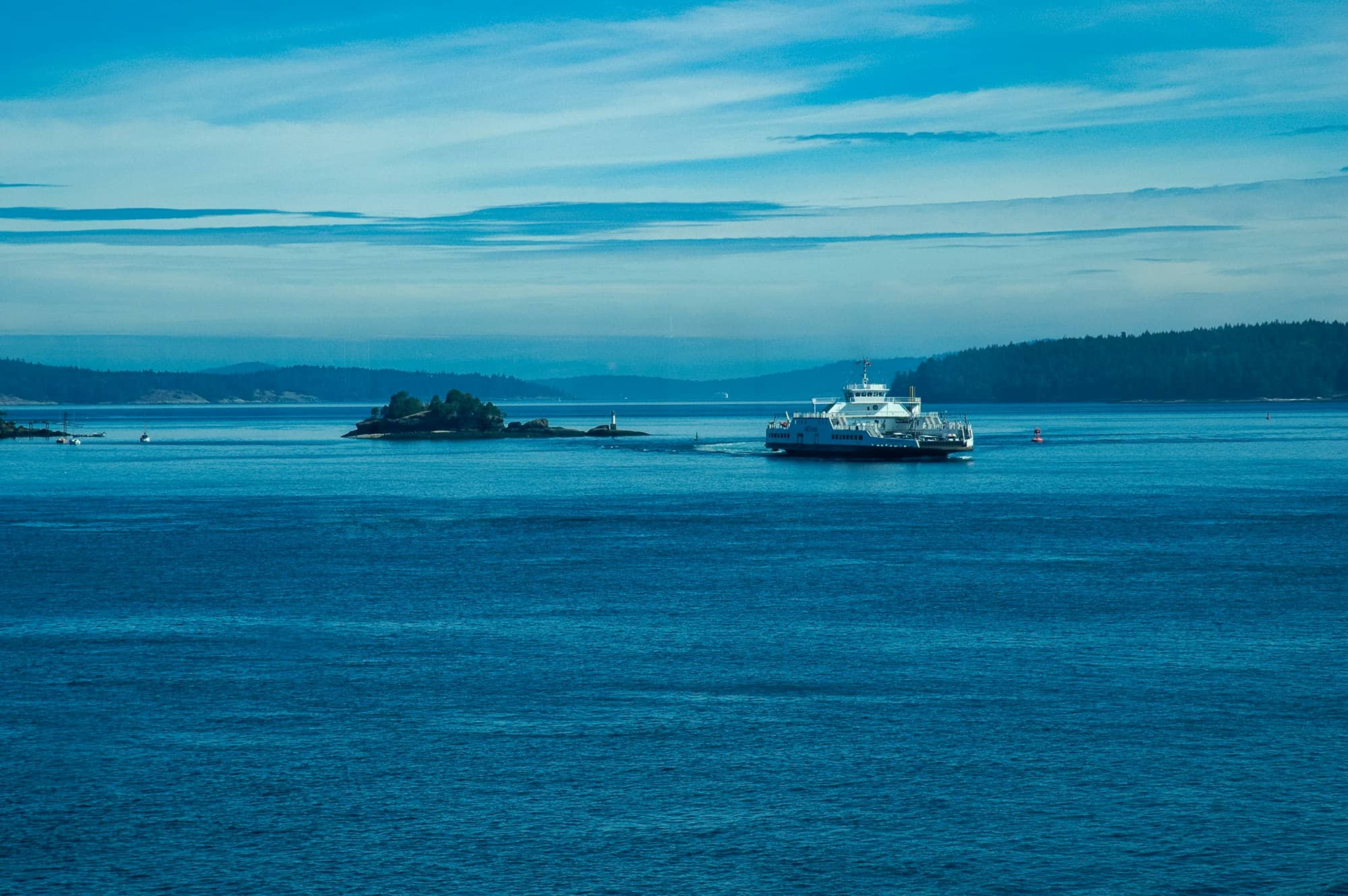
The islands are the part people miss. Casco Bay ferries run year-round and frequently, which makes an island afternoon here far easier than anywhere else on the coast: a year-round service with separate seasonal timetables, so the outward and return departures belong to the same island-day plan.
The Midcoast: where the coast gets complicated
North of Brunswick the shoreline splits into long fingers of rock reaching south between tidal rivers. This is the Maine coast people picture, and it is also the one that ruins itineraries, because getting from the tip of one peninsula to the tip of the next means driving all the way back up to Route 1 and down again.
Bath is the entry point, a shipbuilding city where the yard is still working; the Maine Maritime Museum (4.7 from 1,489 reviews) sits downriver and runs boat trips past the ships under construction. Below it, the Phippsburg peninsula ends at Popham Beach State Park (4.8 from 2,104) and Fort Popham (4.7 from 1,166), and the Georgetown peninsula ends at Reid State Park (4.8 from 1,563) and the wharf at Five Islands Lobster Co (4.7 from 1,259).
Boothbay Harbor is the busiest harbor town on this stretch, with 125 mapped places, the puffin and nature cruises of Cap'n Fish's (4.7 from 2,887), the Ocean Point Walk out at the tip of the peninsula (4.8 from 632), and Coastal Maine Botanical Gardens (4.8 from 7,005), the most-reviewed attraction anywhere on the coast outside Acadia.
Further up: Pemaquid Point Lighthouse (4.8 from 3,243) sits on tilted rock slabs that are better than the light itself; Marshall Point in St. George (4.8 from 1,458) has the wooden walkway out to the tower. Rockland has the mile-long breakwater and its lighthouse (4.8 from 1,318), Owls Head Light nearby (4.8 from 1,726), and the windjammer fleet. Camden puts a harbor directly beneath a mountain. Camden Hills State Park (4.7 from 2,069) and the Mt. Battie tower (4.8 from 819) look down over Penobscot Bay, and Schooner Surprise (5.0 from 221) sails out of the harbor below.
Penobscot Bay closes with Lincolnville Beach (4.6 from 621), the Islesboro ferry landing, and then Bucksport, where Fort Knox and the Penobscot Narrows Observatory (4.8 from 3,270) put an elevator up a bridge tower beside a granite fort.
Downeast and Acadia
Past Ellsworth the coast turns to granite and spruce and the population thins fast. Acadia National Park (4.9 from 24,003 reviews) is the reason almost everyone comes: Cadillac Mountain (4.9 from 1,528) with its reservation-only summit road, Thunder Hole (4.6 from 3,222) which only performs at mid-tide with a swell running, Sand Beach, the carriage roads, and Bass Harbor Head Light (4.4 from 4,616) on the quiet side of the island.
Bar Harbor holds 131 mapped places and functions as the park's front door, including the Bar Island land bridge (4.8 from 553), which is walkable for a few hours either side of low tide and strands somebody every summer. Southwest Harbor and the western half of Mount Desert Island are noticeably calmer for the same access.
On the mainland approach, the lobster pounds on the Trenton causeway cook in the open. Trenton Bridge Lobster Pound (4.4 from 1,688) has been doing it over wood fires for decades. East of the island, Tidal Falls Preserve near Hancock (4.7 from 670) is a reversing falls you can watch from a picnic table.
Far Downeast: the coast most people never see
Beyond Schoodic the map empties. This is a hundred miles of blueberry barrens, working fishing harbors and cliffs, with a fraction of the businesses and none of the crowds. Quoddy Head State Park in Lubec (4.9 from 1,387 reviews) holds West Quoddy Head Lighthouse (4.9 from 1,488), the easternmost point in the contiguous United States, with a cliff trail running south from it. Roque Bluffs State Park (4.7 from 628) pairs a cold ocean beach with a warm freshwater pond. Cobscook Bay State Park (4.6 from 201) sits on water with some of the largest tides on the East Coast, a range that can exceed twenty feet.
Go here if you want the coast without the queue. Do not go expecting services: restaurants are sparse, many are seasonal, and the drive from Bar Harbor is two and a half hours each way.
The lighthouses, ranked
| Light | Where | Rating | Reviews |
|---|---|---|---|
| Portland Head Light | Cape Elizabeth | 4.8 | 16,744 |
| Bass Harbor Head Light | Tremont, MDI | 4.4 | 4,616 |
| Pemaquid Point Lighthouse | Bristol | 4.8 | 3,243 |
| Owls Head Lighthouse | Owls Head | 4.8 | 1,726 |
| West Quoddy Head Lighthouse | Lubec | 4.9 | 1,488 |
| Marshall Point Lighthouse | St. George | 4.8 | 1,458 |
| Rockland Breakwater Lighthouse | Rockland | 4.8 | 1,318 |
| Spring Point Ledge Lighthouse | South Portland | 4.8 | 747 |
| Nubble Lighthouse | York | 4.9 | 631 |
Almost all of these are exterior visits. The grounds are open, the tower usually is not. A handful open to climbers on specific days each year through local organizations. Assume you are visiting a view, not a building.
Driving the coast: what Route 1 is really like
US Route 1 runs the full length of this guide and is the only road that does. Its character changes as sharply as the coast does. From Kittery to Brunswick it is commercial strip with traffic lights. From Bath to Bucksport it is the scenic drive people imagine, with harbor views and antique shops. Past Ellsworth it thins to a two-lane road through spruce.
Three practical rules. First, the bottlenecks are predictable: Wiscasset in the Midcoast, Ellsworth on the Acadia approach, and the Wells-to-Ogunquit stretch in the south. Each can add half an hour in July. Second, I-95 exists for a reason. If you are covering distance rather than sightseeing, use it and drop back to the coast where you actually want to be. Third, every peninsula is a dead end, so budget the drive back out. Our Route 1 guide breaks the road into segments worth driving and segments worth skipping.
Eating along the coast
There are three distinct institutions and they are not interchangeable. A lobster pound boils or steams lobster in seawater, usually outdoors, usually with picnic tables. Trenton Bridge is the archetype, and the ones on the Trenton causeway cook over open wood fires in plain view. A clam shack runs a fryer and sells whole-belly clams, onion rings and a lobster roll; Five Islands in Georgetown (4.7 from 1,259 reviews) is the best-rated example on the coast. A fish market sells you the raw material, and the good ones will pack lobsters for a flight home.
Then there is Red's Eats in Wiscasset (4.3 from 3,342 reviews), which is its own category: the most photographed counter in Maine, at a bridge that already backs up traffic for miles. The food is good and the queue is long enough that a lot of people conclude it was not worth it. Go at opening or go elsewhere.
Two things to know about ordering. Lobster is sold by hard-shell and soft-shell. Soft-shell arrives in mid-summer, is sweeter and easier to open, and does not travel. And a lobster roll comes cold with mayonnaise or warm with butter; both are traditional, and the argument between them is permanent. Our lobster roll guide ranks the best of them.
Islands you can actually reach
There are thousands of islands off this coast and only about fifteen with year-round communities. Three tiers matter for visitors. Casco Bay islands, from Portland, run frequent year-round ferries. Peaks fits a half-day outing when the outward and return departures match the time you intend to spend ashore. Penobscot Bay islands like Vinalhaven, North Haven and Islesboro take state ferries from Rockland and Lincolnville a handful of times daily, and reward an overnight. Monhegan has year-round passenger service from Port Clyde and seasonal service from New Harbor, while other outer-island routes have their own calendars, carry no cars, and have no way back if you miss the last sailing.
A few islands are bridged and need no boat at all: Mount Desert Island by the causeway at Trenton, Deer Isle by the suspension bridge at Sedgwick, and Bailey Island off Harpswell by a granite cribstone bridge that lets the tide flow straight through it.
Tides, fog and the working waterfront
The tide governs more here than visitors expect. The range runs nine to eleven feet along most of the coast and grows as you go east, exceeding twenty feet in Cobscook Bay. That means land bridges open and close, sandbars appear, tidepools are only tidepools for a few hours, and a harbor photographed at low water is mostly mud. Check a tide table the night before, not on arrival.
Fog is the other constant. Warm air over cold water produces it without warning, particularly from June into early summer, and it can sit all morning before burning off around midday. Boat trips cancel. Views vanish. Build a fog day into any week on the coast and put the museums in it.
The last thing worth understanding is that this is a working coast, not a scenic one that happens to have boats. Lobster gear on a wharf is somebody's income; the boats leave before dawn and the traffic on the water has right of way over your kayak. Buoy colors identify individual license holders, which is why they are painted so distinctively. Treat the piers as workplaces and you will be welcome on almost all of them.
When to go, and how long to give it
Peak summer gives you everything open and everything crowded. September and early October are the best weeks of the year: the water is at its warmest right after Labor Day, the crowds go home within a week, and the light gets long. Late fall closes the coast down town by town, and by winter most of the seasonal harbors are shuttered while Portland keeps trading.
For length: three days covers the southern coast, five reaches Camden, and anything including Acadia needs a week to avoid spending two days in the car. Adding far Downeast means ten days or a separate trip. The coastal towns guide works through choosing between the harbors, and the destinations index lists every town covered here.
Sources: 2026-09-14 — Casco Bay Lines schedules, Monhegan Boat Line, National Park Service: Bar Island and Cadillac Mountain vehicle reservations.
FAQ
How long is the Maine coast?
About 230 miles in a straight line from Kittery to Lubec, but roughly 3,500 miles of actual tidal shoreline once you follow every peninsula, cove and island. Driving the coastal route end to end on Route 1 is about 300 road miles and eight to nine hours without stops.
What is the prettiest part of the Maine coast?
The Midcoast peninsulas between Bath and Rockland for classic harbor scenery, and Acadia for drama. If you want the coast without crowds, far Downeast beyond Schoodic is the answer. Quoddy Head State Park rates 4.9 from 1,387 reviews and you will often have the cliff trail to yourself.
Can you drive the entire Maine coast in a day?
Technically yes, and it would be a wasted day. Route 1 from Kittery to Lubec is eight to nine hours of driving before you stop for anything, and the peninsulas (where the good parts are) all branch off it. Three days minimum for the southern half, a week for the whole thing.
Where should I stay on the Maine coast?
Pick two bases rather than one. Portland or Ogunquit for the southern half; Camden, Rockland or Boothbay Harbor for the Midcoast; Bar Harbor or Southwest Harbor for Acadia. Staying in one place and day-tripping the length of the coast means most of your trip happens through a windshield.
Related planning guides: Maine in Summer: June, July and August Trip Choices; Things to Do in Bath, Maine: River, Ships and Downtown; Things to Do in Castine, Maine: History and the Harbor; Things to Do in Eastport, Maine: Bay, Streets and Arts; Things to Do in Belfast, Maine: Harbor Walk and Town; Things to Do in Biddeford, Maine: Mills or the Coast?; Maine Family Vacation: Choose the Base and Main Outing; Maine Tide Pools and Rocky Shores: Choose the Outing; Lobster Season in Maine: Shells, Meals and Timing; Maine in Spring: Choose the Town Before the Trail; Maine in September: Coast, Cities and Regional Choices; Maine Lobster Festival: Plan the Rockland Visit; Maine Donuts: Choose a Bakery Stop for Your Route; Maine Whoopie Pies: Choose a Stop and a Flavor; New York to Maine: Fly, Take Transit or Drive?; Maine Scenic Drives: Choose Coast, Lakes or Mountains.